Do stone, shell, and mulch beds need edging?
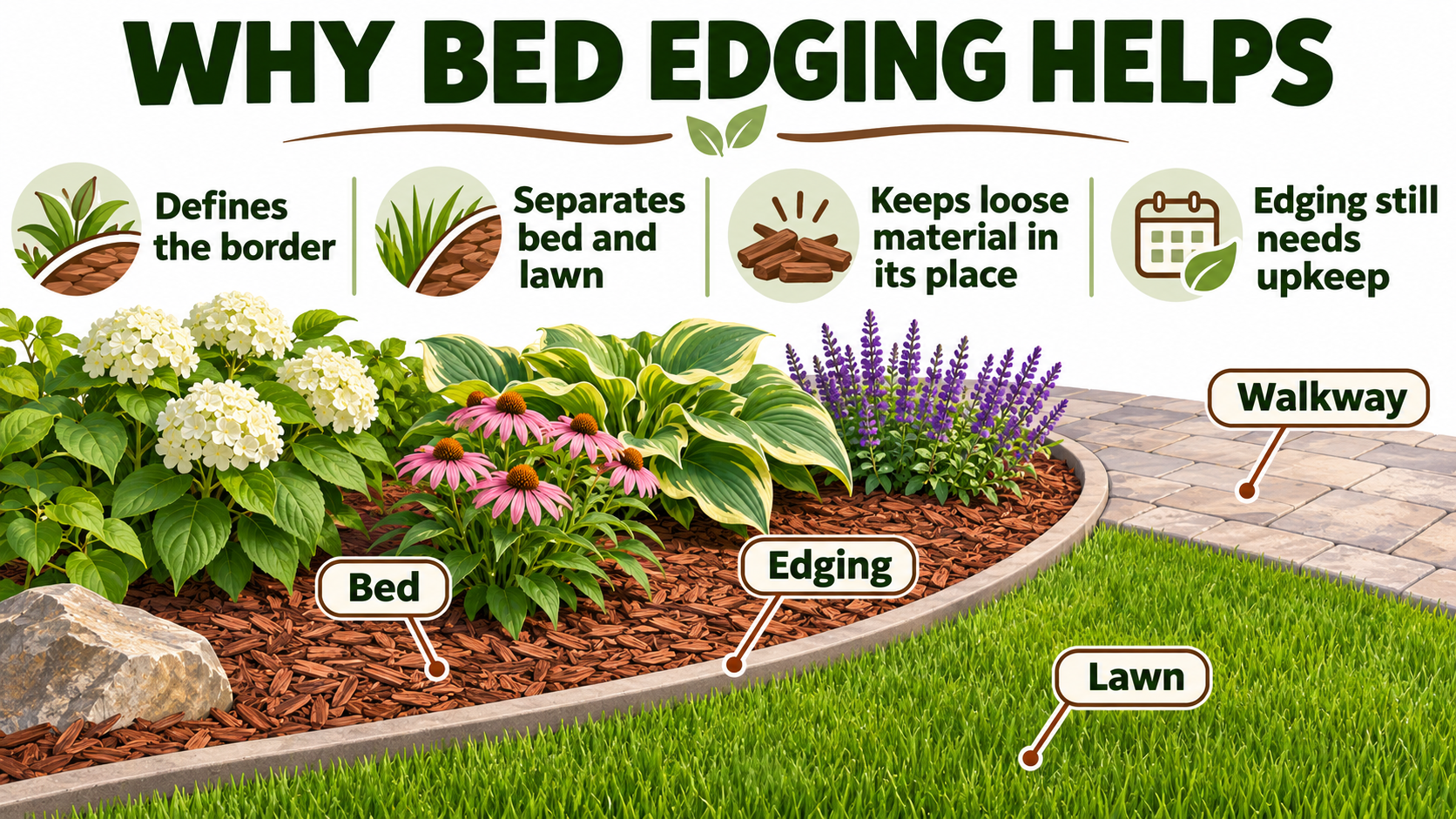
Edging helps define the bed and separate loose landscape material from nearby turf or walkways. The appropriate type depends on the layout, material, bed height, and desired appearance. Discuss existing edging and any new borders during the consultation.
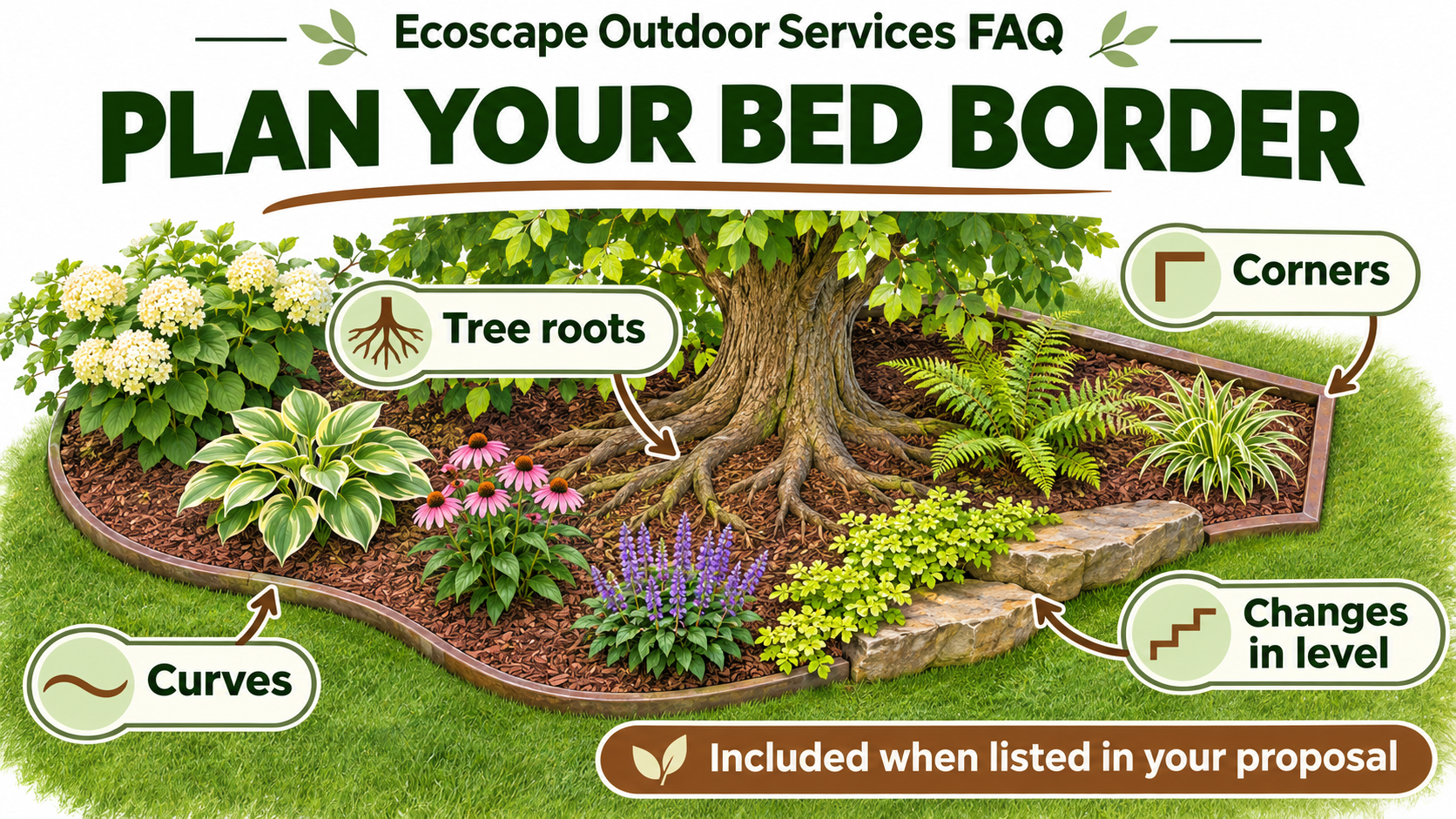
Edging installation is included when listed in your proposal. The scope should identify the product, location, and any removal or adjustment of an existing border. Curves, tree roots, corners, and changes in elevation influence the installation.
A border does not eliminate all movement or maintenance. Keep material at an appropriate level inside the bed and avoid piling it against the edge. Report loose or damaged edging to the office so the required repair is reviewed.
Think about how you want the bed to look beside the rest of the property. A crisp boundary can be important around a formal lawn, driveway, or carefully maintained planting bed. Show us places where material currently spills out, a mower cannot follow the edge cleanly, or an existing border has shifted. Those details help us review the right finish rather than simply adding more material.
Ask the office to distinguish reusing an existing border from repairing it or installing a new one. Edging and drainage solve different problems, so an attractive border should not be treated as a guarantee against runoff or washout.
Book Rock and Gravel Installation online to arrange an onsite consultation.
Book a rock and gravel consultation
Related FAQs