Do you remove the existing grass before installing sod?
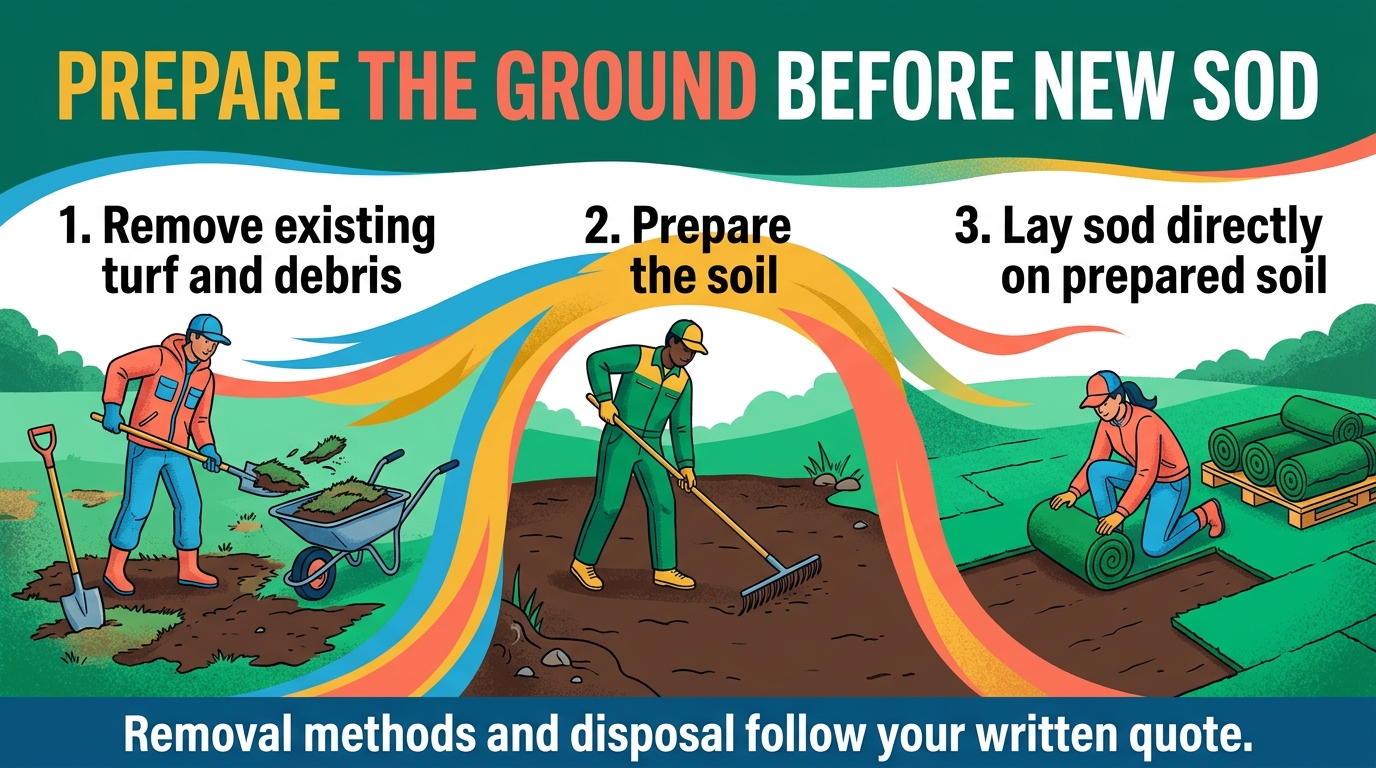
For a full replacement, we identify the existing turf, weeds, roots, and debris requiring removal before preparing the ground. The removal method and disposal scope appear in your quote.
New sod needs direct contact with prepared soil. Installing it over an existing lawn or thick dead-grass layer interferes with rooting and leaves an uneven surface.
For spot repairs, we prepare the damaged area and match the surrounding grade. Where aggressive weeds remain, additional treatment or preparation requires a separate plan before installation.
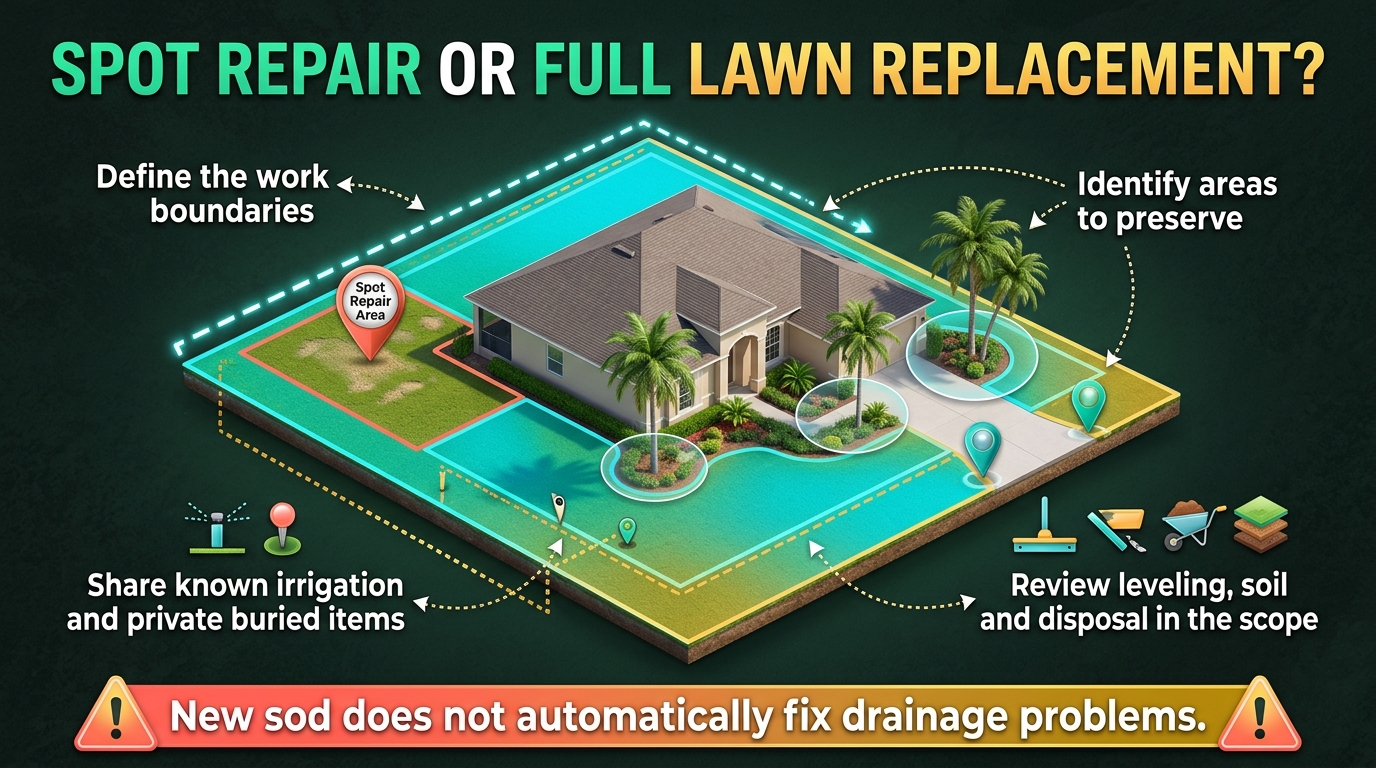
During the onsite review, show us the full area you want replaced and any areas you want preserved. A clearly defined boundary helps distinguish a localized repair from a larger lawn renovation. Tell us about irrigation components, buried private installations, access restrictions, and any history of persistent wet areas before work is planned.
Removal is only one part of successful preparation. Review whether leveling, added soil, irrigation work, and disposal are included in the approved scope. Installing sod does not automatically correct drainage or the reason the previous lawn struggled. Those concerns should be discussed before new material is laid, with any additional work identified and approved separately.
Book an onsite sod consultation online.
Book a sod installation consultation
Related FAQs