How are soil preparation and drainage concerns handled?
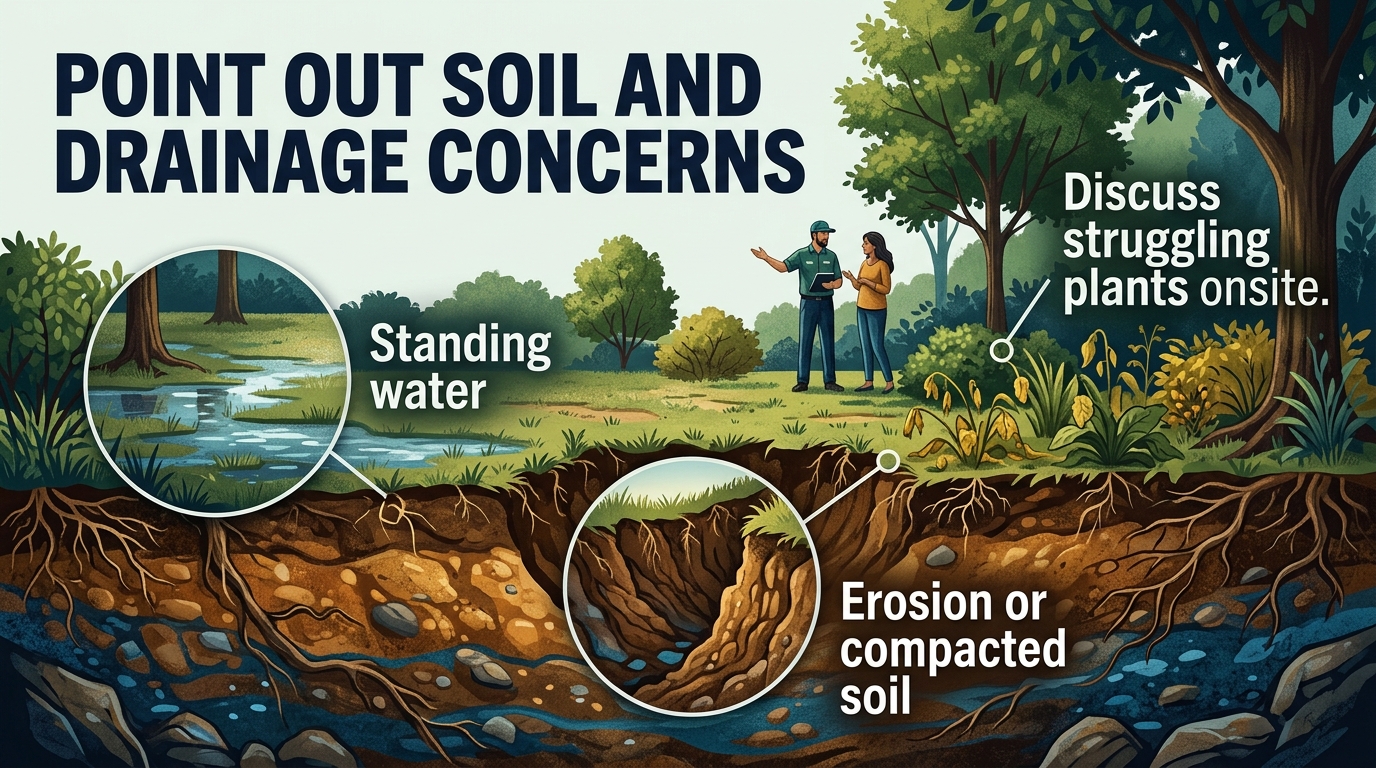
Tell us about standing water, erosion, compacted soil, or areas where plants have struggled. We will review these concerns onsite and discuss the preparation or additional evaluation appropriate for the proposed landscape work.
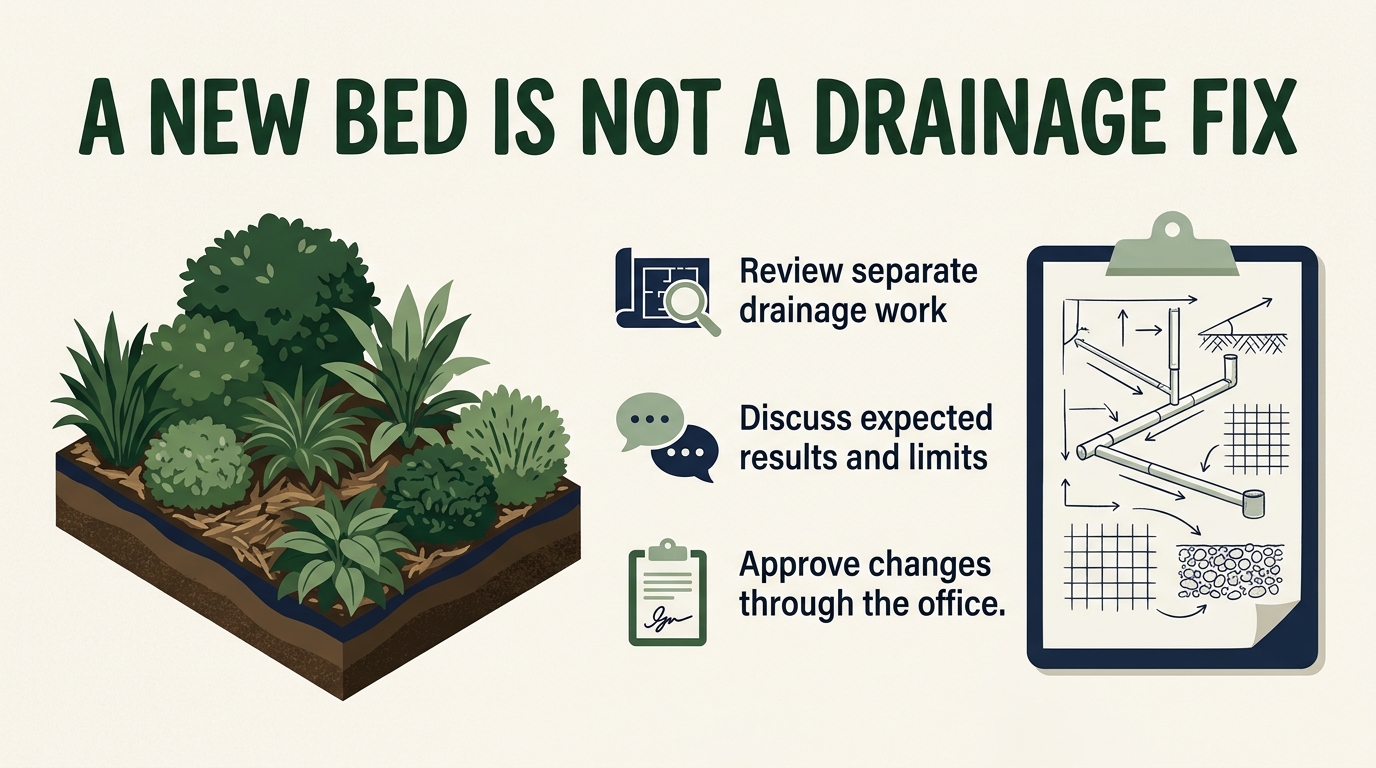
Planting and covering a bed do not automatically correct a drainage problem. Soil work, grading, drainage improvements, and disposal need to be identified separately when included in your project. Conditions discovered during preparation might require a revised approach.
Review any proposed changes with the office before additional work proceeds. More complex drainage concerns may require a specialist or separate project. Discuss the expected result and any limitations of the proposed work before approving it.
Photographs taken during or shortly after rain can help explain a problem that is not visible during a dry-weather consultation. Identify where water enters the area, where it gathers, and any previous work intended to correct it. You do not need to diagnose the cause, but this history helps define the concerns the project should address.
Before approval, distinguish ordinary planting preparation from a separate drainage solution. Confirm the areas, materials, removal, and finish included in the proposal. A request for a new landscape appearance should not leave an unresolved water problem hidden beneath fresh plants or mulch.
UF/IFAS: Florida-Friendly Landscaping principles
Book Landscaping Services online to arrange an onsite consultation.
Book a landscaping consultation
Related FAQs