
Will irrigation work require digging, and how will you restore the disturbed areas?
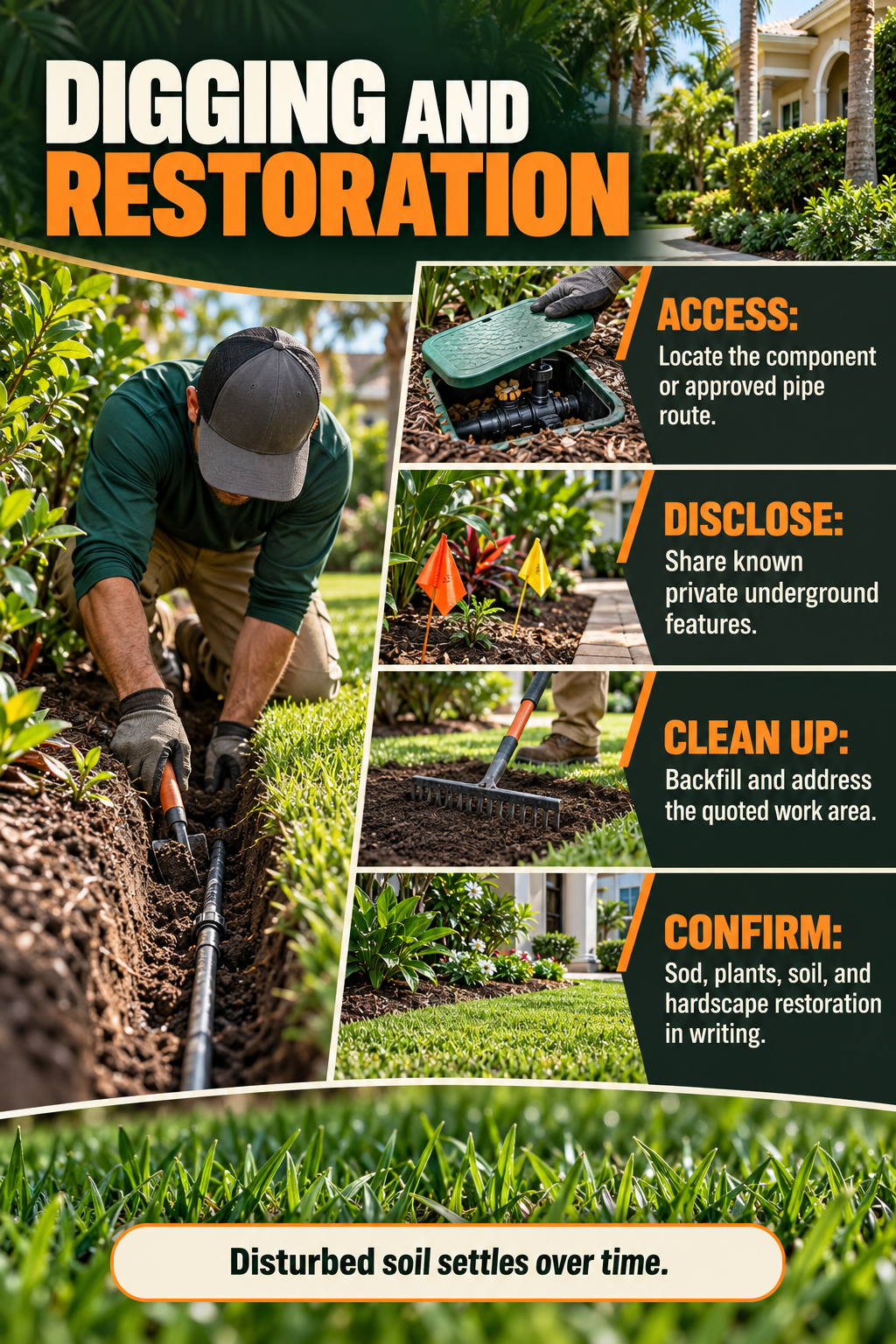
Some irrigation work requires digging to reach pipes, risers, valves, or wiring. A controller adjustment or accessible head replacement usually involves less disturbance than a new system, concealed leak repair, or pipe installation.
We review access and the anticipated work area before starting. Tell us about private utility lines, pool equipment piping, drainage systems, landscape lighting cables, pet fencing, and other underground features. Public utility locating does not identify every private installation on the property.
Our goal is to limit disturbance while providing adequate access for the approved work. Excavated areas require backfilling and cleanup. Trenched soil settles over time, and existing turf does not always return to its previous appearance immediately.
Your proposal identifies included restoration. New sod, replacement plants, imported soil, extensive grading, and paver or concrete restoration are included only when specifically listed. Work beneath driveways or walkways requires separate planning. We discuss additional findings and obtain approval before expanding the scope.
Before approving the work, ask which surfaces will be disturbed and what the area should look like when the agreed repair is finished. Backfilling an excavation is not the same scope as replacing sod, rebuilding a bed, or restoring paving. Defining that difference upfront helps avoid expecting a complete landscape renovation from a repair-only quote.
Keep access to the affected area available and tell the office about anything that must be protected or moved. If the work uncovers a condition beyond the approved repair, review the proposed additional work, restoration, and price with the office rather than assuming it is already included.
Book an irrigation consultation online. For an active leak or urgent concern, contact the office at (813) 518-5555.
Book an irrigation consultation
Related FAQs
