
Amanda's Pennant
Celithemis amanda
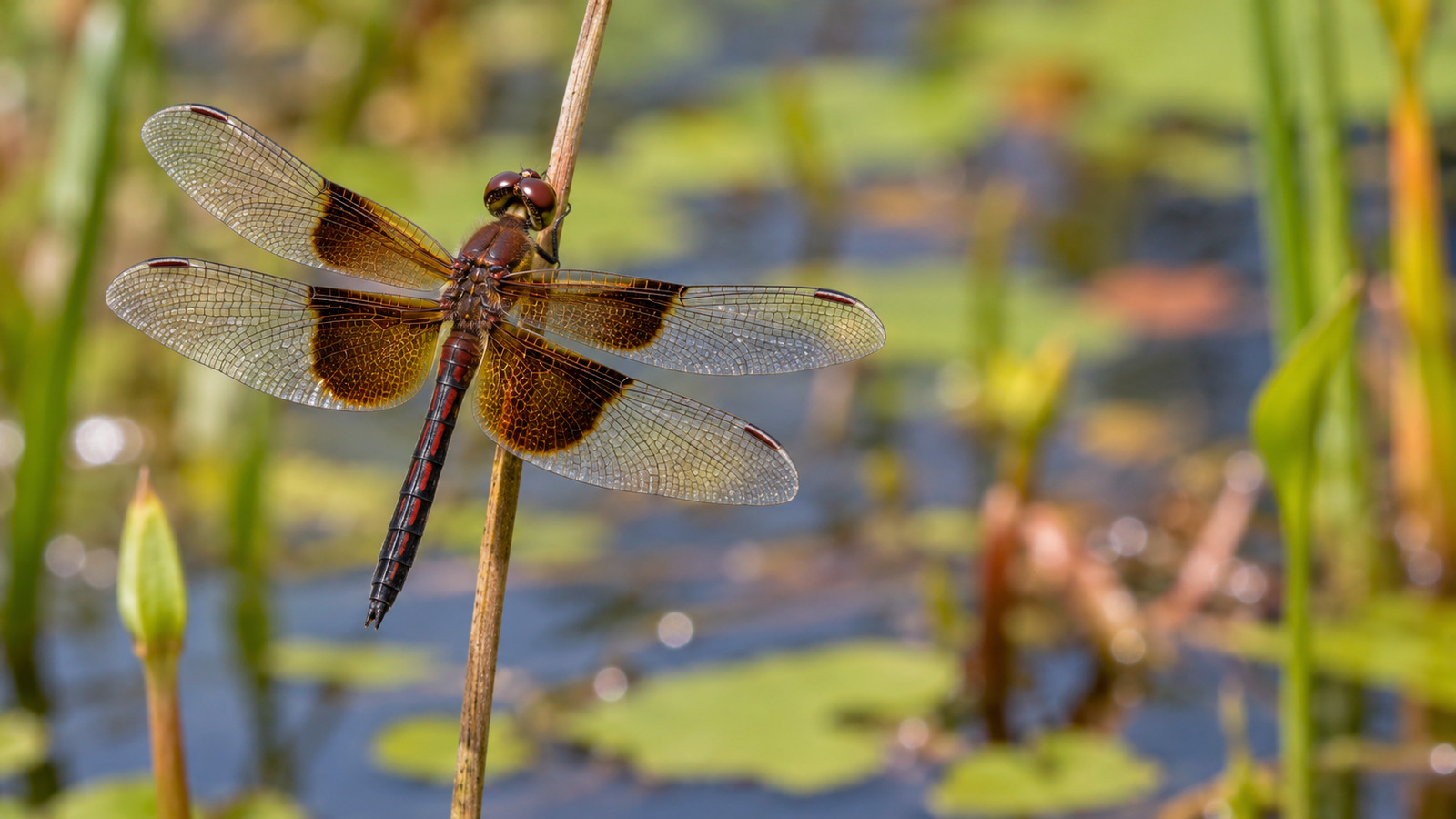
Amanda's Pennants are small southeastern dragonflies with amber-and-dark basal wing markings, found around calm, vegetation-rich ponds and marshes in northern and central Florida.
Amanda's Pennants are small skimmer dragonflies native to the southeastern United States. In Florida they occupy sunny, calm freshwater habitats with abundant emergent and partly submerged vegetation.
Adults hunt over water and nearby openings, while aquatic nymphs develop below the surface. The species was originally described as Diplax amanda and is one of several patterned pennants that require careful observation for identification.
Habitat:
Lakes and Ponds, Freshwater Wetlands
Area / Range:
Florida Panhandle, North Florida, Central Florida
Diet:
Adults catch mosquitoes, midges, flies, and other small flying insects in the air. Aquatic nymphs prey on insect larvae, small crustaceans, and other small freshwater animals.
Behavior:
Adults perch on the tips of stems and reeds, then make short flights to capture prey or patrol breeding water. Females place eggs in suitable aquatic habitat, where the nymphs live among submerged vegetation before emerging as adults.
Day
Active Times:
Best time to see:
Warm, sunny hours from late spring through summer around quiet ponds, marshes, and wetland edges with dense emergent vegetation.
Florida Native Status:
Native
Conservation Status:
Considered secure across its southeastern U.S. range and not federally or state listed in Florida. Healthy local populations depend on clean, calm water and intact shoreline vegetation.
Safety Level:
Harmless
Safety Information:
Amanda's Pennants do not sting and are not aggressive toward people or pets. Like other dragonflies, they may nip only if tightly handled, so observe without grabbing.
Benefits to Property:
Adults consume many small flying insects, and aquatic nymphs help regulate freshwater invertebrate communities. Vegetated ponds that support dragonflies also provide habitat for frogs, birds, and other beneficial wildlife.
Property Concerns:
They do not damage plants, lawns, buildings, or pond structures. Broad insecticide use, polluted runoff, shoreline clearing, and removal of all aquatic vegetation can reduce breeding habitat.
Fun Fact:
The accepted name Celithemis amanda traces back to the original 1861 name Diplax amanda. Pennants are named for their habit of perching conspicuously on stem tips, where they can resemble tiny flags.
Wildlife Laws:
Amanda's Pennants have no special statewide protected designation, but collecting or disturbing wildlife may be restricted in parks, preserves, refuges, and other public lands. Follow all site rules and obtain permission before collecting.
Identification:
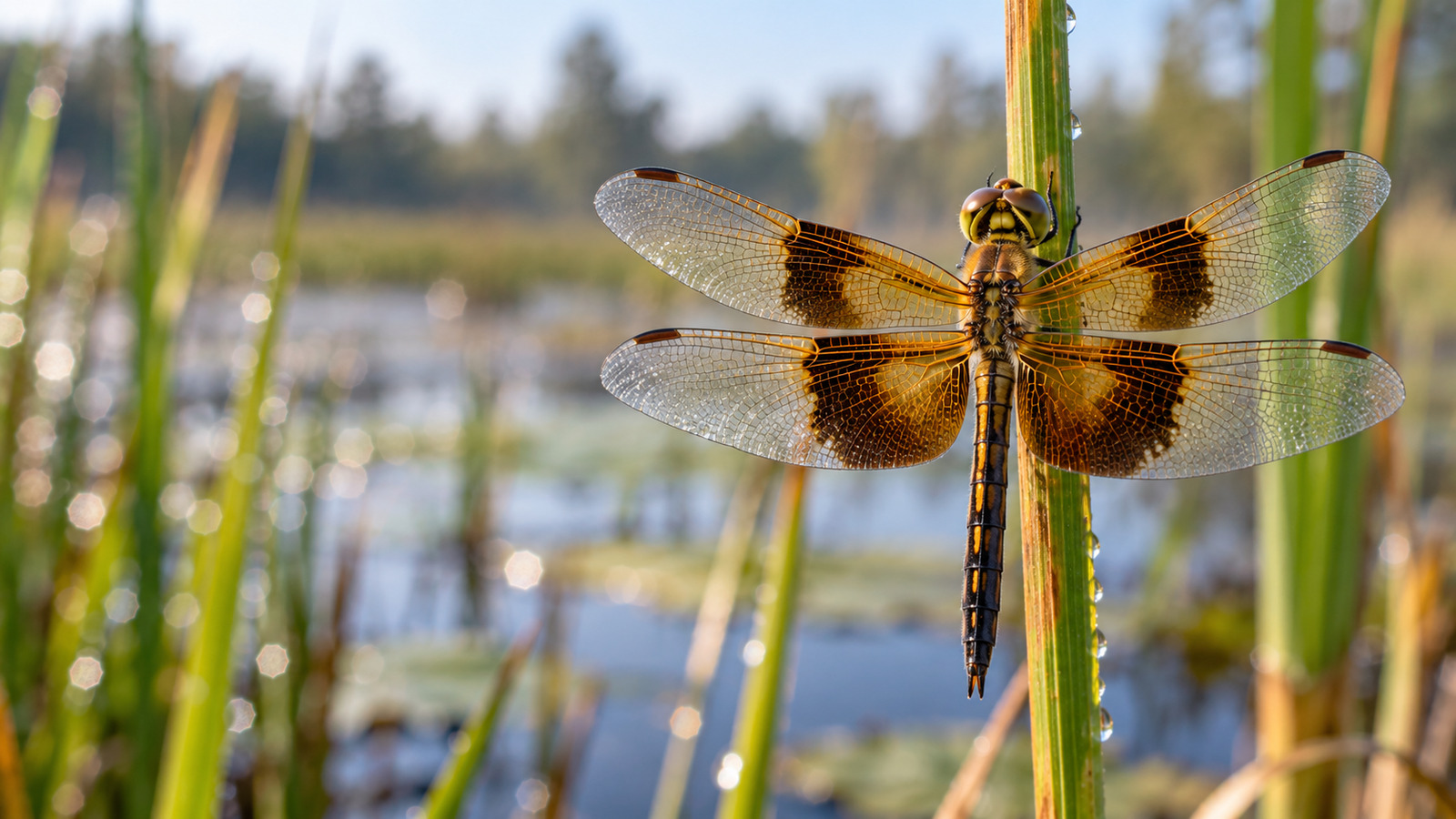
Adults measure about 1.1 to 1.2 inches long, with a wingspan near 1.8 to 2.0 inches. The face is yellow in females and younger individuals, becoming darker brown or reddish in mature males. The thorax is yellow-brown to reddish brown, the abdomen is mostly dark with small yellow or red dorsal markings, and the wing bases are amber-brown with a distinct dark band.