
American Alligator
Alligator mississippiensis
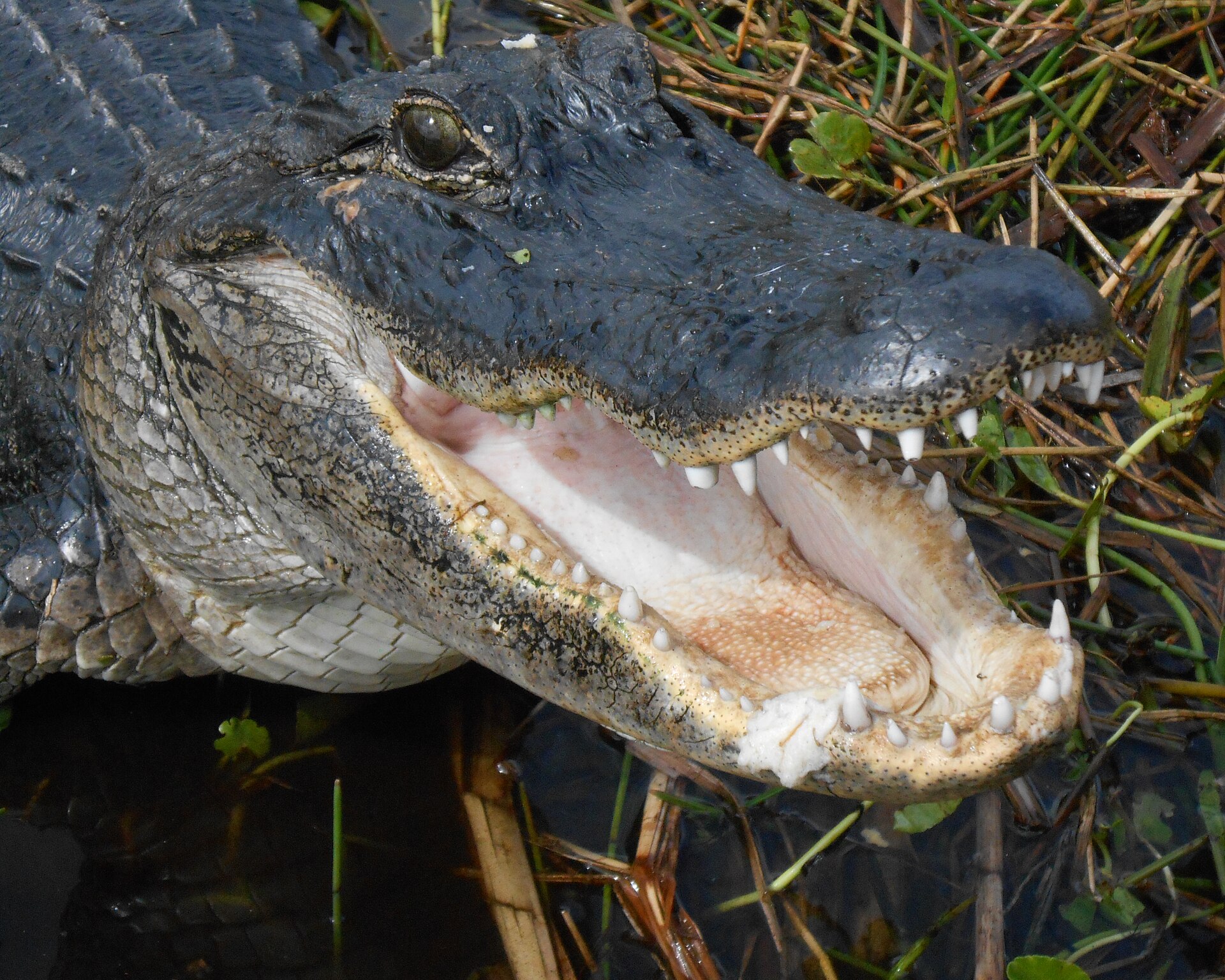
The American alligator is one of Florida’s most recognizable native reptiles and an important engineer of wetland habitat.
American alligators live throughout Florida in lakes, ponds, marshes, swamps, canals, and slow-moving rivers. Their broad rounded snout and dark coloration help separate them from the narrower-snouted American crocodile.
Alligators shape wetlands by creating holes that hold water during dry periods. These areas provide refuge for fish, turtles, birds, and other wildlife.
Habitat:
Freshwater Lakes, Ponds, Marshes, Swamps, Canals, Slow-Moving Rivers
Area / Range:
Statewide, All 67 Counties
Diet:
Young alligators eat insects, amphibians, small fish, and invertebrates. Adults eat fish, turtles, snakes, birds, and small mammals.
Behavior:
Alligators are opportunistic predators. They often bask near water and become more active as temperatures warm. Females guard nests and young.
Dawn, Dusk, Night
Active Times:
Best time to see:
Warm months near freshwater, especially around dawn and dusk.
Florida Native Status:
Native
Conservation Status:
Federally protected due to similarity of appearance to the threatened American crocodile. Managed in Florida.
Safety Level:
Dangerous. Keep Distance
Safety Information:
Never feed an alligator. Keep children and pets away from the water’s edge. Swim only in designated areas during daylight. Report a concerning alligator to the FWC Nuisance Alligator Hotline at 866-392-4286.
Benefits to Property:
Alligator holes retain water during dry weather and support wetland wildlife.
Property Concerns:
Alligators near homes pose a serious risk to people and pets. Feeding removes their natural fear of humans.
Fun Fact:
Florida’s record alligator exceeded 14 feet in length. Alligators communicate with bellows, head slaps, and low-frequency vibrations.
Wildlife Laws:
Florida law prohibits feeding, harassing, possessing, or taking alligators without proper authorization. Only licensed and permitted participants may legally take them.
Identification:
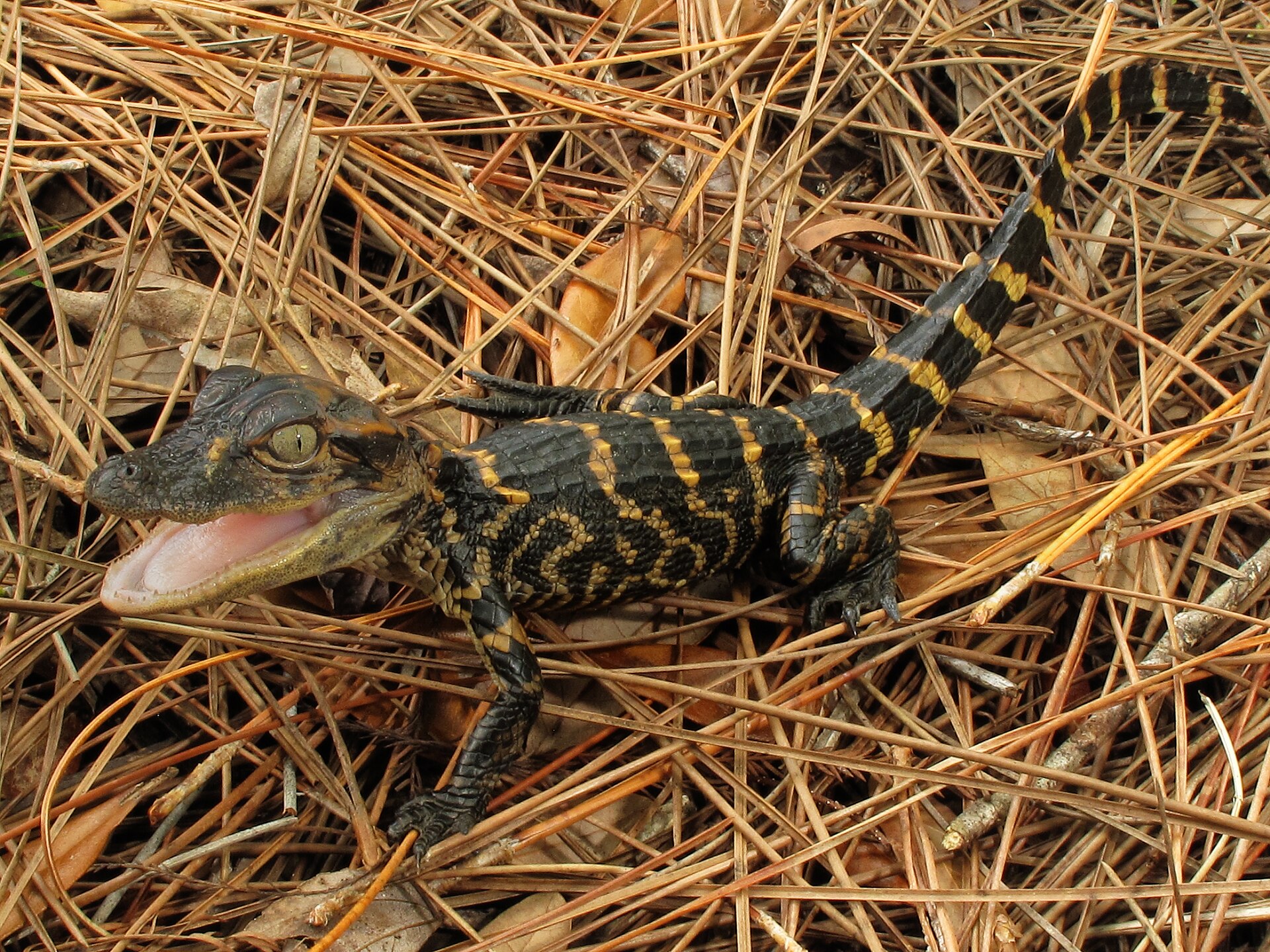
Look for a broad rounded snout, dark gray to nearly black coloration, heavy armored scales, and a powerful flattened tail. Young alligators have yellowish bands across the body and tail.
Credits:
Facts: Florida Fish and Wildlife Conservation Commission. Images: adult alligator and juvenile alligator, Wikimedia Commons.