
American Avocet
Recurvirostra americana
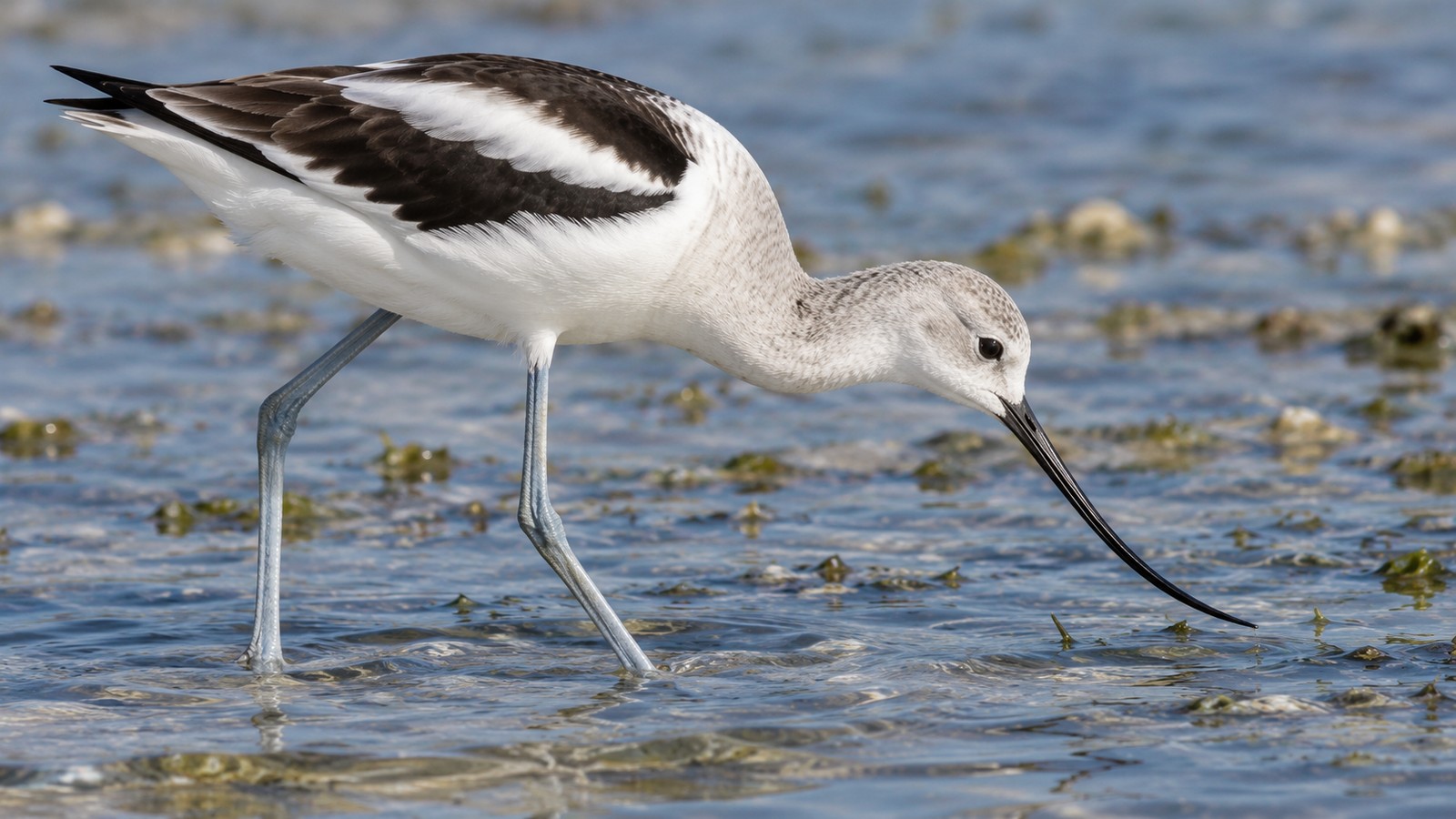
The American Avocet is a long-legged shorebird whose slim, upturned bill sweeps through shallow water for small aquatic animals.
American Avocets visit coastal wetlands and shallow impoundments during the cooler months. The black-and-white body, blue-gray legs, and sharply upturned bill give this shorebird a distinctive outline. Its head and neck are pale gray-white in winter and rusty during the breeding season.
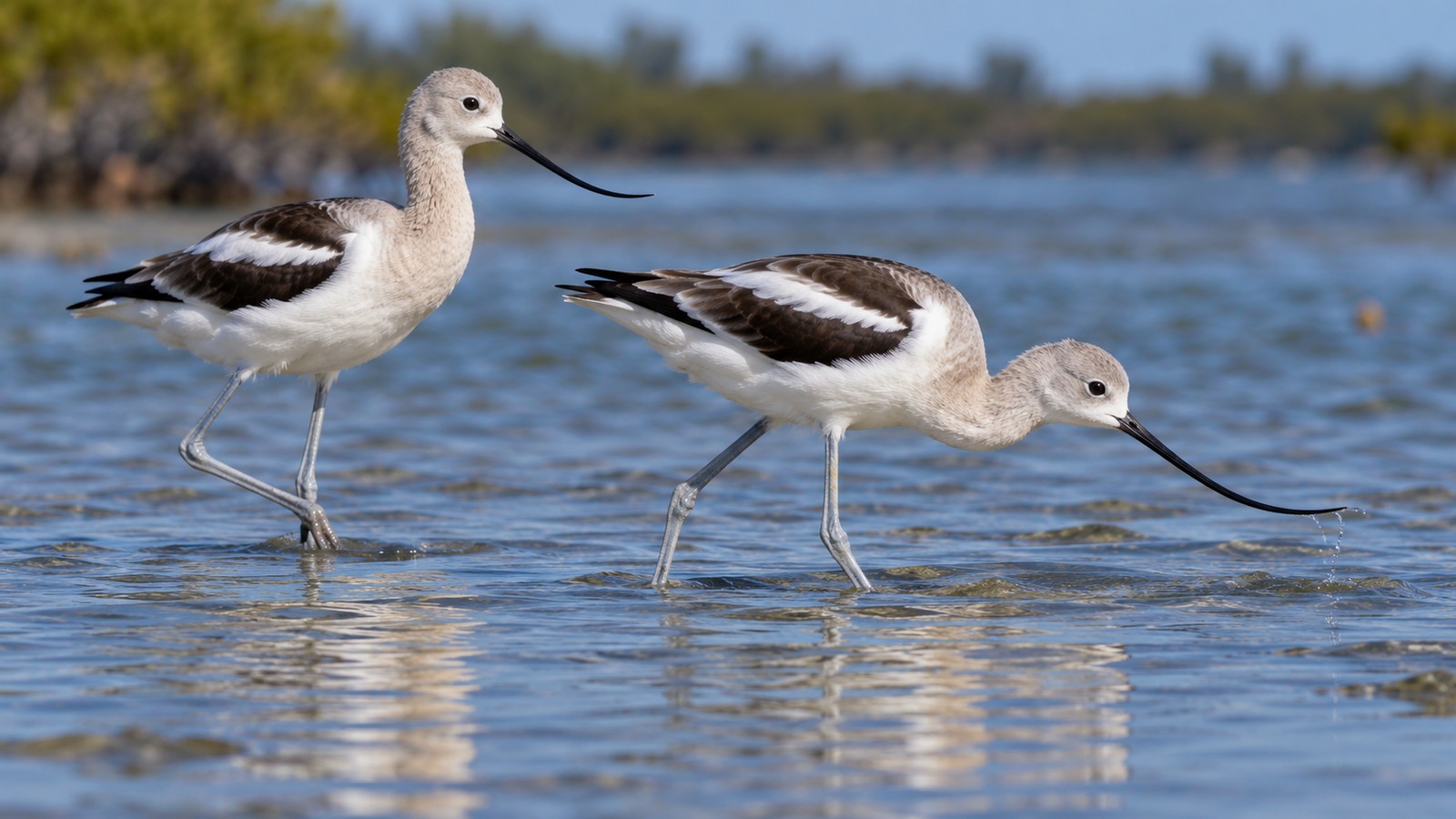
Avocets favor open, shallow water where they can sweep their bills from side to side. In Florida, look along tidal flats, lagoons, salt ponds, and managed wetlands. They often forage in groups with other shorebirds.
Habitat:
Mangroves and Salt Marshes, Estuaries and Bays, Freshwater Wetlands
Area / Range:
Gulf Coast, Atlantic Coast, North Florida, Central Florida, South Florida
Diet:
Aquatic invertebrates, including small crustaceans, midge larvae, water beetles, and other wetland insects. It also takes small fish and some aquatic plant seeds.
Behavior:
Wades through shallow water while moving its slightly open bill from side to side. It also pecks at prey and sometimes swims. Wintering birds often feed and rest in loose flocks.
Day
Active Times:
Best time to see:
Search open mudflats, shallow coastal lagoons, and wetland impoundments from fall through spring. Morning light makes its bill and black-and-white wing pattern easier to see.
Florida Native Status:
Native
Conservation Status:
Native migratory shorebird. Cornell Lab of Ornithology lists the species as low conservation concern, though wetland loss and contamination remain threats.
Safety Level:
Harmless. Respect Nests
Safety Information:
Watch from a distance and keep dogs away from feeding birds. Give any nesting shorebirds wide space and follow wetland closure signs.
Benefits to Property:
Consumes small wetland invertebrates and contributes to the bird diversity of healthy coastal and managed wetlands.
Property Concerns:
Causes no meaningful property damage. Filling or heavily altering shallow wetland edges can reduce feeding habitat.
Fun Fact:
The characteristic side-to-side bill sweep is called scything. Females often have a more strongly curved bill than males.
Wildlife Laws:
American Avocets are protected under the Migratory Bird Treaty Act. Do not capture, injure, or disturb birds, eggs, or active nests.
Identification:
Look for a tall, slender shorebird with a fine black bill that curves upward, long blue-gray legs, a mostly white body, and bold black patches on the back and wings. Winter birds have pale gray-white heads; breeding birds develop a rusty head and neck.
The Black-necked Stilt also has long legs and black-and-white plumage, but its bill is straight and its legs are pink-red.