
American Eel
Anguilla rostrata
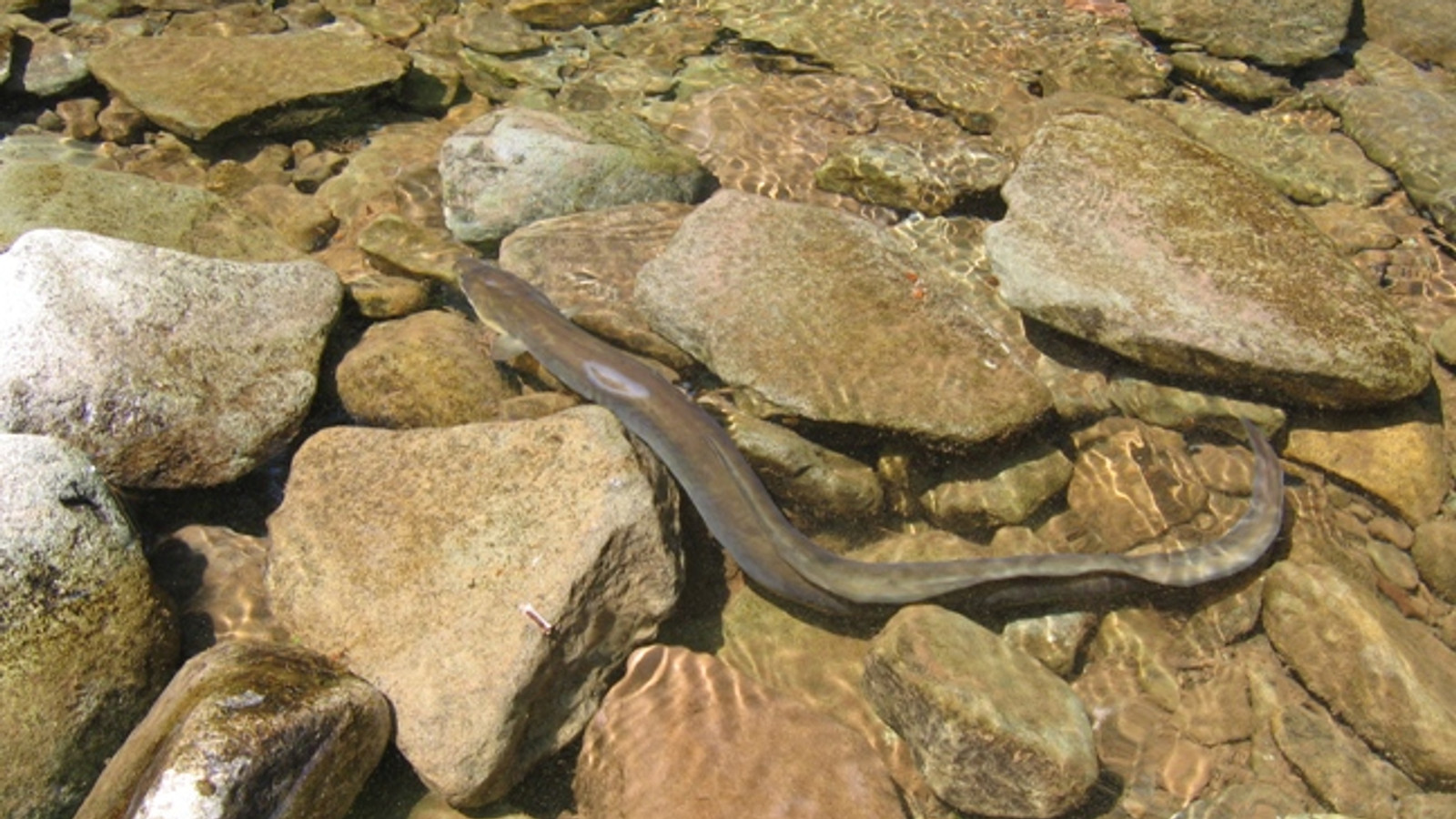
A native fish that grows in coastal rivers and returns to the Sargasso Sea to spawn.
American eels hatch in the Sargasso Sea. Young eels enter Atlantic coastal waters and move into estuaries, rivers, and sometimes freshwater lakes, where they grow for years before returning to sea to spawn.
Their long, flexible bodies let them hide under rocks and vegetation. Florida researchers monitor young eels entering coastal systems and study pressures on the species.
Habitat:
Rivers and Springs, Freshwater Wetlands, Estuaries and Bays, Canals and Ditches
Area / Range:
Atlantic Coast, North Florida, Central Florida
Diet:
Feeds on aquatic insects, small fish, crustaceans, frogs, and carrion.
Behavior:
Often shelters by day and forages along the bottom at night. It moves between salt and freshwater during its life cycle.
Night
Active Times:
Best time to see:
Most often encountered at night in connected coastal rivers and estuaries
Florida Native Status:
Native
Conservation Status:
Declining in portions of its range; review current fishery guidance
Safety Level:
Low risk. Do not handle unnecessarily
Safety Information:
Do not handle wildlife unnecessarily. Release accidentally caught eels according to current fishing rules.
Benefits to Property:
Acts as both predator and prey in rivers and estuaries and contributes to connected aquatic food webs.
Property Concerns:
Barriers, altered flow, pollution, and harvest pressure affect eel movement and survival. An eel in a pond without coastal access is difficult to identify confidently from a glance.
Fun Fact:
American eels spawn at sea even when they spent much of their growth period in freshwater.
Wildlife Laws:
Florida regulates commercial freshwater American Eel harvest through licenses and permits. Check current FWC fishing rules before collecting or selling eels.
Identification:
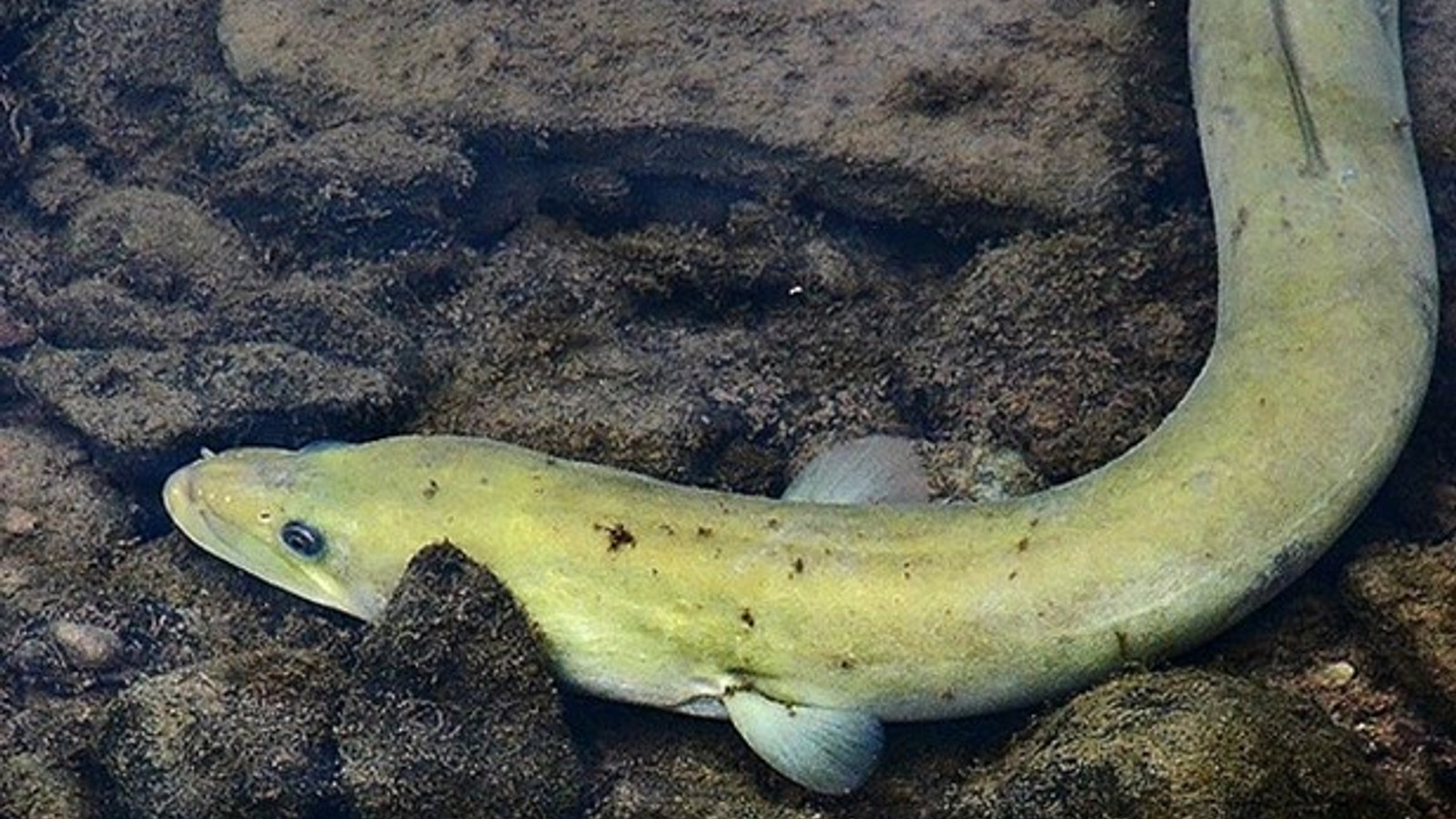
Look for a long, smooth, snake-like fish with a continuous fin along its back, around its tail, and forward along its underside. Small pectoral fins sit behind the gill openings.
Growing eels are often yellow-brown or olive; departing adults become darker above and silvery below. Unlike a snake, an eel has gills and fins.