
American Oystercatcher
Haematopus palliatus
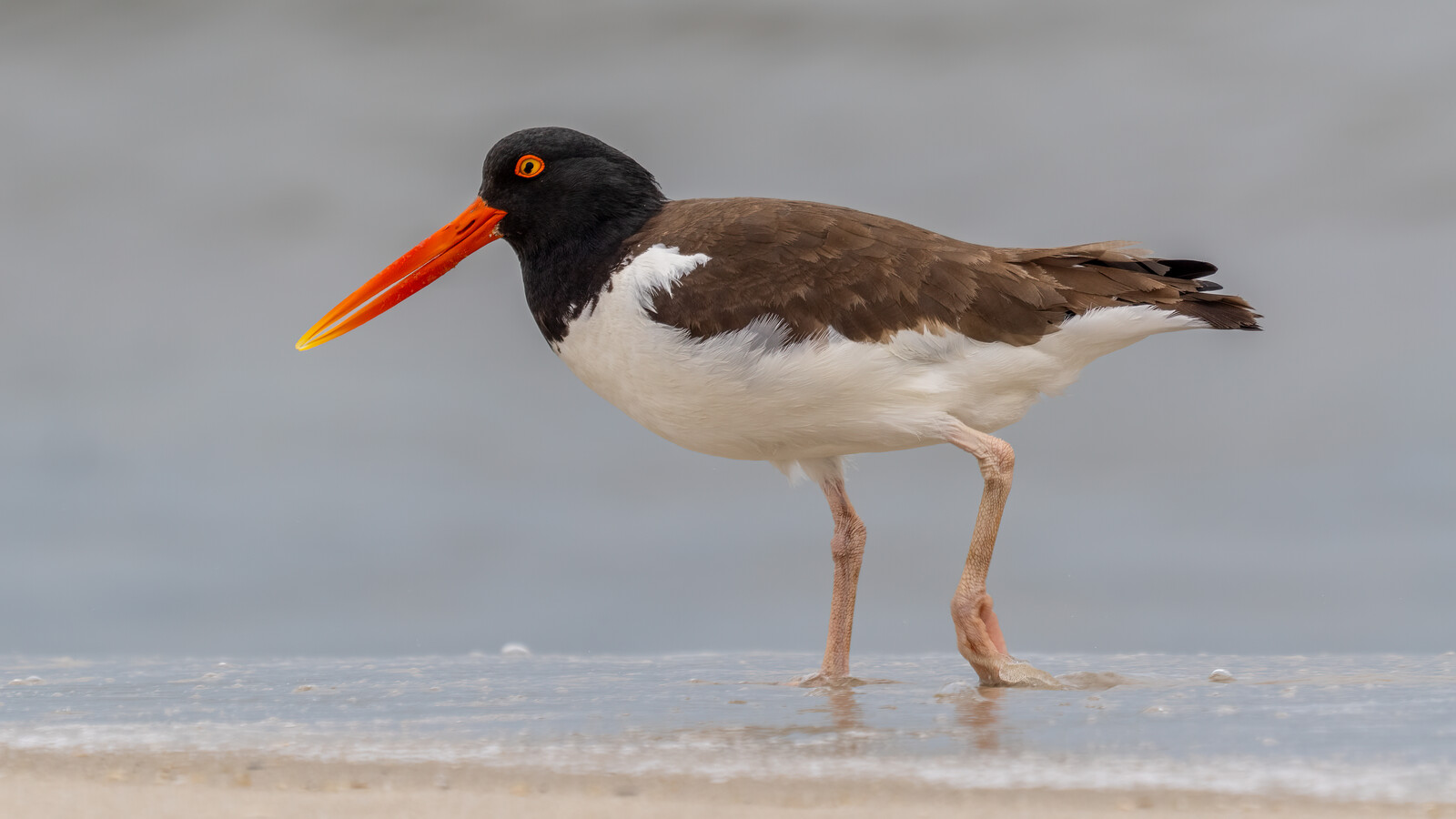
American Oystercatchers are striking black, brown, and white shorebirds with bright orange-red bills built for opening shellfish.
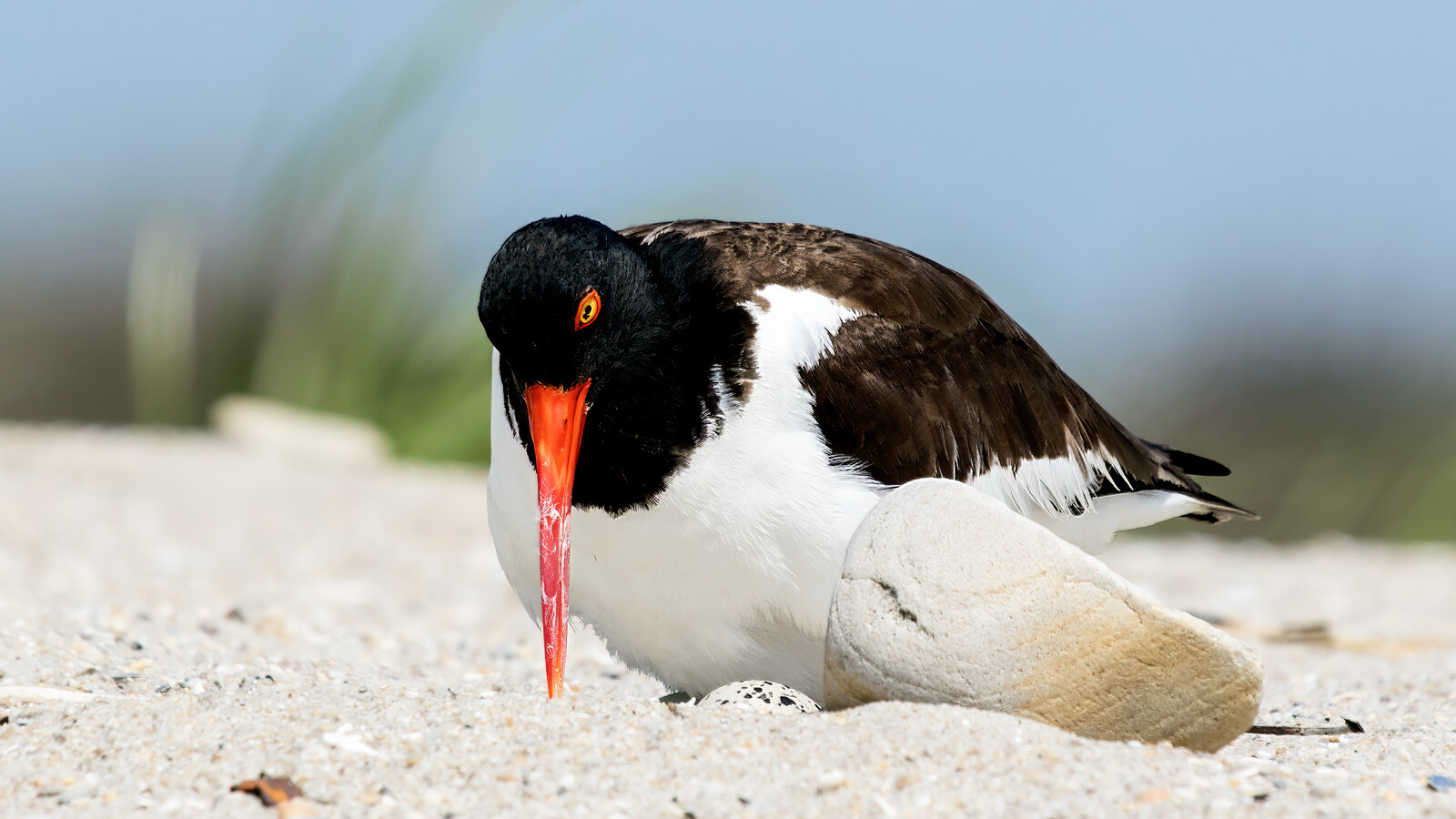
American Oystercatchers live year-round along Florida’s coasts. They feed on oyster reefs, tidal flats, and shell bars, then nest on open beaches, spoil islands, and some gravel rooftops.
Because eggs and chicks blend into sand and shell, people and pets can approach dangerously close before noticing them.
Habitat:
Beaches and Dunes, Estuaries and Bays, Mangroves and Salt Marshes
Area / Range:
Atlantic Coast, Gulf Coast
Diet:
They eat oysters, mussels, clams, marine worms, crabs, and other intertidal invertebrates.
Behavior:
Pairs defend feeding and nesting territories. They probe, pry, and stab shellfish with the bill and become loud and agitated when a nest or chick is approached.
Day
Active Times:
Best time to see:
Around low tide on oyster bars, mudflats, sandy islands, and quiet shell beaches.
Florida Native Status:
Native
Conservation Status:
A conservation-priority shorebird. Florida nesting pairs are sensitive to disturbance, habitat loss, flooding, and predators.
Safety Level:
Low Risk
Safety Information:
Back away when adults alarm-call, keep dogs leashed, and never move eggs or chicks. Coordinate roof or shoreline work with FWC when nesting birds are present.
Benefits to Property:
They indicate productive shorelines and oyster reefs and add exceptional wildlife value to coastal properties.
Property Concerns:
Nesting birds may use gravel roofs or nearby beaches, which can delay maintenance or require protected work zones until chicks leave.
Fun Fact:
The bill is compressed from side to side and works like a specialized tool for handling bivalves. Mated pairs often remain together for years.
Wildlife Laws:
American Oystercatchers and their nests are protected by federal migratory-bird law and Florida wildlife rules. Active nests must not be moved, damaged, or disturbed without authorization.
Identification:
Look for a large shorebird with a black head, brown back, white belly, thick orange-red bill, yellow eye, and pink legs. In flight, a bold white wing stripe is visible.
Credits:
Facts: species reference. Images: primary and secondary, Wikimedia Commons.