
American Pipit
Anthus rubescens
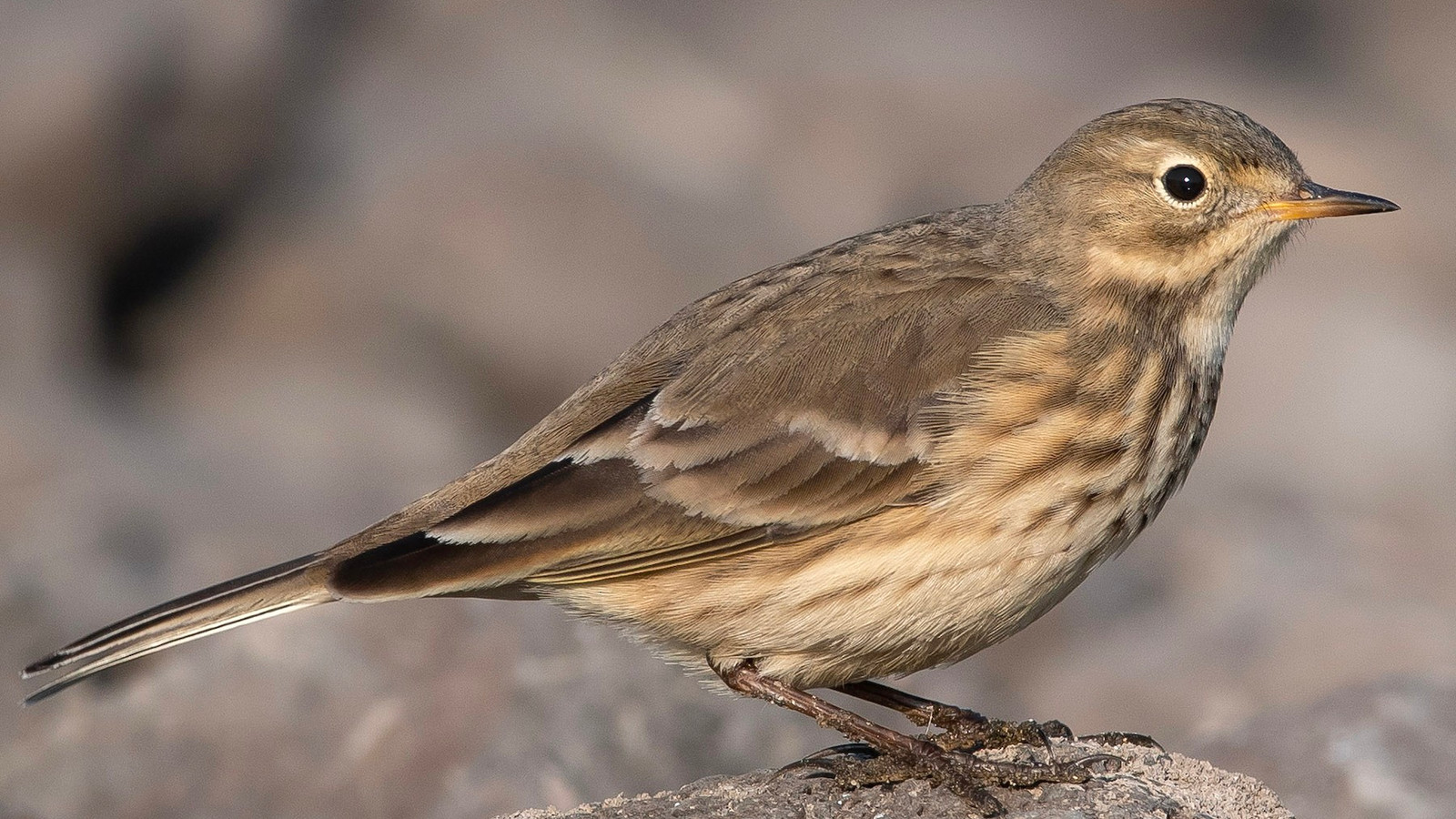
A subtle brown songbird that visits Florida in winter, walking open ground with a characteristic tail bob.
The American pipit is a slender ground-dwelling songbird that winters in Florida after breeding in Arctic and alpine regions. It favors broad, open landscapes where it can walk and run while searching for food.
Its quiet colors blend into fields, shorelines, mudflats, and sparse grass, but its repeated tail bobbing and sharp pip-it call help reveal it.
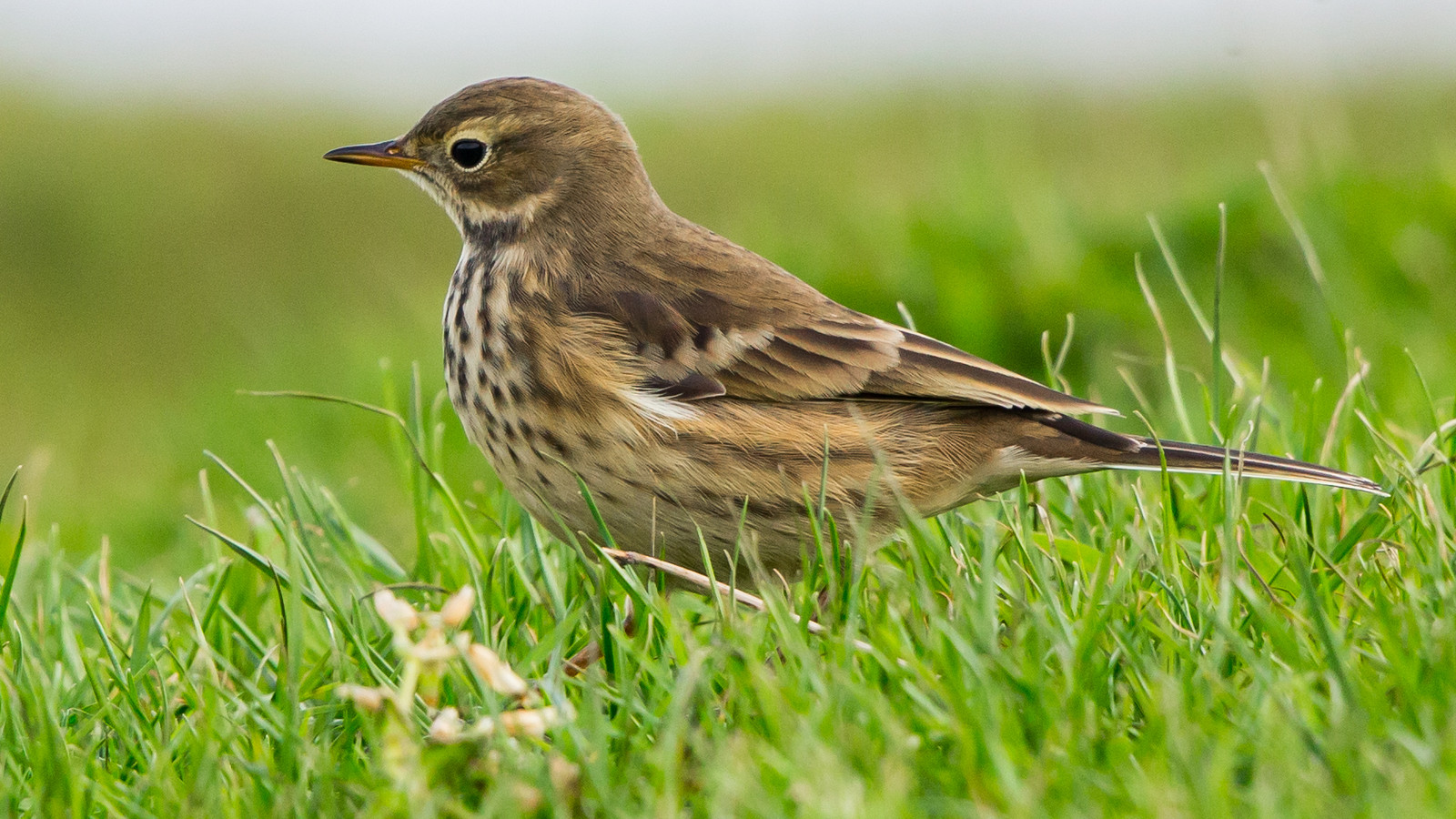
Habitat:
Grasslands and Agricultural Areas, Beaches and Dunes, Freshwater Wetlands
Area / Range:
Statewide
Diet:
American pipits eat insects, insect larvae, spiders, and other small invertebrates. Seeds and other plant material become more important during winter when insects are less abundant.
Behavior:
They forage on foot in loose flocks, pausing frequently to bob the tail. When flushed, they rise with wavering flight and often give a thin pip-it call before circling back to open ground.
Day
Active Times:
Best time to see:
October through April in short grass, sod farms, mudflats, and open shorelines
Florida Native Status:
Native winter migrant
Conservation Status:
Low Concern; not federally listed
Safety Level:
Harmless
Safety Information:
This small bird is harmless. Observe from a respectful distance and avoid repeatedly flushing feeding flocks, especially during cold weather.
Benefits to Property:
American pipits consume insects and other small invertebrates in lawns, fields, and agricultural areas and contribute to the seasonal biodiversity of open habitats.
Property Concerns:
They cause no meaningful property damage. Heavy pesticide use and loss of low, open vegetation can reduce suitable feeding habitat.
Fun Fact:
American pipits breed in tundra and high mountains, then shift to low, open country for winter. Their constant tail bobbing is one of the quickest field clues.
Wildlife Laws:
American pipits are protected by the federal Migratory Bird Treaty Act. Do not capture, harm, possess, or disturb birds, nests, eggs, or young without authorization.
Identification:
Look for a gray-brown back, pale eyebrow, thin bill, white outer tail feathers, and a buffy breast marked with fine dark streaks. Adults are about 6 to 7 inches long, with relatively long legs and a habit of pumping the tail while walking.