
American Redstart
Setophaga ruticilla
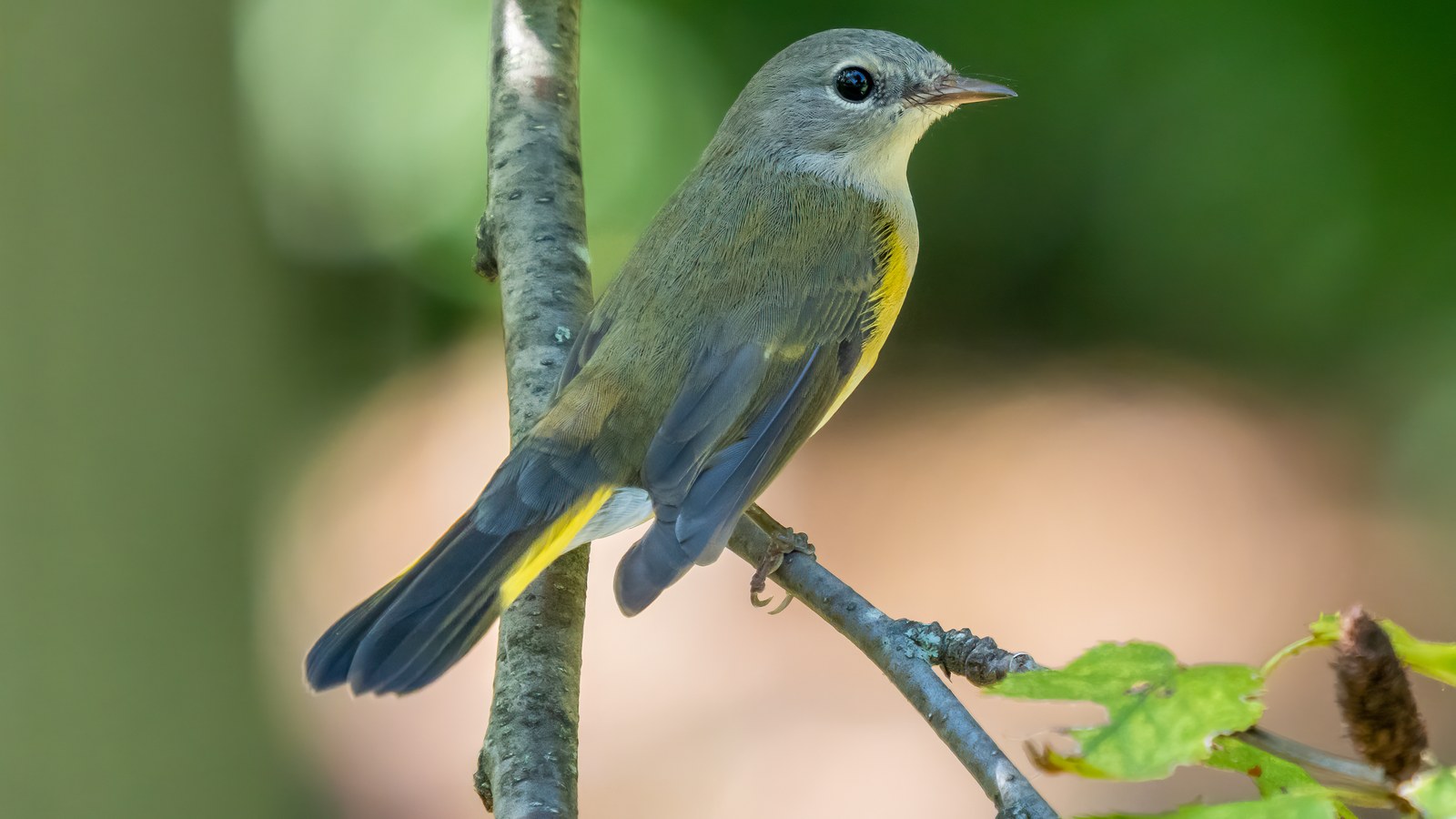
The American redstart is an active Florida warbler that flashes bright wing and tail patches while hunting insects through trees and shrubs.
American redstarts pass through Florida during spring and fall migration, and many spend the winter in South Florida and the Keys. They use wooded parks, hammocks, mangroves, stream corridors, and mature residential trees.
The bird's flashing wing and tail patches help flush insects from leaves and branches. Rapid movement and frequent short flights often reveal the bird before its thin, high notes are heard.
Habitat:
Forests and Woodlands, Mangroves and Salt Marshes, Urban and Residential Areas
Area / Range:
Statewide
Diet:
They eat flies, moths, caterpillars, beetles, leafhoppers, spiders, and other small arthropods. Berries and small fruits supplement the diet during migration and winter.
Behavior:
American redstarts fan their tails, droop their wings, and dart between perches to startle insects into motion. They often catch prey in midair or pick it from foliage.
Day
Active Times:
Best time to see:
Early morning during spring and fall migration, or through winter in South Florida hammocks and mangroves.
Florida Native Status:
Native
Conservation Status:
Least Concern globally, though long-term populations have declined in parts of the range.
Safety Level:
Harmless
Safety Information:
Observe without approaching closely. Keep cats indoors, reduce unnecessary nighttime lighting during migration, and use bird-safe window treatments where collisions occur.
Benefits to Property:
American redstarts consume many flying and leaf-feeding insects. Native trees, shrubs, and pesticide-free planting beds give migrants valuable feeding cover.
Property Concerns:
They cause no property damage. Window collisions, outdoor cats, excessive night lighting, and pesticide exposure create the main residential risks.
Fun Fact:
American redstarts use their bright tail patches as hunting tools. Fanning the tail exposes hidden insects and sends them into the open.
Wildlife Laws:
American redstarts are protected by the federal Migratory Bird Treaty Act. Do not capture birds or disturb active nests, eggs, or young.
Identification:
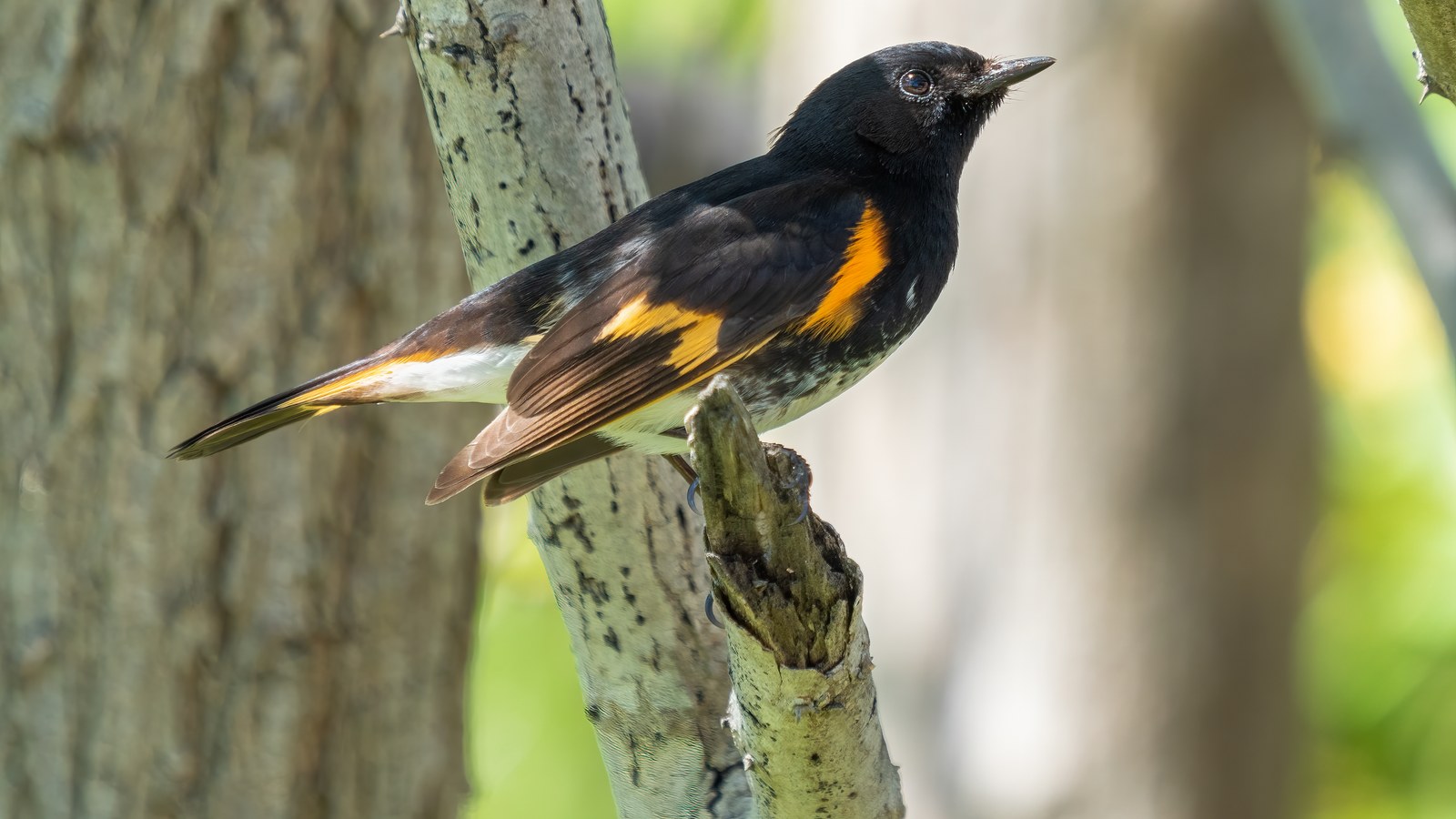
Adult males are glossy black with vivid orange patches on the sides, wings, and tail. Females and young males are gray or olive with yellow patches in the same places. Both sexes have a small bill and frequently spread the tail.
Credits:
Facts: Cornell Lab of Ornithology. Images: primary and secondary, Wikimedia Commons.