
Arrowhead Orbweaver
Verrucosa arenata
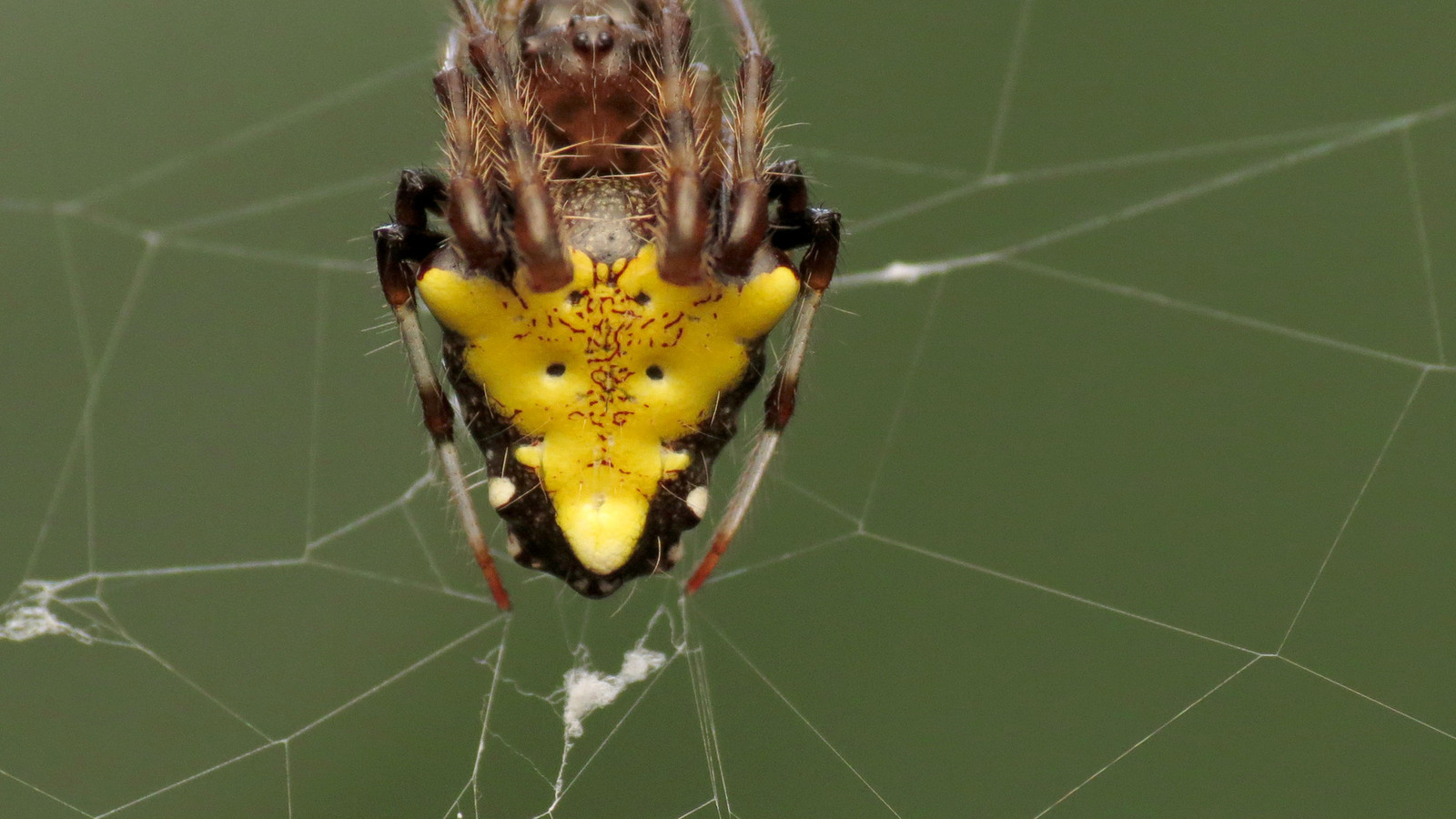
A small native orbweaver with a bold triangular abdomen, often found in low woodland webs during late summer and fall.
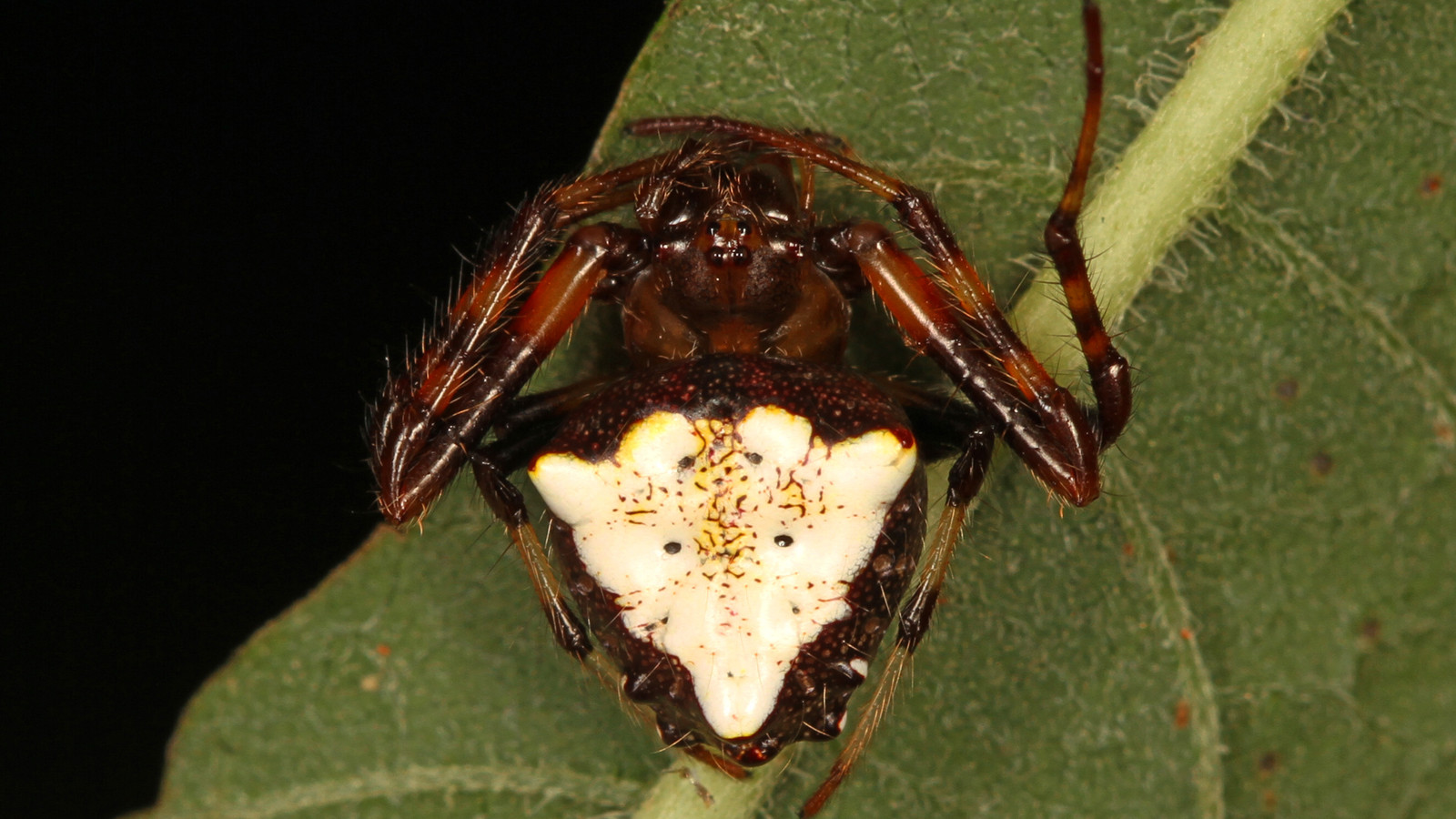
The arrowhead orbweaver is a small native spider named for the pointed triangular patch covering most of the female's abdomen. The patch may be white, yellow, or pink and stands out against darker margins.
It builds a delicate circular web in woods, yards, and shrub-lined openings where tiny flying insects move through vegetation.
Habitat:
Forests and Woodlands, Urban and Residential Areas
Area / Range:
Statewide
Diet:
Arrowhead orbweavers capture mosquitoes, gnats, small flies, moths, and other tiny flying insects in closely spaced sticky web strands.
Behavior:
A female constructs a vertical orb web low in vegetation and rests near the center with her head pointing upward, the reverse of many orbweavers. Webs may be rebuilt in the evening or early morning.
Evening and night
Active Times:
Best time to see:
Late summer through fall along woodland paths, shrub edges, and shaded yards
Florida Native Status:
Native spider
Conservation Status:
Common and not federally listed
Safety Level:
Harmless
Safety Information:
This orbweaver is not dangerous to people. A bite is unlikely unless the spider is pressed against skin and would generally cause only minor localized irritation.
Benefits to Property:
Arrowhead orbweavers provide natural pest control by capturing mosquitoes, gnats, flies, and other small insects around wooded yards and gardens.
Property Concerns:
The spider causes no structural damage. Its small webs may occasionally cross narrow paths; move the anchor strand gently rather than using pesticides.
Fun Fact:
Unlike most orbweavers that rest head-down, the arrowhead orbweaver usually sits head-up in the center of its web. The female's colored abdomen resembles a glossy drop of paint.
Wildlife Laws:
This common native spider has no special collection status, but unnecessary pesticide use can harm it and other beneficial invertebrates. Follow all pesticide labels and local rules.
Identification:
Females have a broad, arrowhead-shaped abdomen with a large pale or yellow triangle pointing away from the head. The legs and front of the body may be rusty red, brown, or black. Females are usually about 0.25 to 0.4 inch long; males are smaller and lack the bold triangular shape.