
Atlantic Spotted Dolphin
Stenella frontalis

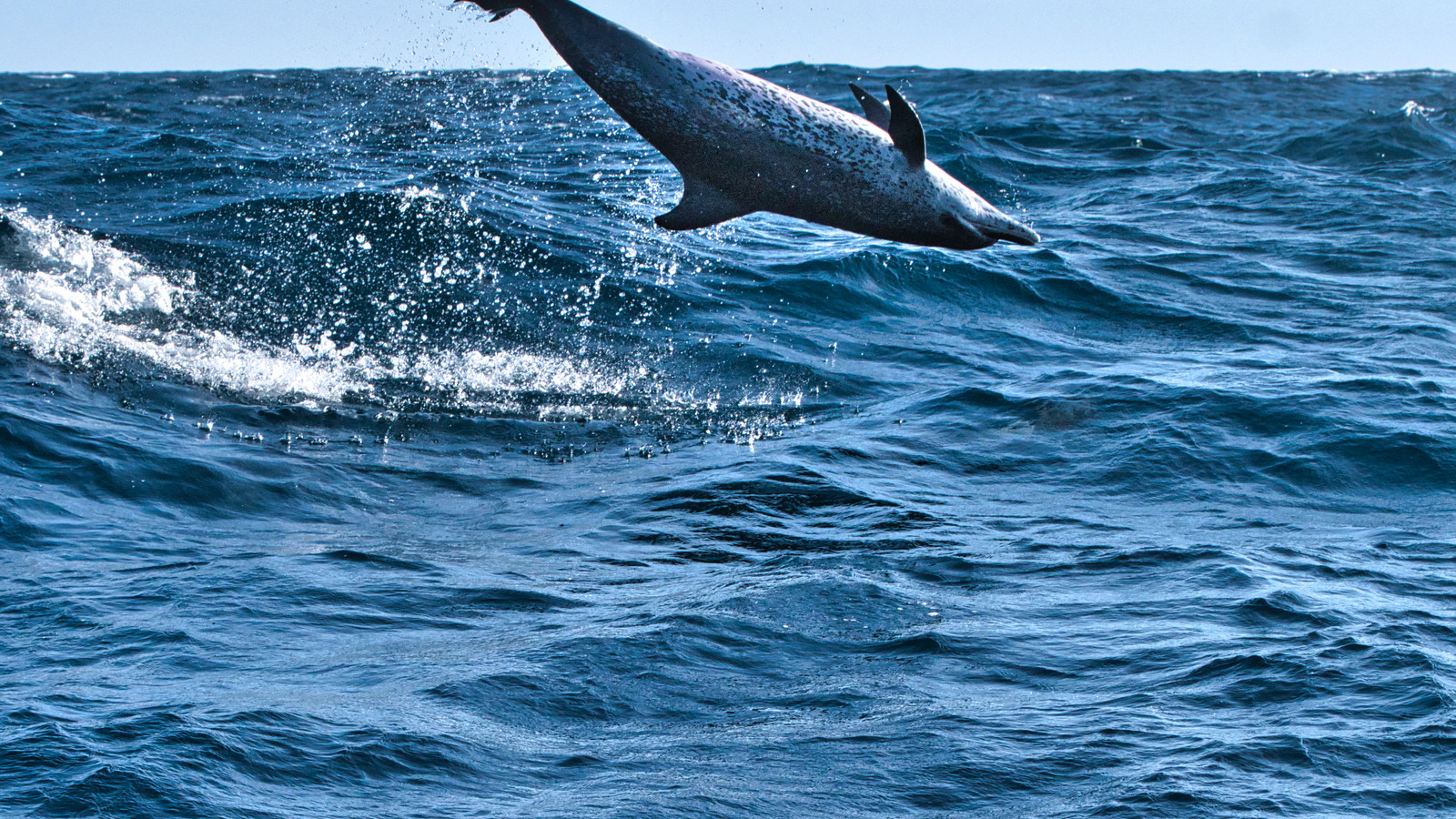
A fast, social dolphin of Florida’s Atlantic and Gulf waters whose adults develop dark and light spots across the body.
Atlantic Spotted Dolphins live in warm offshore and shelf waters around Florida. Young animals begin mostly unspotted and gain distinctive markings as they mature.
They travel in social groups, bow-ride, leap, and work together while feeding. Responsible viewing keeps vessels predictable and gives dolphins control over the encounter.
Habitat:
Coastal Waters
Area / Range:
Atlantic Coast, Gulf Coast
Diet:
Eats small schooling fish, squid, and bottom-dwelling invertebrates, with diet varying by depth and location.
Behavior:
Highly social and athletic. Groups may leap, surf wakes, bow-ride, and coordinate feeding both near the surface and along the seafloor.
Daytime, Nighttime
Active Times:
Best time to see:
Year-round during responsible offshore wildlife trips in calm weather, especially over warm shelf waters.
Florida Native Status:
Native
Conservation Status:
Not listed under the federal Endangered Species Act; protected and monitored under the Marine Mammal Protection Act.
Safety Level:
Moderate
Safety Information:
Never swim toward, touch, feed, chase, or separate dolphins. Maintain a respectful vessel distance and allow the group to choose whether it approaches.
Benefits to Property:
Supports healthy marine food webs and contributes to Florida’s wildlife-viewing and coastal education value.
Property Concerns:
No land-property concern. Vessel strikes, fishing line, marine debris, and feeding by people create serious risks offshore.
Fun Fact:
- Calves are born with few or no spots.
- Spot patterns become more extensive with age.
- Groups use clicks and whistles to navigate and communicate.
Wildlife Laws:
Protected by the federal Marine Mammal Protection Act. Harassing, pursuing, feeding, touching, capturing, or injuring wild dolphins is illegal.
Identification:
Slender dolphin with a dark cape, pale underside, long beak, and spots that increase with age. Calves and juveniles may show few or no spots.