
Banded Garden Spider
Argiope trifasciata
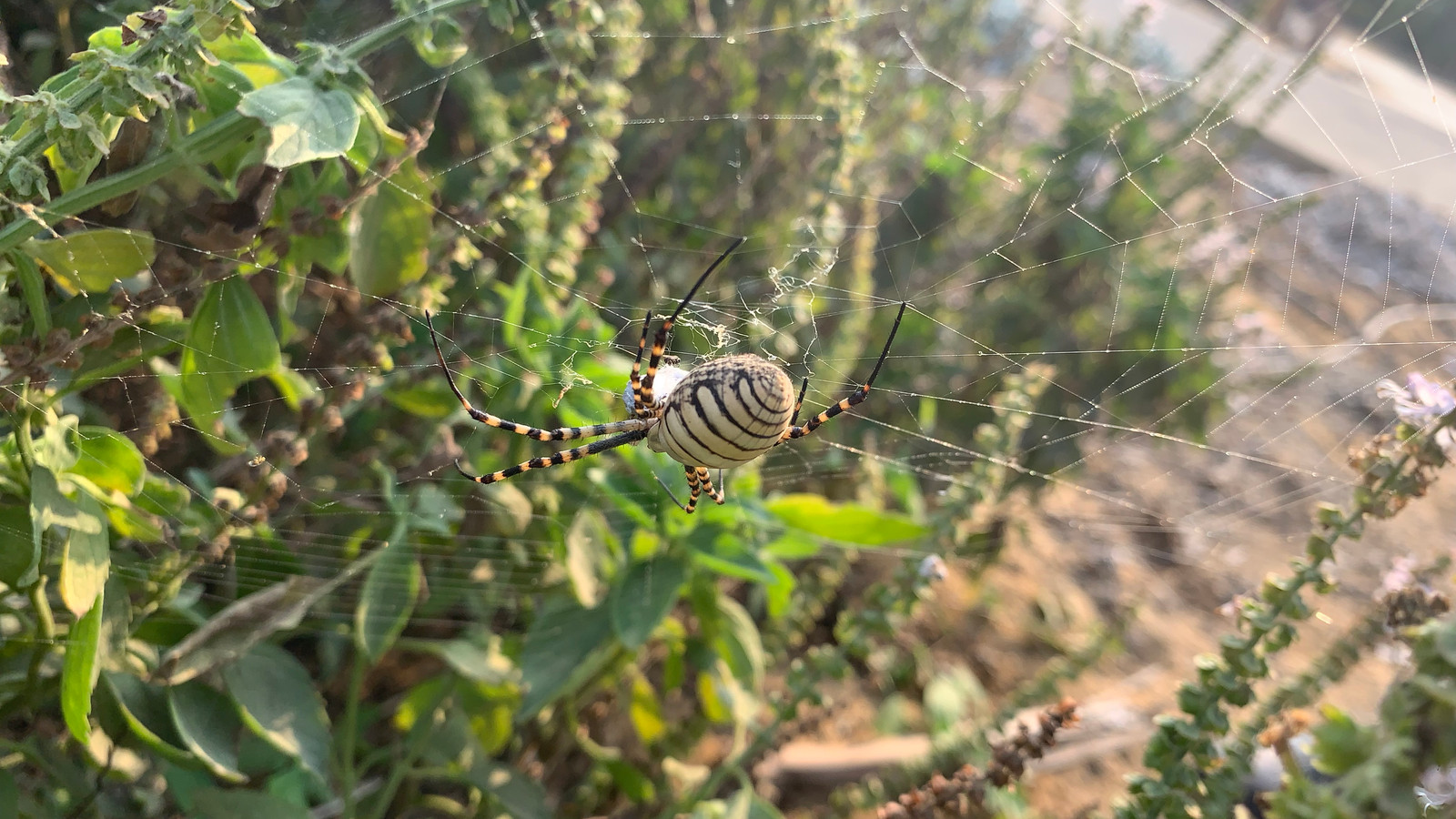
A large, harmless-to-observe orb-weaver whose striped abdomen and circular web make it a useful visitor to Florida gardens.
The banded garden spider is one of four Argiope garden orb-weavers recorded in Florida. Large females build conspicuous circular webs among vegetation, where they intercept flying insects. Males are much smaller and less noticeable.
Despite its size, this spider poses little risk to people. Leaving an occupied web undisturbed allows it to contribute to natural insect control.
Habitat:
Urban and Residential Areas, Grasslands and Agricultural Areas, Forests and Woodlands
Area / Range:
Statewide
Diet:
Flying insects caught in its orb web are the main prey. Like other garden orb-weavers, it helps reduce local insect numbers.
Behavior:
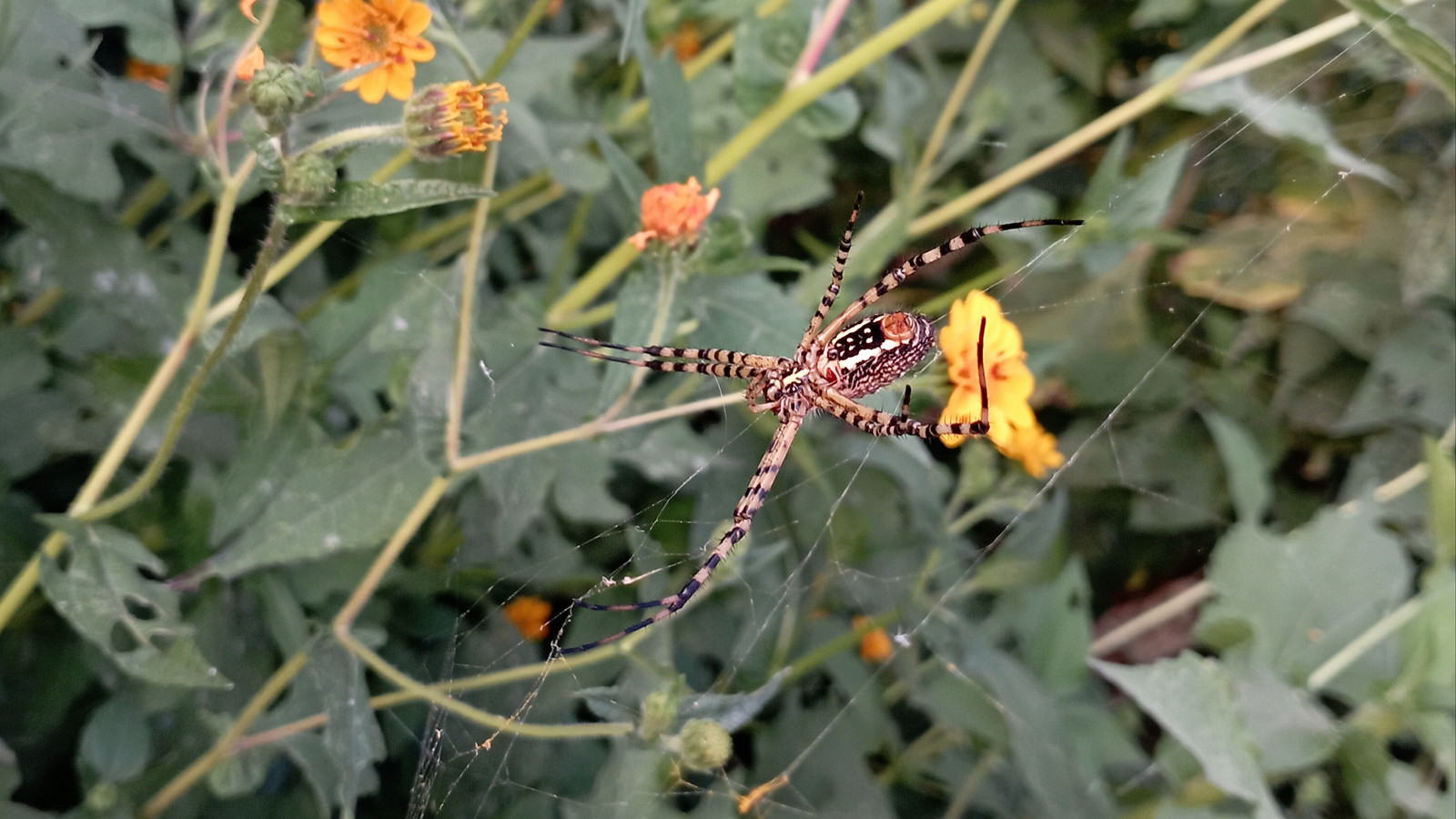
A female typically waits in or near the center of her orb web for vibration from trapped prey. Garden Argiope may add conspicuous zigzag silk decorations to their webs, although their exact function remains debated.
The spider generally remains in its web and avoids people. Its large size reflects the female; males are much smaller.
Day, Night
Active Times:
Best time to see:
Look for occupied orb webs among garden shrubs, grasses, and open vegetation in daylight; avoid walking through the web.
Florida Native Status:
Native
Conservation Status:
Widespread in North America and not listed as threatened or endangered in Florida.
Safety Level:
Low
Safety Information:
Banded garden spiders are not considered a medical threat to humans. Avoid handling any spider and leave its web intact; seek medical advice if a bite causes concerning symptoms.
Benefits to Property:
By trapping insects, the banded garden spider provides natural pest control in gardens and landscaped areas. Diverse plantings and reduced pesticide use help maintain prey and shelter.
Property Concerns:
Large webs across paths or between shrubs can be inconvenient. Redirect foot traffic or gently move only the obstructing web if necessary; the spider does not harm buildings or plants.
Fun Fact:
The species name trifasciata refers to its banded appearance. Females are several times larger than males, a striking example of size difference within one species.
Wildlife Laws:
This spider is not subject to a special Florida harvest rule identified in the consulted sources. Observe it in place and follow any rules that apply on protected land or to wildlife collection.
Identification:
Females have a boldly banded, oval abdomen and long legs marked with contrasting dark and pale bands. They rest in the center of a circular orb web. Males are much smaller and more slender.
Other Florida Argiope species have different abdominal patterns; the banded species should be identified by the spider itself as well as its web.