
Basilica Orbweaver
Mecynogea lemniscata
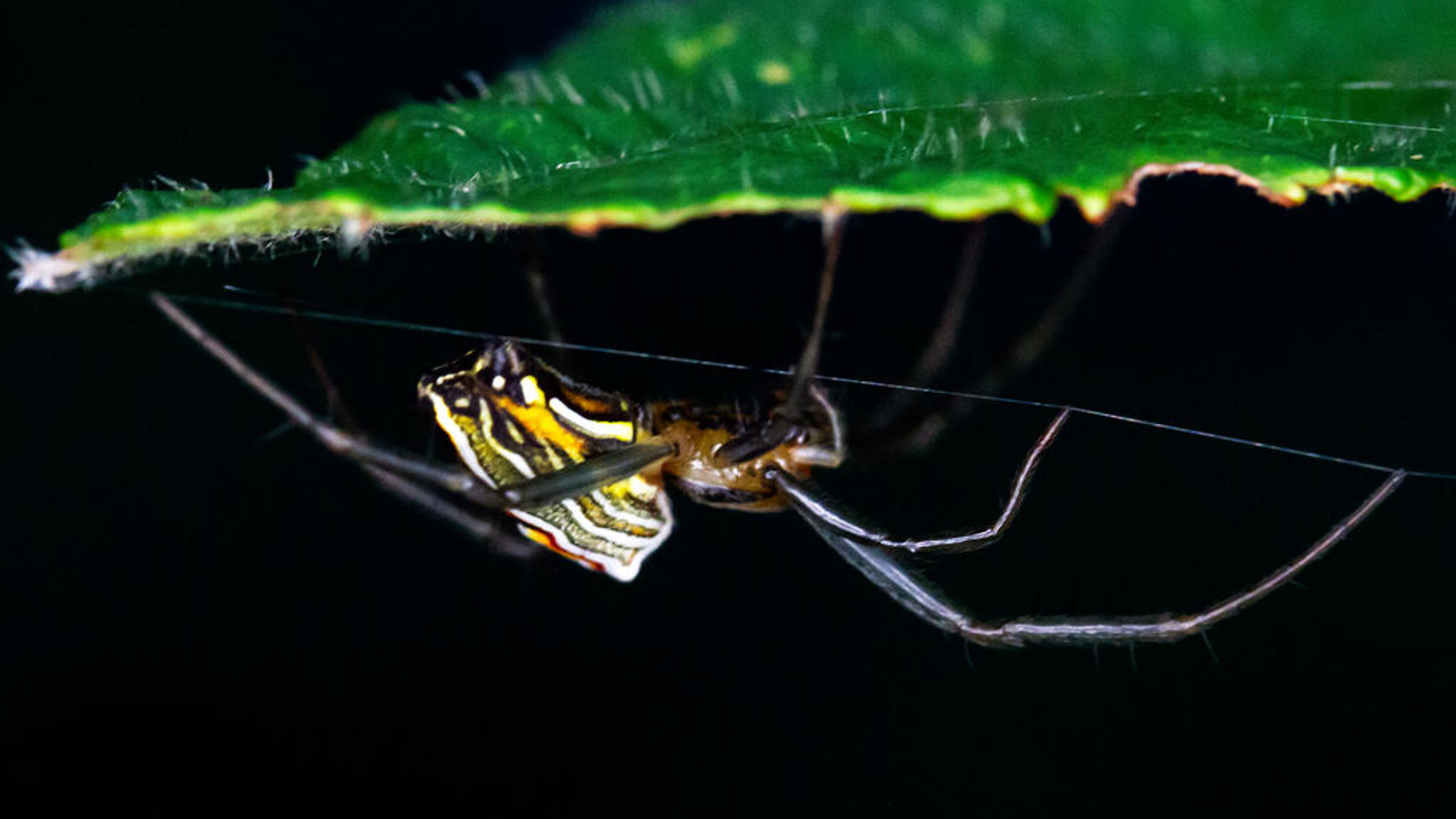
A small, colorful orb-weaving spider that builds a distinctive dome-shaped web among shrubs and low vegetation.
The Basilica Orbweaver is a small native orb-weaving spider found from the southeastern United States through the tropics. Its common name comes from the dome-like center of its web.
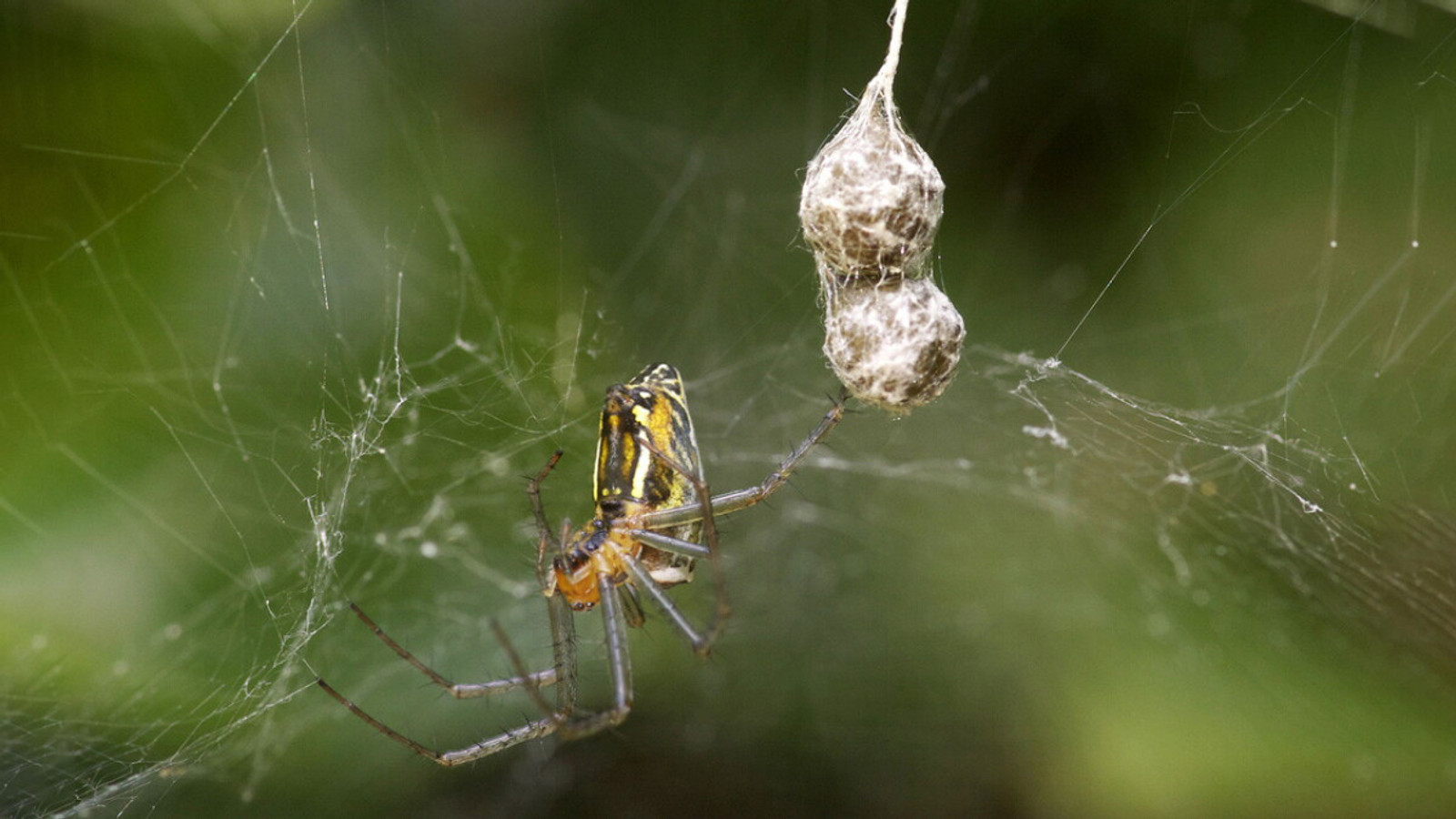
It lives in shrubs, woodland edges, gardens, and other vegetation where flying insects are plentiful. The spider is often noticed beneath its web or beside a chain of egg sacs.
Habitat:
Forests and Woodlands, Urban and Residential Areas
Area / Range:
Statewide
Diet:
Feeds on small flying insects and other arthropods trapped in the web. The spider detects struggling prey through vibrations in its silk.
Behavior:
Rests beneath the domed web and rushes to subdue captured prey. Females place multiple egg masses in a connected silken chain.
Mostly evening and nighttime
Active Times:
Best time to see:
Summer through fall in shrubs, woodland edges, and gardens, especially around intact webs.
Florida Native Status:
Native
Conservation Status:
Not listed; widespread within its range.
Safety Level:
Low
Safety Information:
Not considered medically significant and reluctant to bite. Avoid handling; gently walk around webs instead of touching the spider.
Benefits to Property:
Captures mosquitoes, small flies, moths, and other flying insects, providing free pest control in gardens and landscapes.
Property Concerns:
Webs may span paths or ornamental shrubs and can be startling, but the spider does not damage plants, buildings, or furnishings.
Fun Fact:
Spiderlings initially build ordinary round orb webs. As they mature, their webs develop the species’ characteristic domed architecture.
Wildlife Laws:
No special listing applies, but collection may be restricted on parks, preserves, and other public lands. Leave native spiders and egg sacs undisturbed.
Identification:
Females have a patterned abdomen with white or yellow lengthwise markings, black central patterning, and red or orange accents; males are smaller. The web has a domed orb section supported by irregular barrier threads.