
Bay-Breasted Warbler
Setophaga castanea
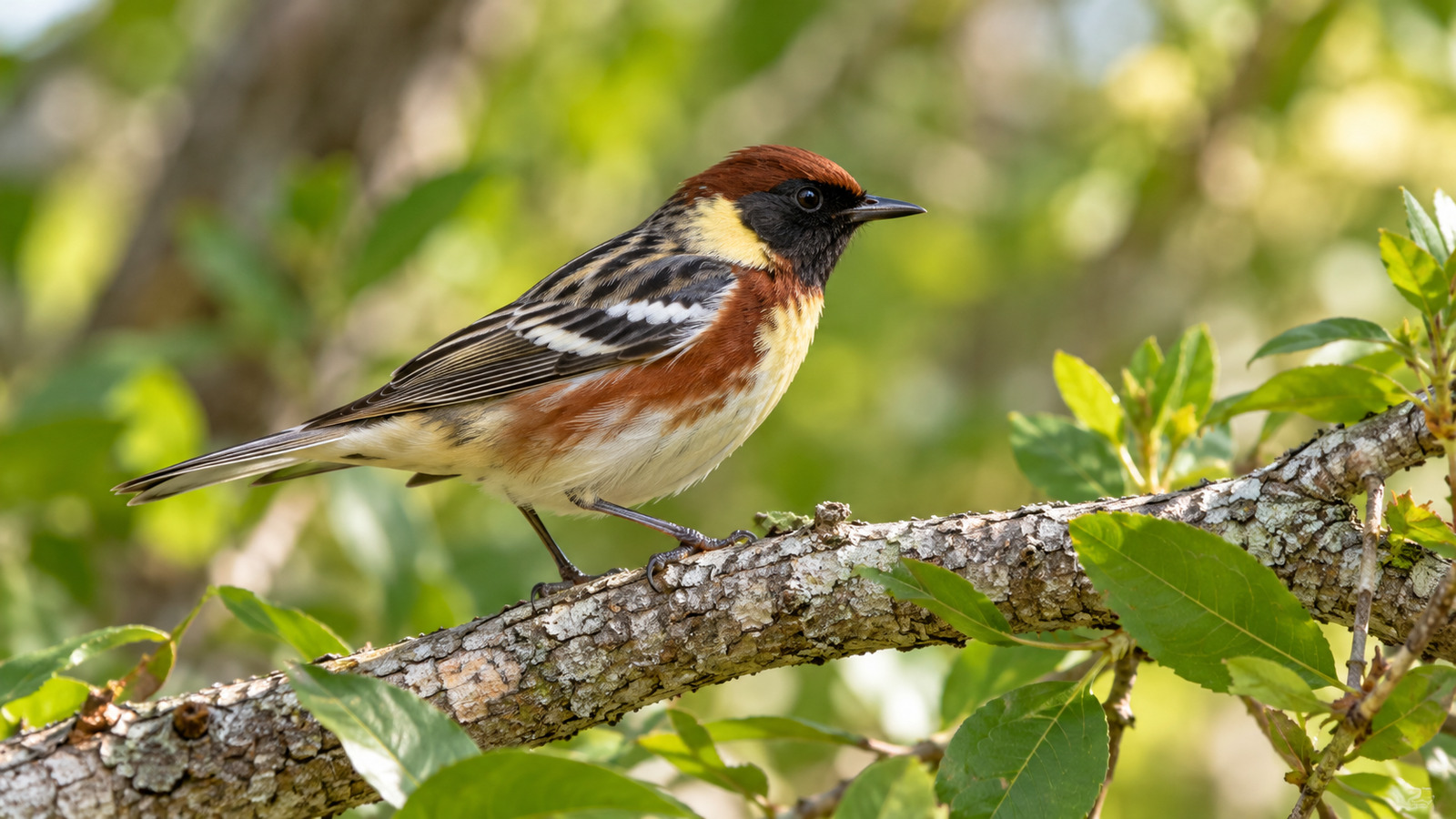
A long-winged migrant warbler whose spring males show rich bay coloring, a black mask, and bold white wing bars.
The Bay-Breasted Warbler is an uncommon spring and fall migrant in Florida. It breeds in northern spruce and fir forests and passes through wooded parks, coastal hammocks, and forest edges while traveling between the boreal zone and tropical wintering grounds.
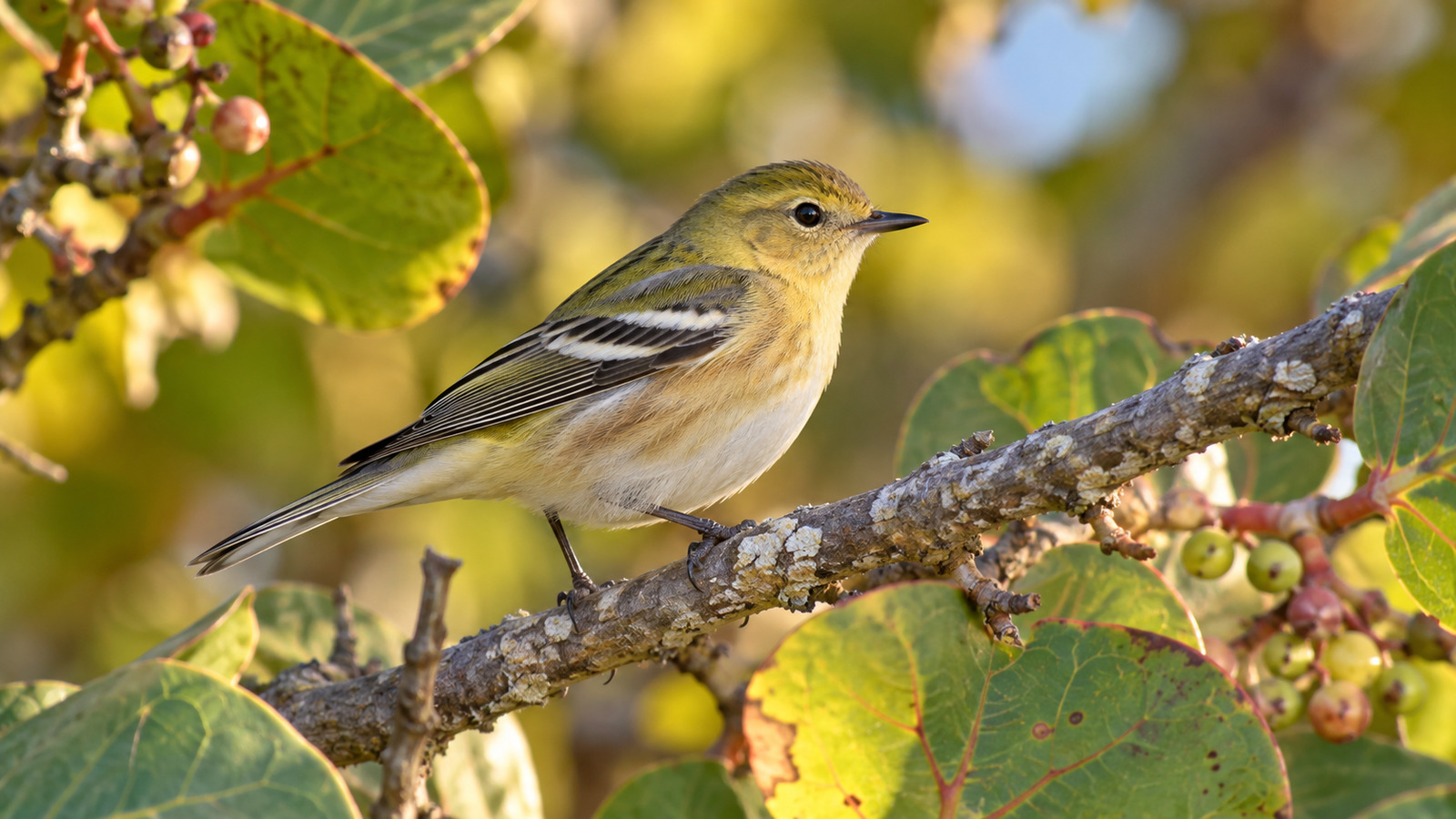
Spring males are striking, while females and fall birds are subtler. Patient observers should scan mixed feeding flocks and the inner portions of leafy trees for this methodical foliage gleaner.
Habitat:
Forests and Woodlands, Scrub and Dry Prairie, Urban and Residential Areas
Area / Range:
Statewide
Diet:
During the breeding season, Bay-Breasted Warblers eat insects and small spiders, especially spruce budworm larvae and pupae. Migrants also take beetles, flies, moth larvae, grasshoppers, and other arthropods. Fruit becomes more important during fall migration and winter.
Behavior:
This species hops and makes short flights through foliage, gleaning prey from leaves, bark, and lichen. It sometimes hover-gleans and occasionally catches insects in brief aerial sallies. Migrants often travel and feed with mixed-species flocks.
Day
Active Times:
Best time to see:
Spring migration from late April through May, with another chance during fall migration
Florida Native Status:
Native Migrant
Conservation Status:
Low Concern
Safety Level:
Harmless. Respect Nests
Safety Information:
Bay-Breasted Warblers are harmless to people and pets. Watch from a respectful distance, keep cats indoors, and avoid disturbing resting migrants or any active nest.
Benefits to Property:
While stopping in Florida, these warblers consume caterpillars, beetles, flies, spiders, and other small invertebrates. Layered native trees and shrubs help provide food and shelter during migration.
Property Concerns:
This species does not damage buildings, lawns, or gardens. Major property-related threats to migrating warblers include reflective windows, unnecessary nighttime lighting, outdoor cats, and broad-spectrum pesticide use.
Fun Fact:
The word bay in the common name refers to the rich reddish-brown color on a breeding male. Bay-Breasted Warbler numbers can rise when spruce budworms become abundant, because these caterpillars are a major breeding-season food.
Wildlife Laws:
Protected migratory bird. Do not capture, harm, possess, or destroy active nests, eggs, or young. Federal authorization may be required before removing an active nest.
Identification:
Breeding males have a dark chestnut-bay crown, throat, and flanks, a black face, a pale yellow neck patch, and two bold white wing bars. Females and nonbreeding birds are yellow-green above with buff-olive flanks, a plain face, and strong wing bars. The bill is stout for a warbler, and the wings appear relatively long.