
Black-and-White Warbler
Mniotilta varia
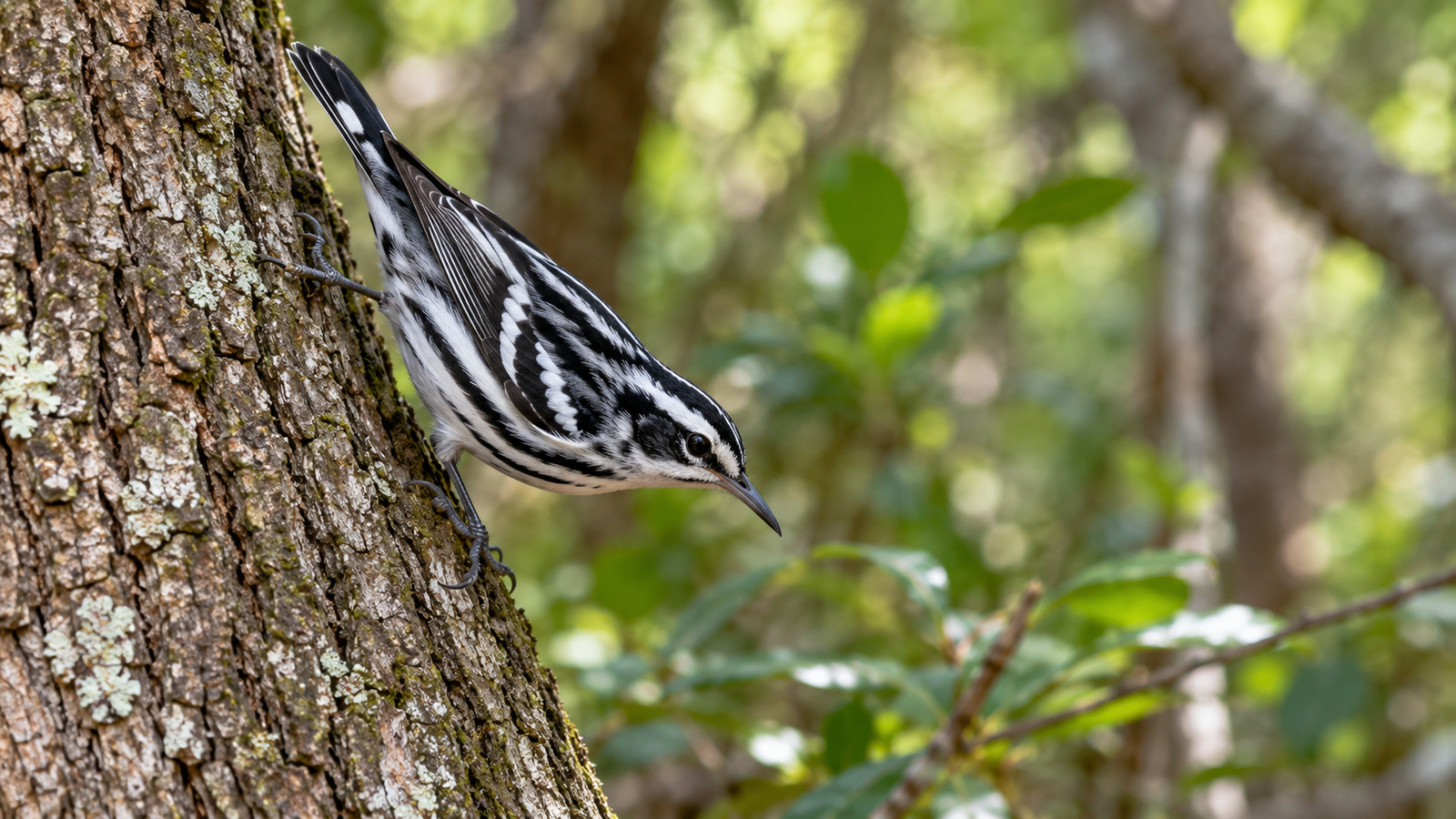
Black-and-White Warblers are boldly striped migratory songbirds that creep over trunks and branches like nuthatches while searching bark for insects.
Black-and-White Warblers pass through Florida during migration and also winter in the state. They use forests, wooded hammocks, mangroves, parks, gardens, and other places with mature trunks and branches that provide bark-dwelling prey.
The species is the only member of the genus Mniotilta. Its unusually strong legs, long hind claw, and slightly downcurved bill support a distinctive climbing style unlike that of most other North American warblers.
Habitat:
Forests and Woodlands, Mangroves and Salt Marshes, Urban and Residential Areas
Area / Range:
Statewide
Diet:
Primarily insects and spiders taken from bark, including caterpillars, beetles, borers, flies, ants, leafhoppers, weevils, larvae, and egg masses. Caterpillars are especially important during spring migration and the breeding season.
Behavior:
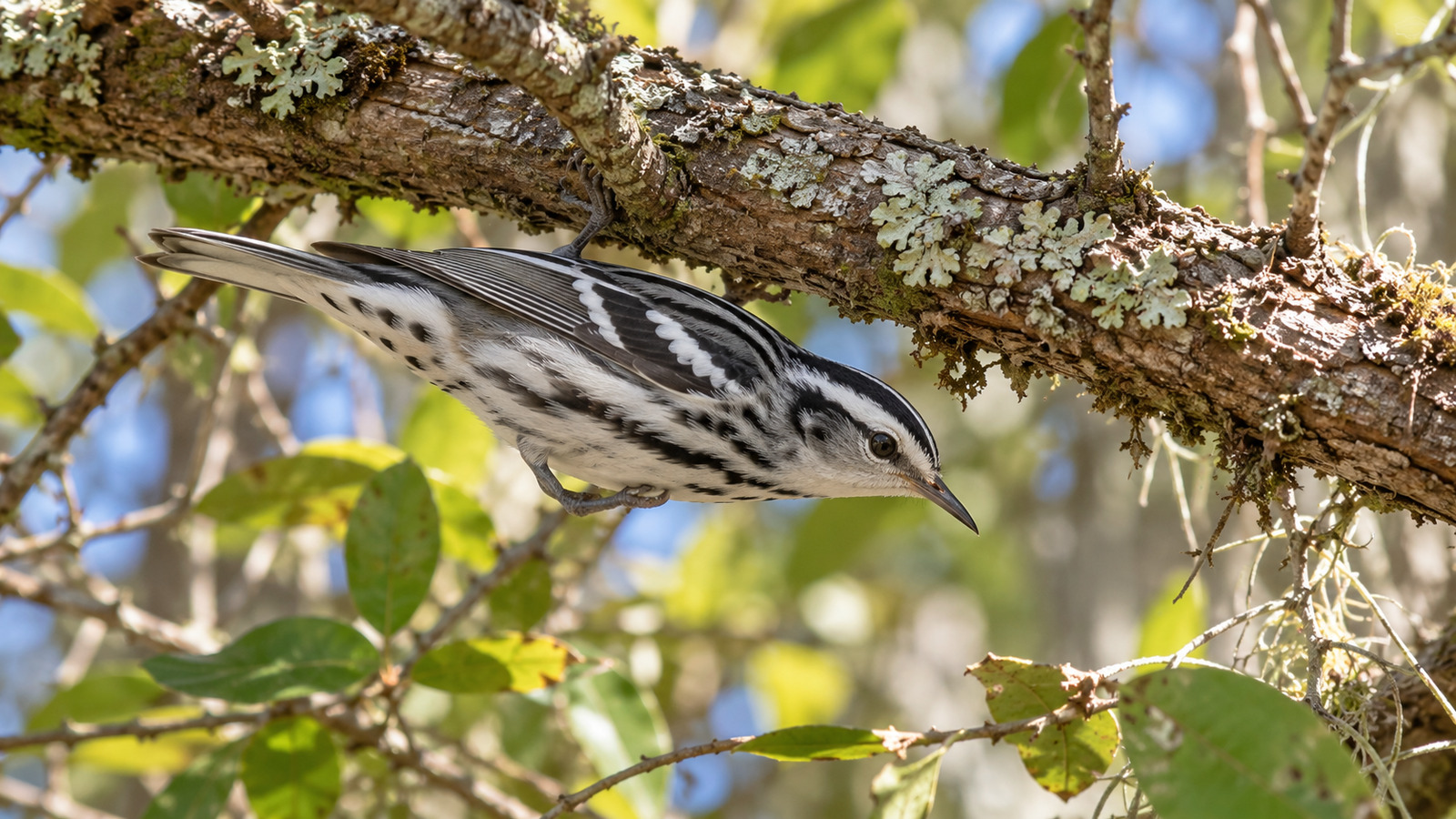
These warblers move rapidly up, down, and around trunks and large limbs, often hanging beneath branches while probing bark crevices. They migrate at night and are usually solitary, though they may join mixed-species feeding flocks in winter and during migration.
Day
Active Times:
Best time to see:
Early morning during spring and fall migration, or in winter, in mature woodlands, wooded parks, hammocks, mangroves, and forest edges.
Florida Native Status:
Native Migratory Bird
Conservation Status:
Low conservation concern overall, but long-term surveys document population declines. Forest fragmentation, pesticide exposure, and collisions during nocturnal migration remain concerns.
Safety Level:
Harmless. Respect Nests
Safety Information:
Black-and-White Warblers pose no danger to people or pets. Observe quietly, keep cats indoors, reduce nighttime lighting during migration, and do not disturb birds, nests, eggs, or young.
Benefits to Property:
They consume many bark-dwelling insects and add seasonal biodiversity to wooded properties. Mature native trees, layered vegetation, and leaf litter can provide valuable stopover and winter habitat.
Property Concerns:
They do not damage trees or structures. Window collisions, free-roaming cats, broad insecticide use, and removal of mature trees or dense cover are much greater threats to the birds than the birds are to property.
Fun Fact:
The genus name Mniotilta means moss-plucking, a reference to the bird's bark-foraging behavior. It is the only North American wood-warbler that regularly moves along trunks and limbs like a nuthatch.
Wildlife Laws:
Protected by the federal Migratory Bird Treaty Act and Florida wildlife laws. Do not capture, harm, possess, sell, or disturb the birds, their active nests, eggs, or young without required authorization.
Identification:
Adults are small songbirds striped black and white from crown to tail, with two broad white wing bars and a thin, slightly downcurved bill. Males show a black cheek and heavier black streaking below. Females and immature birds are paler, with a grayish cheek, white throat, and sometimes a buff wash along the flanks.