
Black Spiny-tailed Iguana
Ctenosaura similis
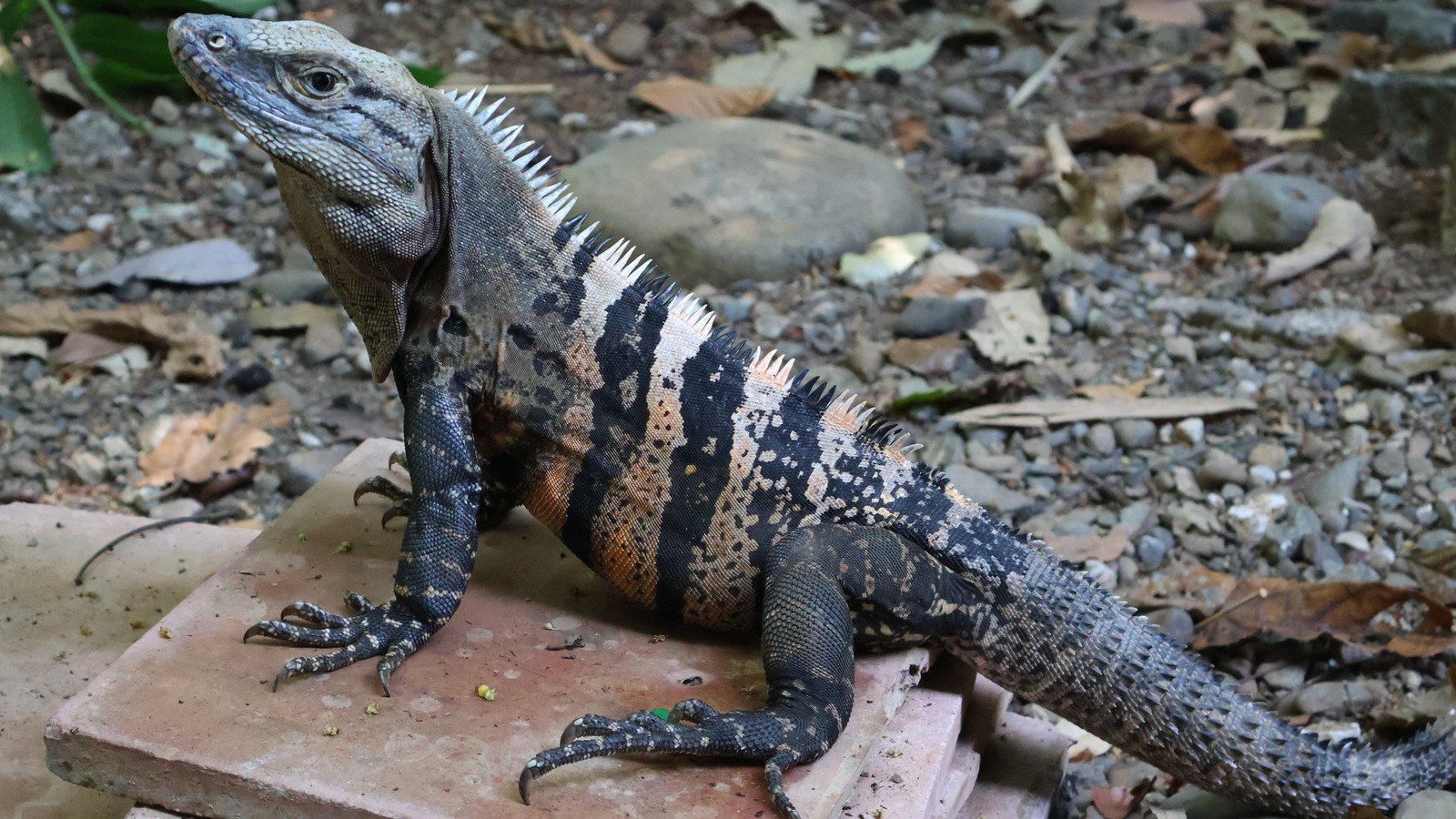
A large, fast nonnative iguana established in parts of southern Florida, recognizable by dark body bands and a strongly spined tail.
The black spiny-tailed iguana is a large Central American lizard introduced to Florida through the pet trade. Established populations occur in parts of southern Florida, especially warm coastal and urbanized areas.
It is a powerful runner and climber that shelters in burrows, rock piles, seawalls, and other cavities. Adults often bask in open sun near a quick escape route.
Habitat:
Urban and Residential Areas, Scrub and Dry Prairie, Beaches and Dunes
Area / Range:
South Florida, Gulf Coast, Atlantic Coast
Diet:
Adults eat leaves, flowers, fruits, and other plant material but also take insects, small vertebrates, eggs, and carrion. Younger iguanas eat a higher proportion of animal prey.
Behavior:
These iguanas are active by day, bask frequently, and retreat quickly into burrows or crevices. They can climb trees and structures and may use or enlarge existing animal burrows.
Day
Active Times:
Best time to see:
Warm sunny mornings and afternoons near seawalls, rocks, roadsides, and landscaped areas
Florida Native Status:
Introduced and established nonnative species
Conservation Status:
Nonnative in Florida; not protected except by anti-cruelty law
Safety Level:
Caution
Safety Information:
Black spiny-tailed iguanas are not venomous, but a cornered or handled animal can bite, scratch, or lash with its tail. Keep people and pets back and use trained wildlife professionals for removal.
Benefits to Property:
They may consume some pest insects and fallen fruit, but because the species is nonnative, these limited benefits do not offset ecological concerns.
Property Concerns:
Burrowing can undermine landscaping, seawalls, and areas near foundations. Iguanas may eat ornamental plants and can compete with or prey on native wildlife.
Fun Fact:
Black spiny-tailed iguanas are among the fastest lizards and can sprint rapidly to a refuge. The tail's enlarged scales provide both protection and a powerful defensive whip.
Wildlife Laws:
This species is nonnative in Florida and may be humanely removed from private property with landowner permission. Follow current Florida wildlife rules, do not release captured iguanas elsewhere, and comply with anti-cruelty requirements.
Identification:
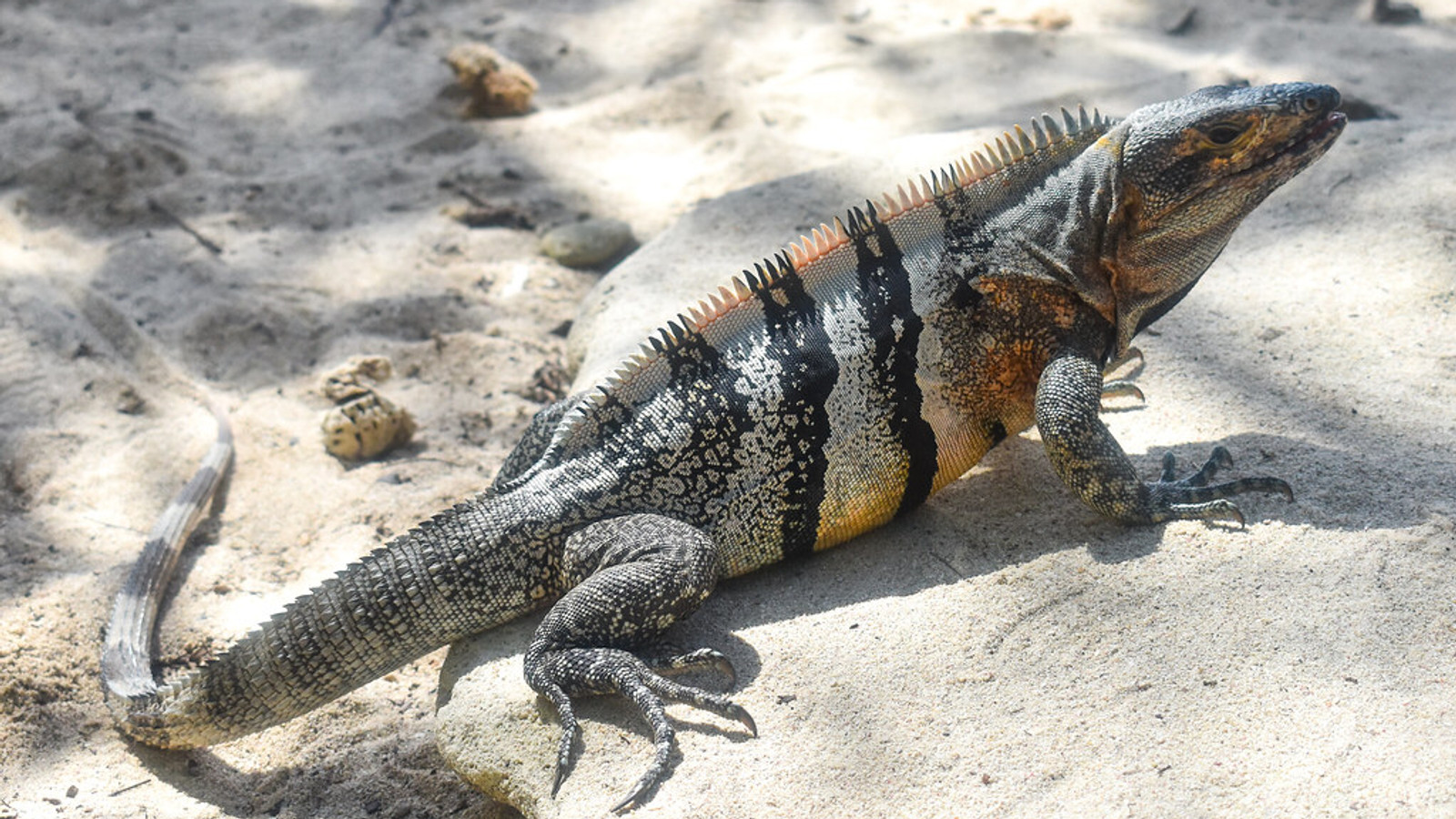
Adults are gray, tan, or nearly black with dark crossbands, a low crest of spines along the back, and a long tail ringed with sharp scales. Large males can exceed 4 feet in total length, while females and younger animals are smaller and less heavily built.