
Blackburnian Warbler
Setophaga fusca
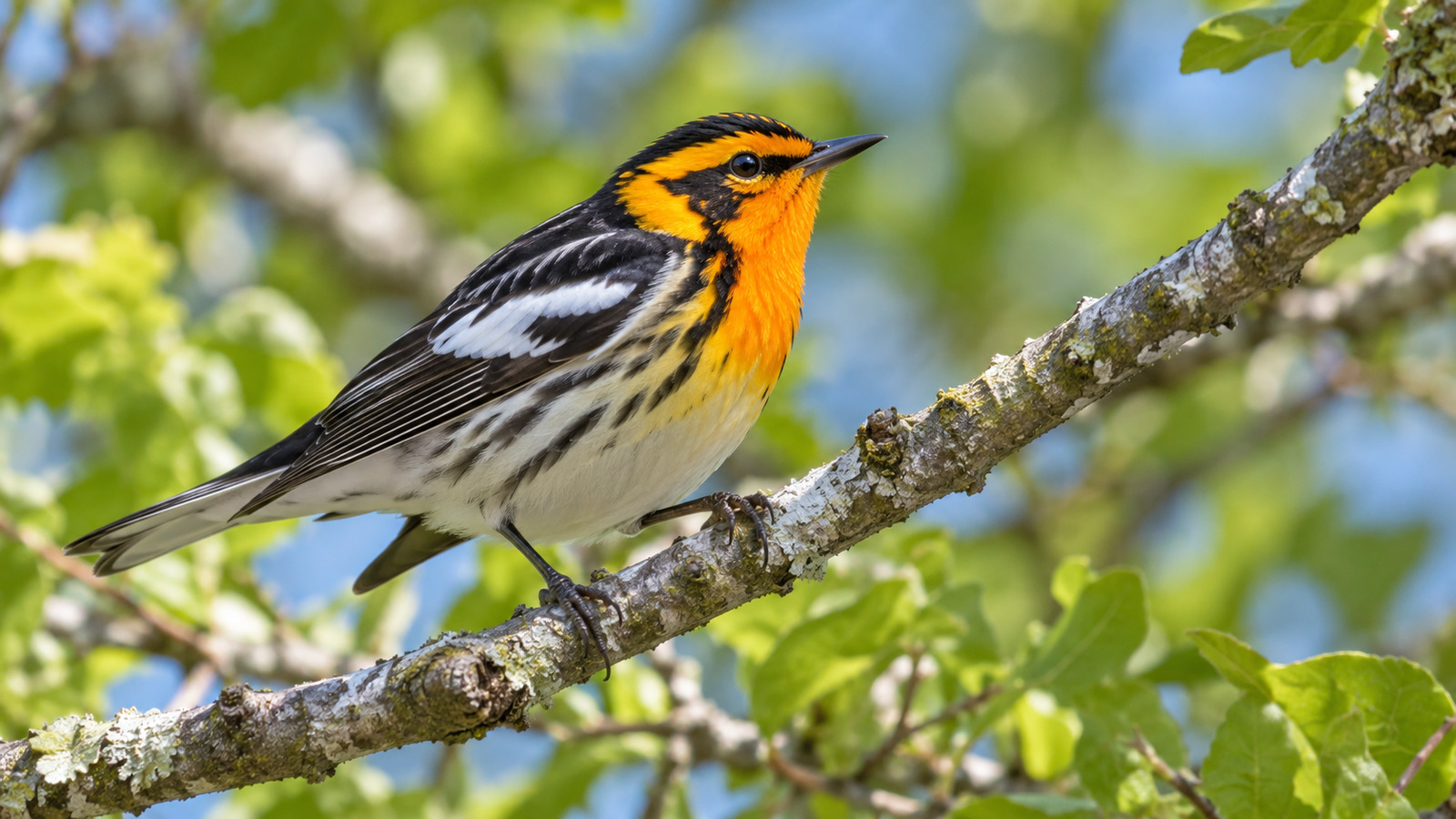
A canopy-loving migrant whose breeding male glows with a fiery orange face and throat against black-and-white plumage.
The Blackburnian Warbler is a spring and fall migrant through Florida. It breeds in mature coniferous and mixed forests farther north and winters in montane forests of northwestern South America. Florida's coastal woods, hammocks, parks, and tree-lined neighborhoods provide vital stopover habitat.
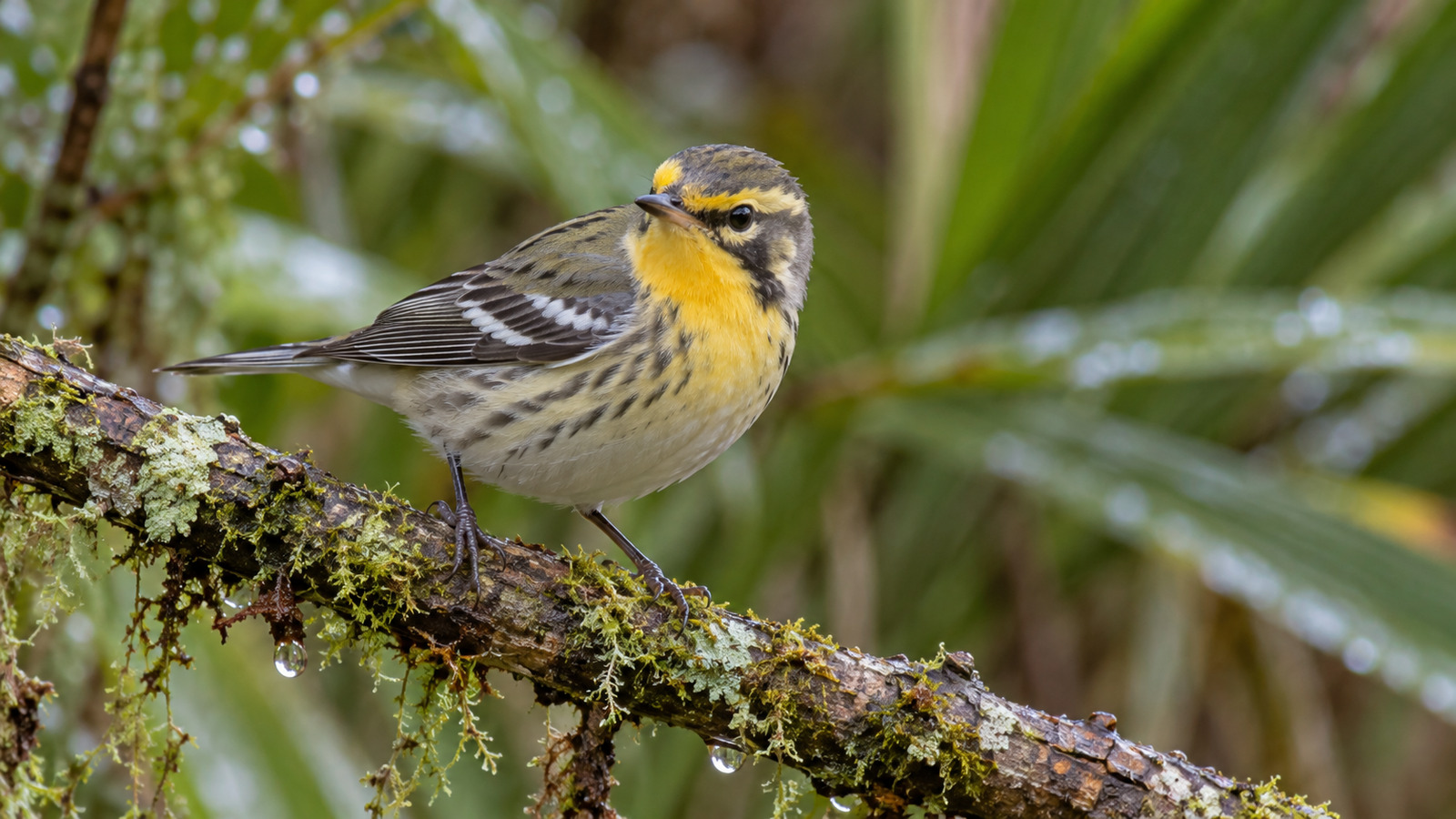
Most individuals forage high in trees, but tired migrants may feed much lower after crossing open water. The vivid breeding male is unmistakable, while females and immatures retain a distinctive triangular facial pattern and a softer yellow-orange throat.
Habitat:
Forests and Woodlands, Scrub and Dry Prairie, Urban and Residential Areas
Area / Range:
Statewide
Diet:
Blackburnian Warblers eat caterpillars, including spruce budworms, plus spiders, flies, beetles, ants, aphids, scale insects, mayflies, and other arthropods. They occasionally take berries.
Behavior:
This species gleans and hover-gleans insects from foliage, probes needle clusters and curled leaves, and often remains high in the canopy. During migration, individuals may descend into shrubs, edges, lawns, or shorelines to refuel after long flights.
Day
Active Times:
Best time to see:
Spring migration from April through May and fall migration from September into October
Florida Native Status:
Native Migrant
Conservation Status:
Low Concern
Safety Level:
Harmless. Respect Nests
Safety Information:
Blackburnian Warblers are harmless. Give resting migrants space, keep cats indoors, and watch without flushing birds from feeding areas.
Benefits to Property:
These warblers consume caterpillars, aphids, flies, beetles, scale insects, and spiders. Mature native trees and layered vegetation offer food and shelter during their demanding migrations.
Property Concerns:
This species does not harm buildings or gardens. Reflective glass, outdoor cats, nighttime lighting, tree removal during migration, and pesticide use reduce safe stopover habitat.
Fun Fact:
Blackburnian Warblers are sometimes called firethroats because of the adult male's intense orange plumage. They usually forage and nest higher in trees than most other warblers, with some nests recorded up to 80 feet above the ground.
Wildlife Laws:
Protected migratory bird. Do not capture, harm, possess, or destroy active nests, eggs, or young. Federal authorization may be required before removing an active nest.
Identification:
Breeding males have a blazing orange face and throat, black crown and back, bold white wing patches, and dark streaks on white underparts. Females and immatures are gray-green above with a paler yellow-orange throat, pale wing bars, fine flank streaks, and a dark triangular facial pattern. All plumages have a fine, pointed bill.