
Blackpoll Warbler
Setophaga striata
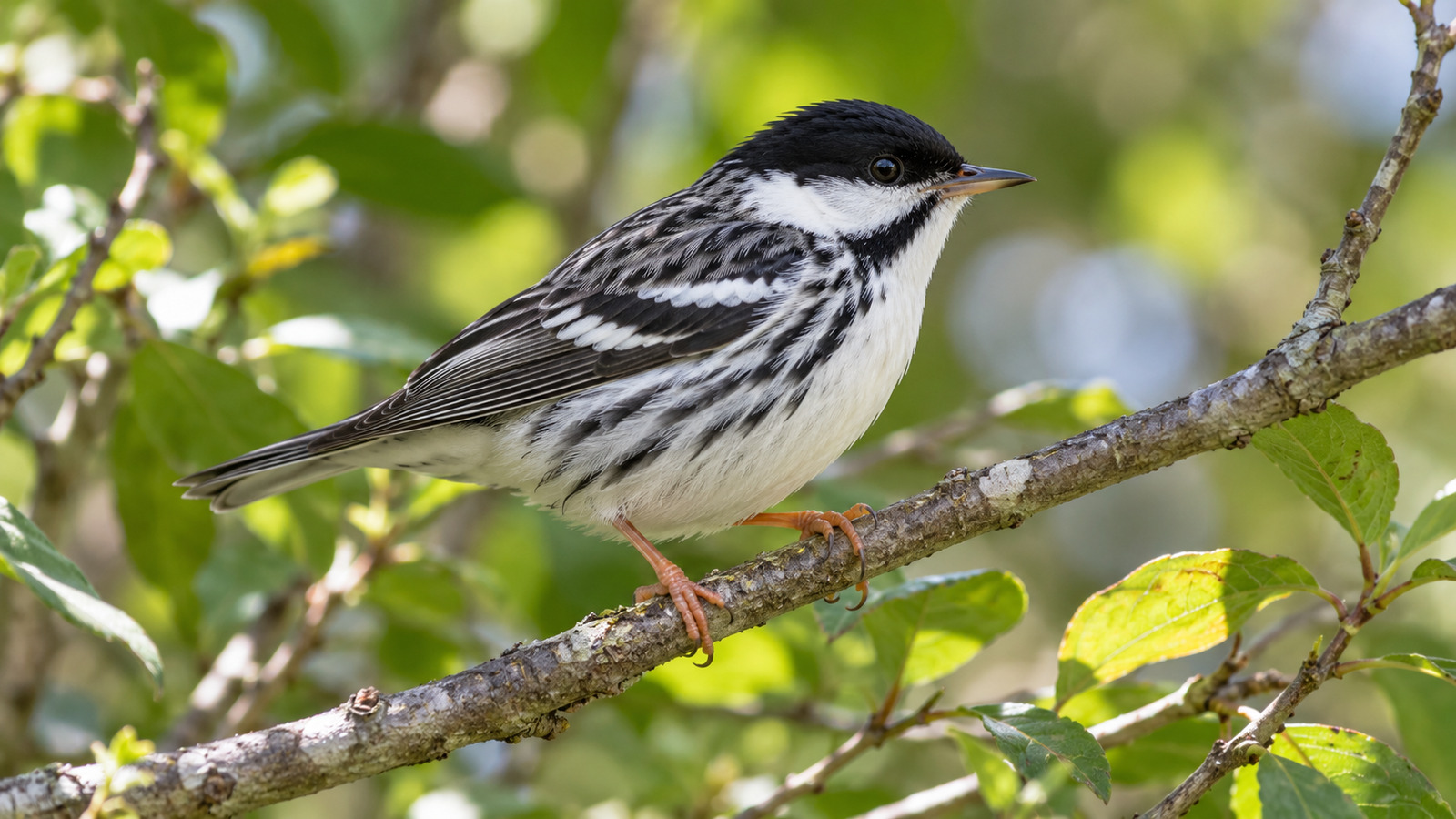
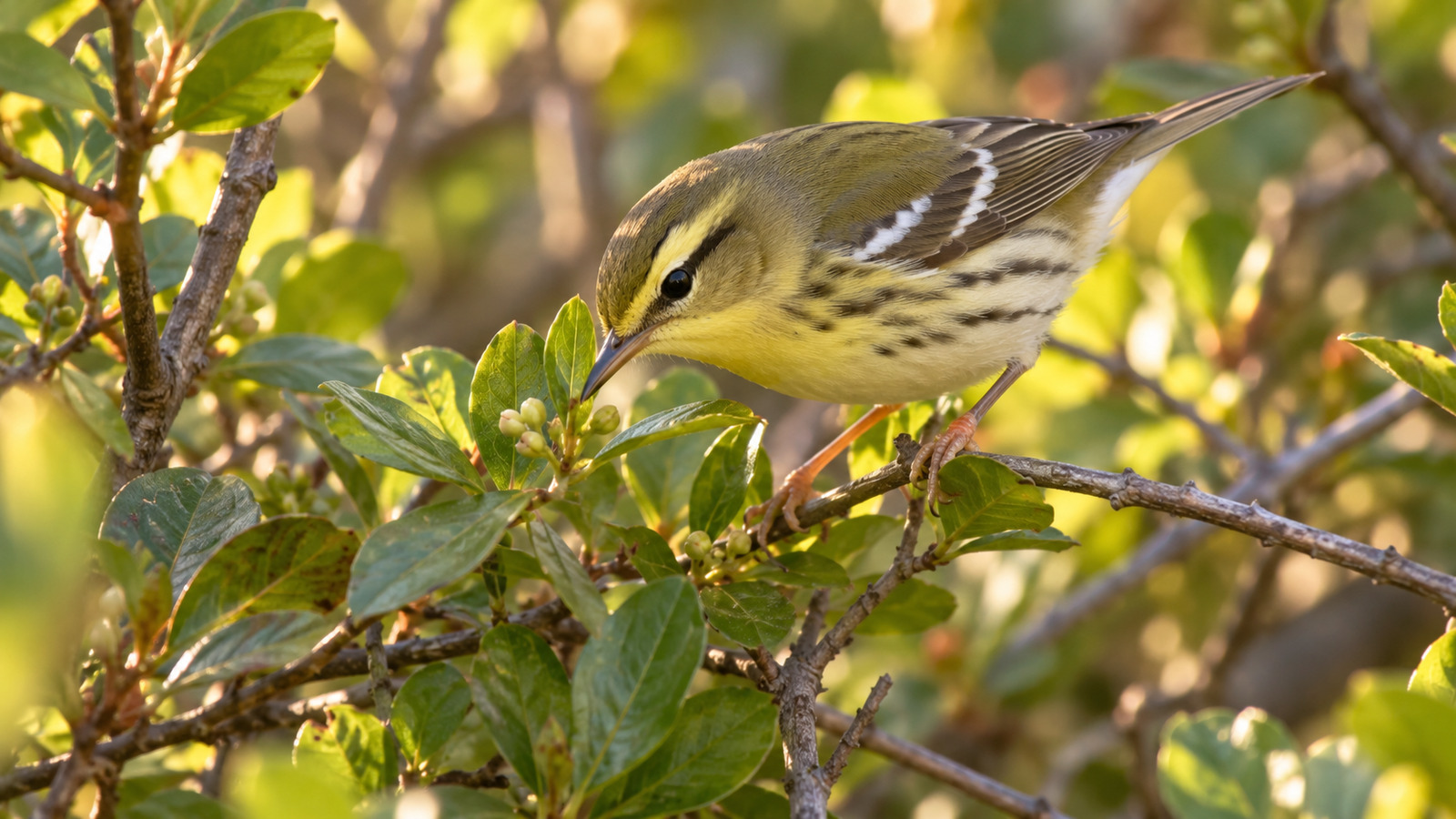
A long-distance migrant seen in Florida mainly during spring, with breeding males showing a black cap and white cheeks and fall birds turning yellow-green.
Blackpoll Warblers pass through Florida between South American wintering grounds and northern boreal breeding forests. Spring offers the best chance to see them in the state.
These small birds undertake one of the longest overwater flights known among songbirds. During migration they depend on insect-rich trees, shrubs, and protected stopover habitat.
Habitat:
Forests and Woodlands, Scrub and Dry Prairie, Urban and Residential Areas
Area / Range:
Statewide
Diet:
Blackpoll Warblers eat insects and spiders, including caterpillars, beetles, ants, flies, gnats, and mosquitoes. They also eat small fruits during migration.
Behavior:
They move deliberately through foliage, picking prey from leaves and branches from eye level into the canopy. Migrants often join mixed flocks of other warblers.
Before long flights, Blackpoll Warblers build large fat reserves. Spring birds may sing while feeding and moving north.
Day
Active Times:
Best time to see:
Spring migration, especially late April through May in leafy woodland edges and coastal stopover habitat
Florida Native Status:
Native Migrant
Conservation Status:
Common Bird in Steep Decline. Long-term losses are linked to habitat change, migration hazards, lighted structures, and climate pressure.
Safety Level:
Harmless. Respect Nests
Safety Information:
Harmless to people and pets. Observe without chasing, keep cats indoors, and reduce nighttime lighting during peak migration.
Benefits to Property:
Blackpoll Warblers consume insects during migration and add seasonal wildlife value to properties with native canopy, shrubs, and pesticide-free feeding habitat.
Property Concerns:
They do not damage landscapes. Window collisions, outdoor cats, intense night lighting, and broad insecticide use create avoidable risks.
Fun Fact:
Blackpoll Warblers make a nonstop fall flight over the Atlantic that can last several days. They increase their body mass substantially before departure.
The species was formerly placed in the genus Dendroica.
Wildlife Laws:
Protected migratory bird. Do not capture, harm, possess, or destroy active nests, eggs, or young. Federal authorization may be required before removing an active nest.
Identification:
Breeding males have a black cap, white cheeks bordered by a black mustache stripe, white underparts with black flank streaks, two white wing bars, and orange-pink legs.
Females and nonbreeding birds are greener and yellower, with a dark eyeline, blurry streaking, two wing bars, and the same distinctive leg color.