
Blue Grosbeak
Passerina caerulea
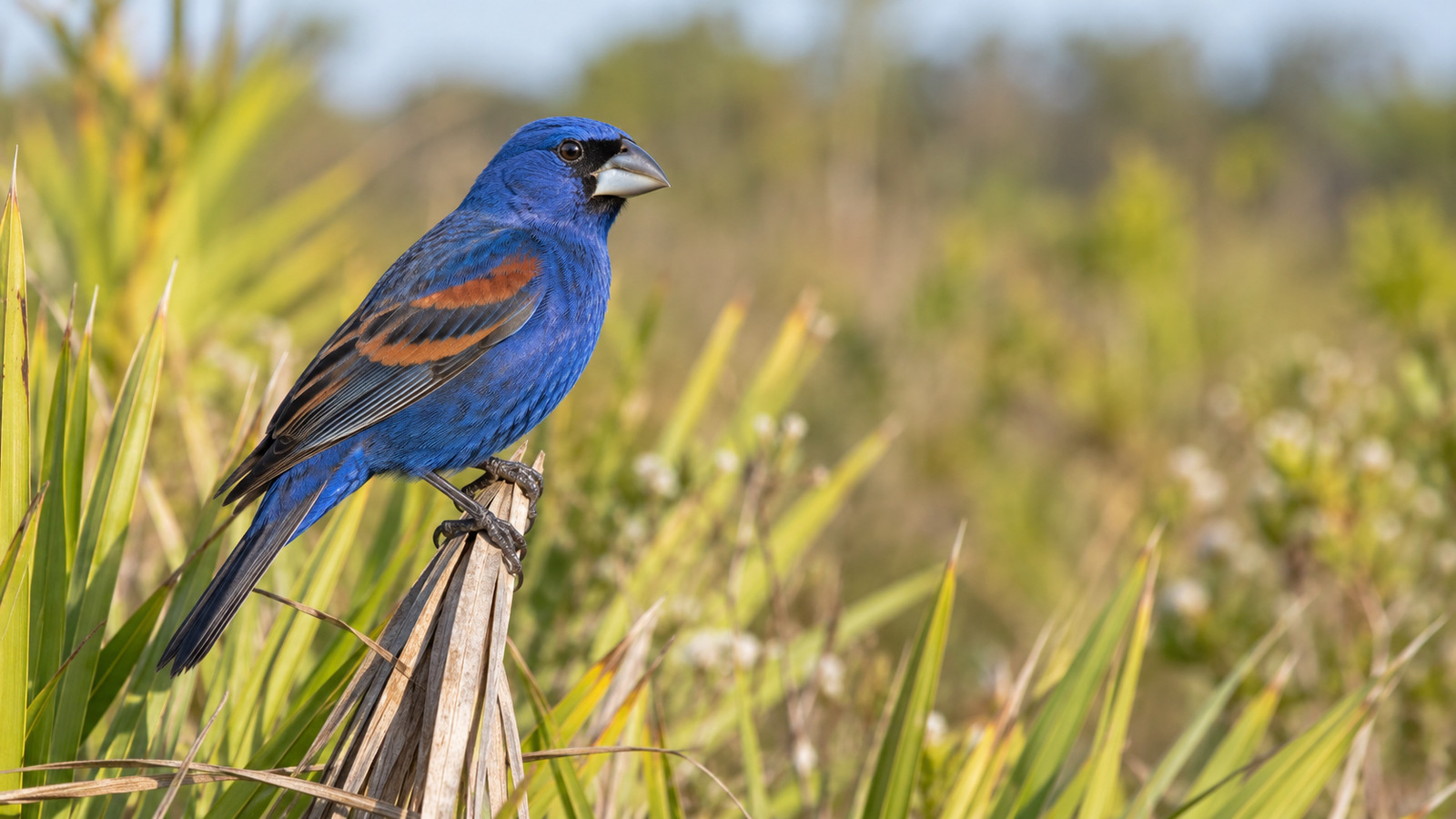
Blue Grosbeaks are stocky summer songbirds whose massive bills, chestnut wingbars, and rich blue males stand out along Florida's brushy field edges.
Blue Grosbeaks breed in open, shrubby country, including old fields, hedgerows, transmission corridors, stream edges, and open pine landscapes. Florida's longleaf pine country can support especially high breeding densities.
These uncommon but widespread birds arrive late in spring, often singing from exposed shrubs, small trees, or roadside wires before gathering in feeding flocks ahead of fall migration.
Habitat:
Grasslands and Agricultural Areas, Pine Flatwoods and Sandhills, Scrub and Dry Prairie, Forests and Woodlands
Area / Range:
Statewide
Diet:
Mostly grasshoppers, crickets, beetles, cicadas, caterpillars, and other invertebrates, supplemented by snails and seeds from wild plants and cultivated grains.
Behavior:
Blue Grosbeaks glean insects from foliage, sally from perches after flying prey, and forage on the ground. Breeding males often sing from conspicuous high points, while pairs place cup nests low in shrubs, vines, or briars.
Day, Dawn, Dusk
Active Times:
Best time to see:
Spring through early fall, especially early in the morning along sunny old fields, hedgerows, and open pine edges.
Florida Native Status:
Native Migratory Bird
Conservation Status:
Least Concern; the widespread population is considered stable overall, though the species usually occurs at low density.
Safety Level:
Low Risk
Safety Information:
Blue Grosbeaks pose no danger. Watch from a respectful distance, keep cats indoors, and avoid trimming dense shrubs when an active nest is present.
Benefits to Property:
They consume many grasshoppers, beetles, caterpillars, and other insects while adding native songbird diversity to properties with open, shrubby habitat.
Property Concerns:
They do not damage buildings or landscaping. Broad pesticide use and removal of all low shrub cover can reduce their food and nesting habitat.
Fun Fact:
The Blue Grosbeak's closest relative is the much smaller Lazuli Bunting. In the southern breeding range, a pair may raise two broods in one season.
Wildlife Laws:
Protected by the Migratory Bird Treaty Act. Do not capture or harm the birds, and do not remove active nests, eggs, or young.
Identification:
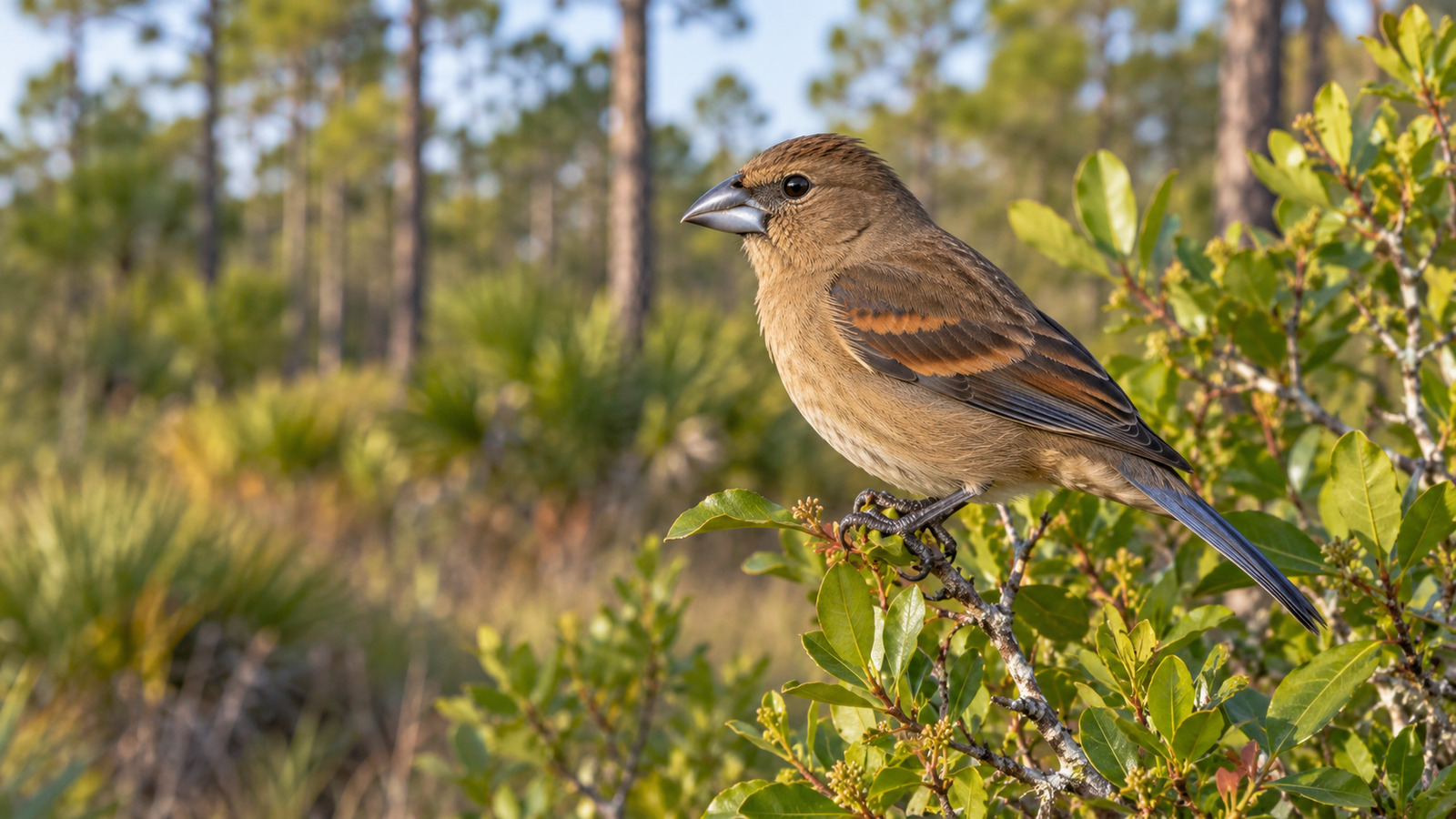
Adult males are deep cobalt blue with a small black mask, an oversized silver-and-black triangular bill, and two chestnut wingbars. Females and immatures are warm cinnamon brown with brown wingbars, unstreaked underparts, and the same exceptionally large bill.