
Blue Tang
Acanthurus coeruleus
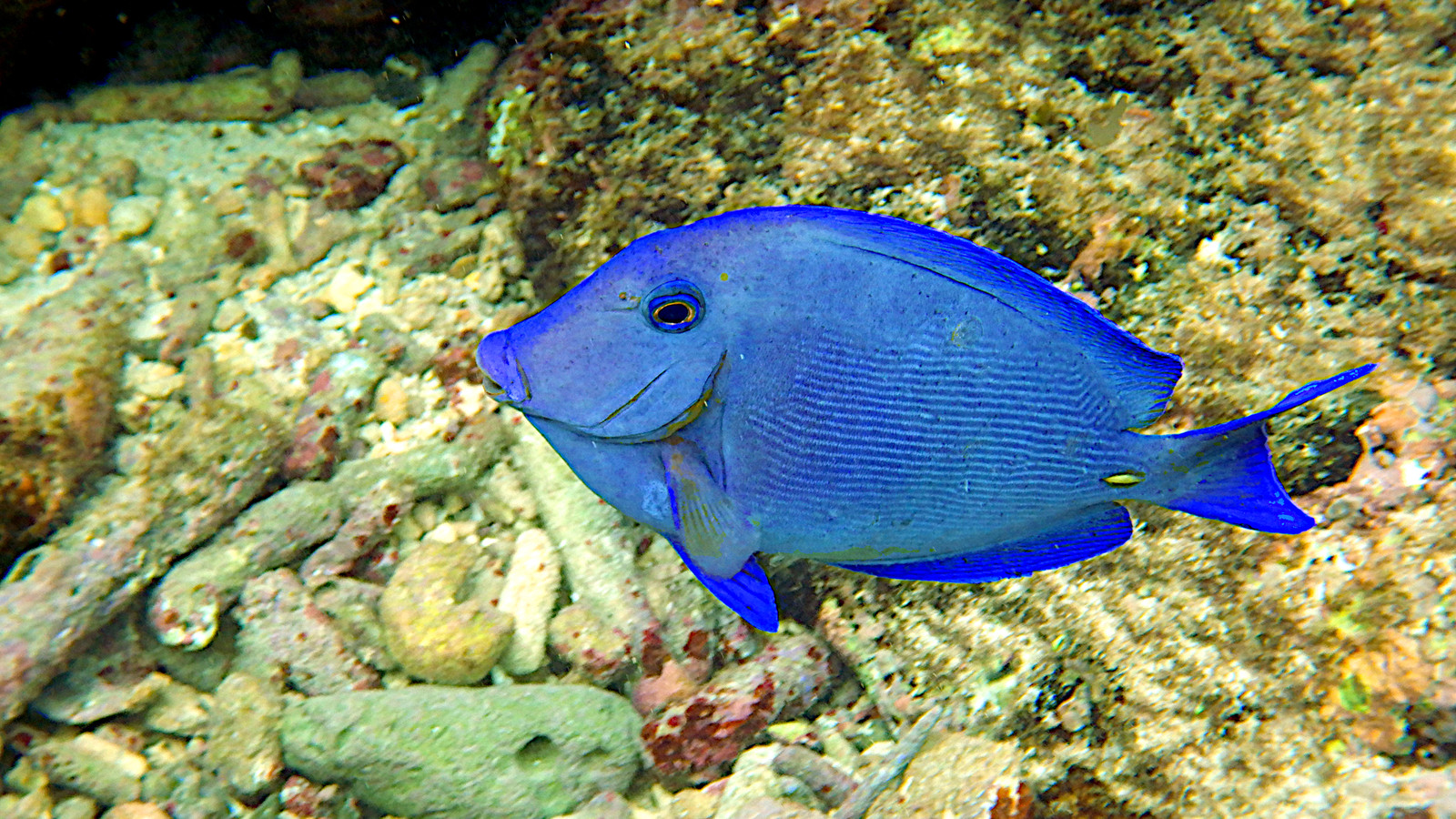
A familiar Florida reef grazer that changes from bright yellow as a juvenile to rich blue as an adult and carries a sharp spine near its tail.
The blue tang, also called the Atlantic blue tang or blue surgeonfish, is a native herbivorous reef fish common in warm Florida waters. Adults are usually deep blue to violet-blue, while juveniles begin life bright yellow.
By cropping algae from reef surfaces, blue tangs help keep space available for corals and other attached marine life.
Habitat:
Coastal Waters
Area / Range:
South Florida, Florida Keys, Atlantic Coast, Gulf Coast
Diet:
Blue tangs graze mainly on benthic algae growing on reefs, rocks, and seagrass blades. Small juveniles may also pick parasites from larger fishes at cleaning stations.
Behavior:
They feed during the day, alone or in loose groups, scraping algae with small comb-like teeth. At night they shelter in reef crevices. When threatened, the sharp movable spine at the tail base can be presented toward a predator.
Day
Active Times:
Best time to see:
Daylight on shallow coral reefs, rocky ledges, and grassy hard bottom in South Florida and the Florida Keys.
Florida Native Status:
Native
Conservation Status:
Native western Atlantic species; globally assessed as Least Concern by the IUCN.
Safety Level:
Use Caution
Safety Information:
Nonaggressive toward swimmers, but the surgeonfish spine at the base of the tail is sharp and can cause a deep cut if the fish is handled. Observe without touching or cornering it.
Benefits to Property:
Continuous algae grazing helps maintain open reef surfaces and supports the balance between algae and reef-building organisms.
Property Concerns:
It creates no typical land-property problem. Collection for aquariums should follow current rules and use methods that do not damage coral or reef habitat.
Fun Fact:
A juvenile blue tang is bright yellow rather than blue. The family name surgeonfish refers to the scalpel-like spine near the tail, not to the animal's feeding habits.
Wildlife Laws:
Florida saltwater licensing, gear, bag, size, and closed-area rules may apply. Blue tangs are covered by Florida marine-life collection rules, and collecting is prohibited in some parks, sanctuaries, and no-take zones. Check current FWC rules before taking any fish.
Identification:
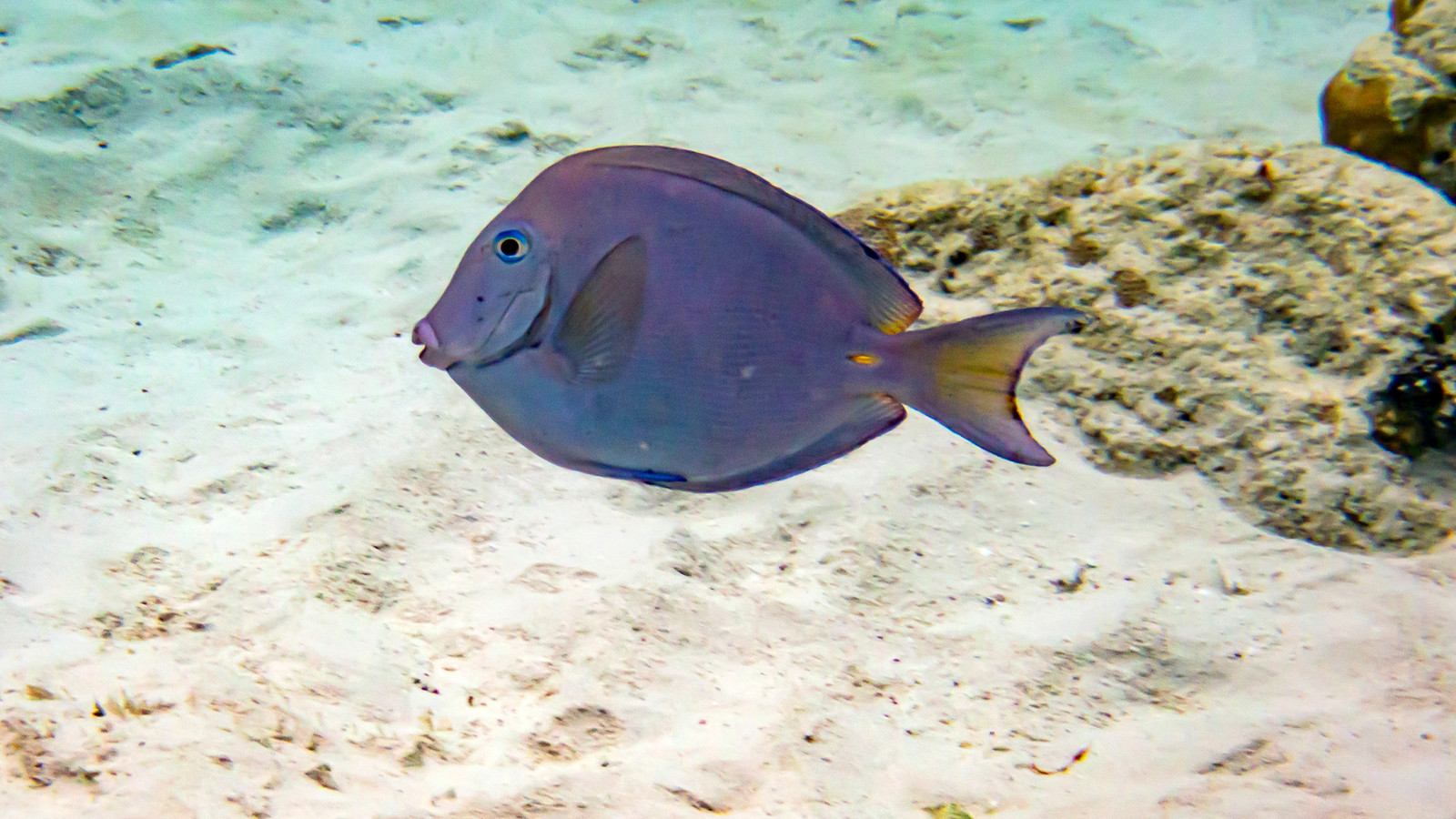
The body is deep, thin, and oval with a small low-set mouth. Adults are blue to purplish blue and have a conspicuous yellow or pale spine on each side of the tail base. Juveniles are bright yellow, and intermediate fish are blue with a yellow tail before taking on adult coloration.