
Bluehead Wrasse
Thalassoma bifasciatum
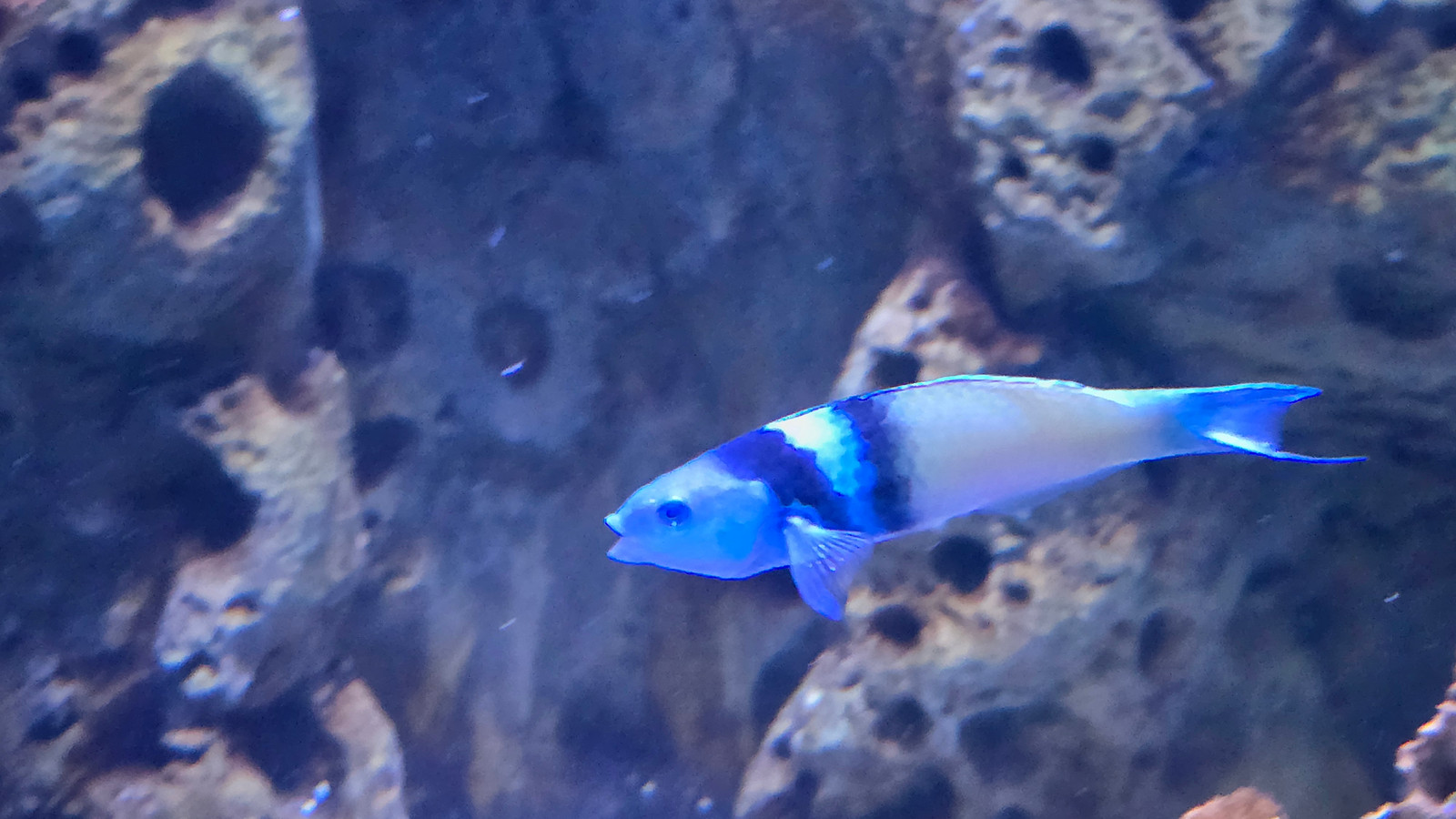
A colorful Florida reef wrasse whose blue-headed males and smaller initial-phase fish help clean parasites from other fish.
The bluehead wrasse is a native, active fish of clear Florida coastal waters. It moves over shallow reefs, rocky flats, sandy bottoms, and seagrass, sometimes forming very large schools.
Habitat:
Coastal Waters, Estuaries and Bays
Area / Range:
Atlantic Coast, Gulf Coast, Florida Keys
Diet:
Blueheads eat zooplankton, small bottom-dwelling animals, and sometimes fish eggs. Initial-phase fish also remove parasites and dead tissue while cleaning other reef fish.
Behavior:
They swim continually around reef habitat and can form large schools. Some establish cleaning stations where other fish pause to have parasites removed. A small share of males develop the striking terminal-phase blue-head pattern.
Day
Active Times:
Best time to see:
Daylight while snorkeling or diving on clear, shallow reefs and rocky coastal habitat.
Florida Native Status:
Native
Conservation Status:
Not considered endangered or vulnerable by IUCN in the Florida Museum profile.
Safety Level:
Low Risk
Safety Information:
Generally harmless to swimmers and divers. Watch without handling fish or touching reef structures.
Benefits to Property:
Cleaning behavior supports other reef fish and healthy coastal ecosystems; there is no direct residential-landscape benefit.
Property Concerns:
No direct property concern. Protecting water quality and reef habitat is more relevant than yard management for this species.
Fun Fact:
A female can change sex and develop the blue-headed terminal-phase male coloration when social conditions change. Cleaner blueheads may dance to signal their service to other fish.
Wildlife Laws:
For any marine-life collection, follow current FWC license, gear, bag, possession, and closed-area rules. The bluehead belongs to the wrasse family; local parks and sanctuaries may impose stricter limits.
Identification:
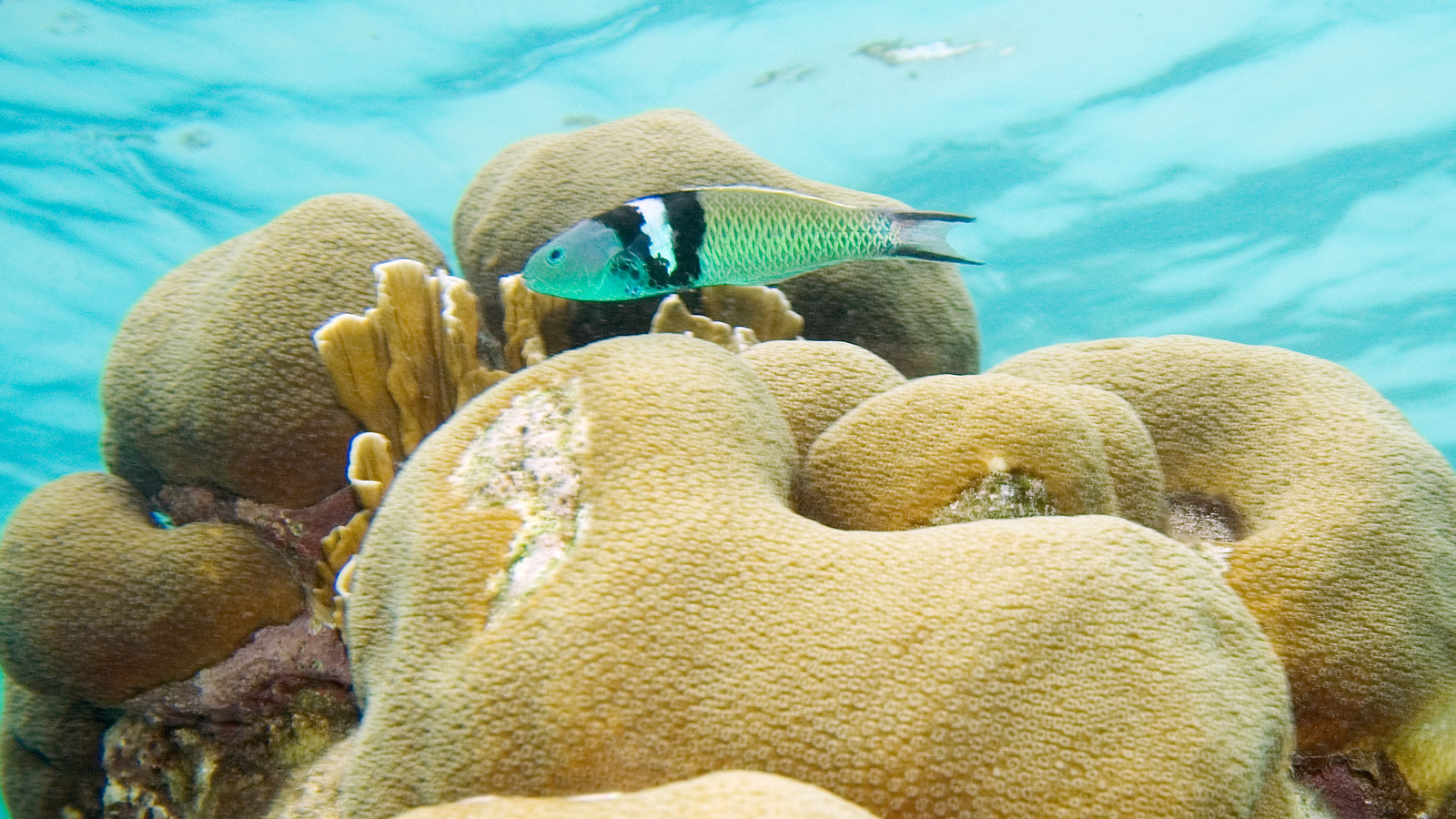
Terminal-phase males have a bright blue head, two black bars separated by a white bar, and a green to blue-green body. Initial-phase adults and juveniles look different, often showing yellow and a dark stripe or blotches. The body is narrow and elongated.