
Bobolink
Dolichonyx oryzivorus
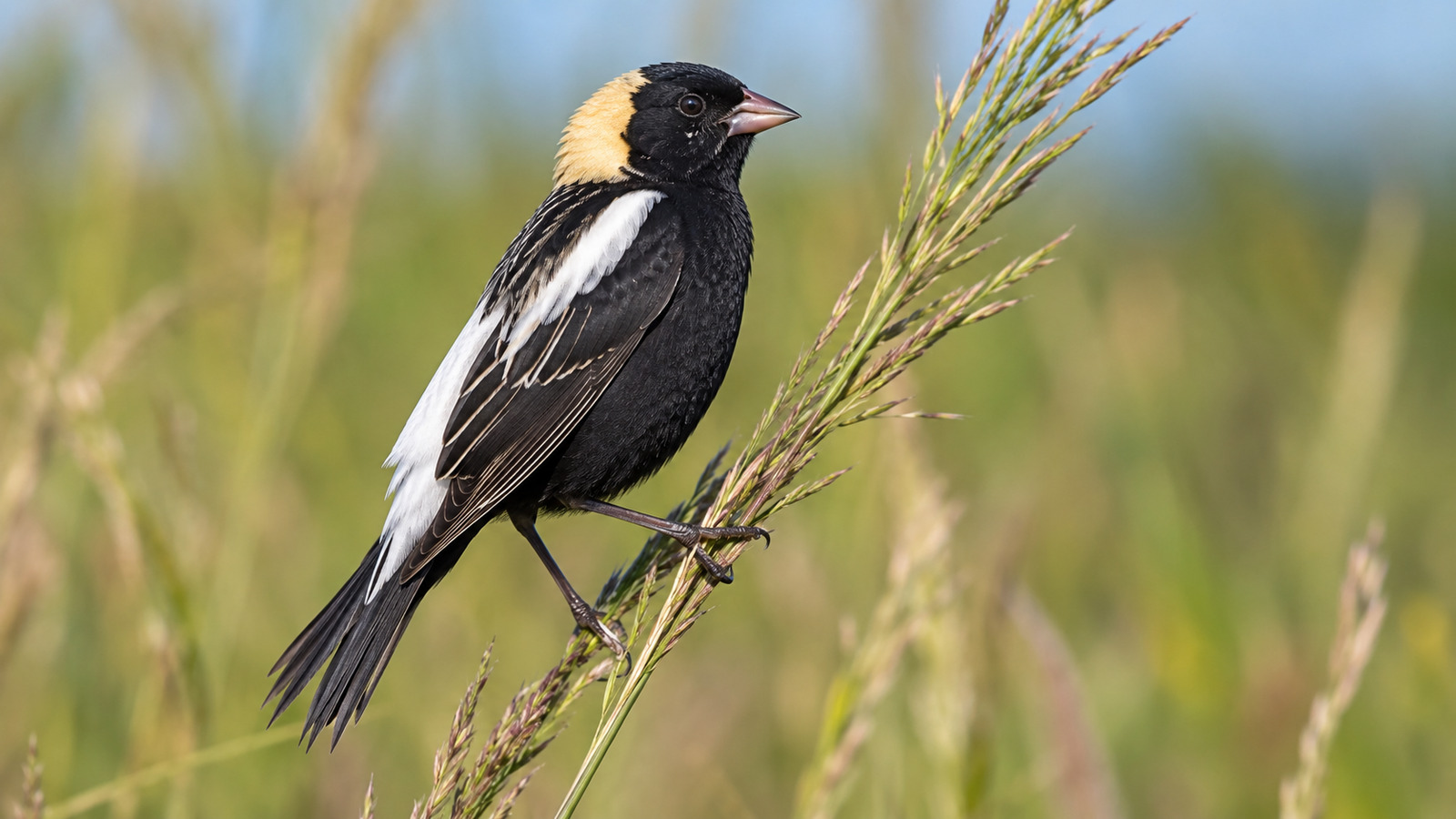
Bobolinks are remarkable long-distance migrants that cross Florida in spring and fall, gathering in grasslands, marsh edges, and agricultural fields.
Bobolinks are small native blackbirds that pass through Florida during their long migrations between northern breeding grounds and southern South America. In Florida they are most often associated with open grasslands, wet fields, marsh edges, and agricultural areas where flocks pause to feed and rest.
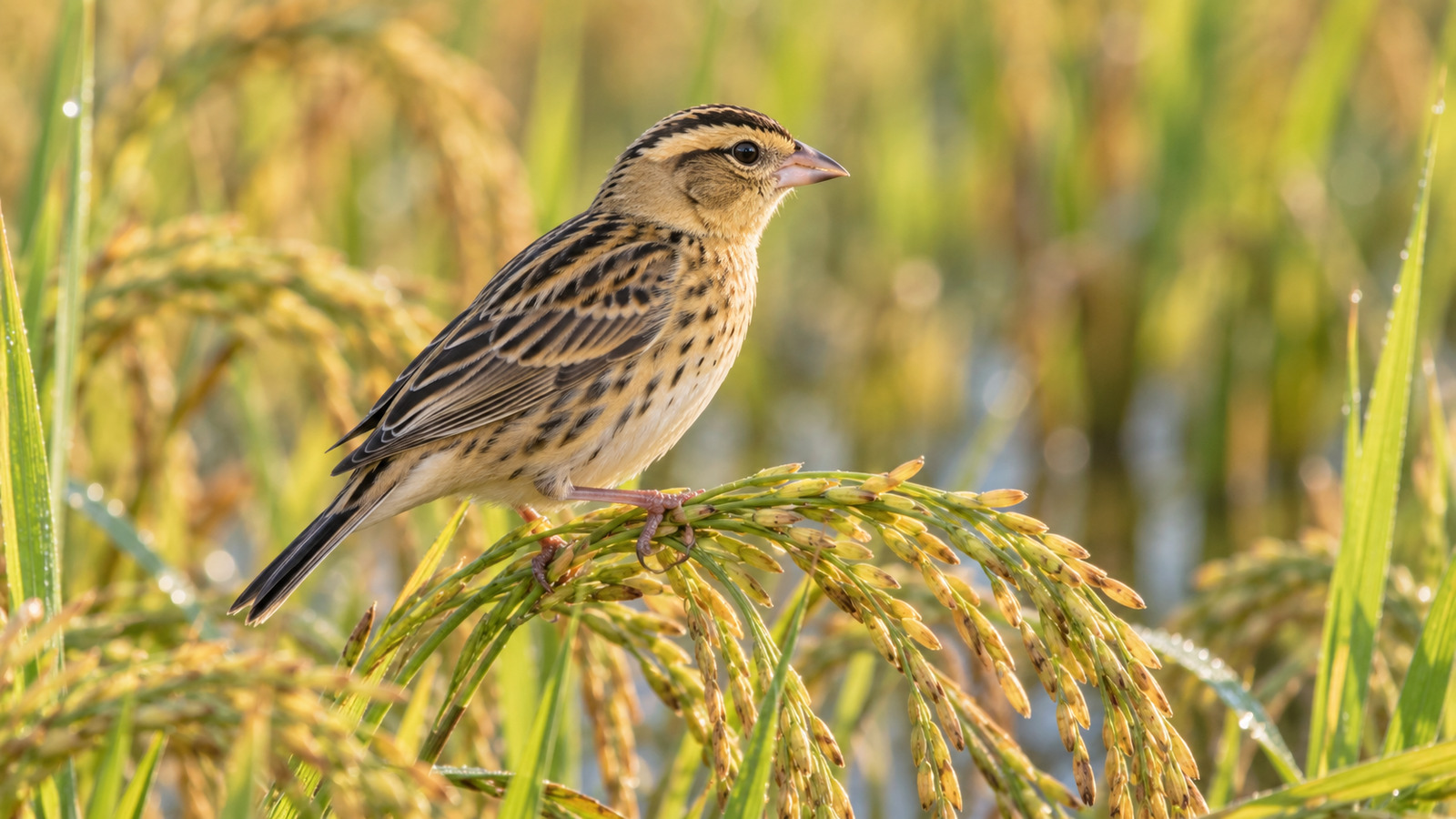
Breeding males wear striking black, white, and straw-colored plumage, but most birds seen during fall migration have warm buff-and-brown plumage. Their rapid seasonal change in appearance makes careful attention to shape, crown pattern, and calls especially useful.
Habitat:
Grasslands and Agricultural Areas, Freshwater Wetlands
Area / Range:
Statewide
Diet:
Bobolinks eat seeds, grains, insects, spiders, and other small invertebrates. Insects are especially important during the breeding season, while migrating and wintering flocks rely heavily on grass seeds, weed seeds, rice, and other grains.
Behavior:
During migration, Bobolinks often travel and forage in flocks, sometimes remaining hidden low in tall grass until they rise together. Breeding males perform fluttering song flights over grasslands, but Florida observers more often detect migrants by their sharp call notes as they move through fields and marshes.
Day
Active Times:
Best time to see:
Early morning during spring and fall migration in wet fields, marsh edges, and seed-rich grasslands
Florida Native Status:
Native Migratory Bird
Conservation Status:
Orange Alert Tipping Point species with a steep long-term population decline
Safety Level:
Harmless. Respect Nests
Safety Information:
Bobolinks are harmless to people and should be observed without disturbance. Keep pets away from resting flocks and avoid driving or walking through dense field vegetation where birds are feeding or sheltering.
Benefits to Property:
Bobolinks consume insects and weed seeds while adding seasonal biodiversity to large open landscapes. Fields managed with varied grass height, seed-bearing native plants, and reduced pesticide use can provide valuable migration stopover habitat.
Property Concerns:
Bobolinks do not damage buildings or landscapes. Large flocks may temporarily feed in grain fields, but most Florida encounters are brief migration stopovers. Mowing extensive fields during peak use can remove cover and food, so delayed or rotational mowing is preferable where practical.
Fun Fact:
A Bobolink may travel roughly 12,500 miles during its annual migration. The species name oryzivorus means rice eating, reflecting the bird's long association with rice and other grains.
Wildlife Laws:
Bobolinks, their feathers, active nests, eggs, and young are protected under the federal Migratory Bird Treaty Act. Do not capture, harm, possess, or disturb the birds or active nests without appropriate authorization.
Identification:
Bobolinks have a compact body, a large somewhat flat head, a short tail, and a short pointed bill. Breeding males are black below with white shoulders and back patches, a white rump, and a straw-gold nape. Females, young birds, and nonbreeding males are buffy brown with bold dark crown stripes, a dark eyeline, streaked back and flanks, and a pinkish bill.