
Brown Pelican
Pelecanus occidentalis
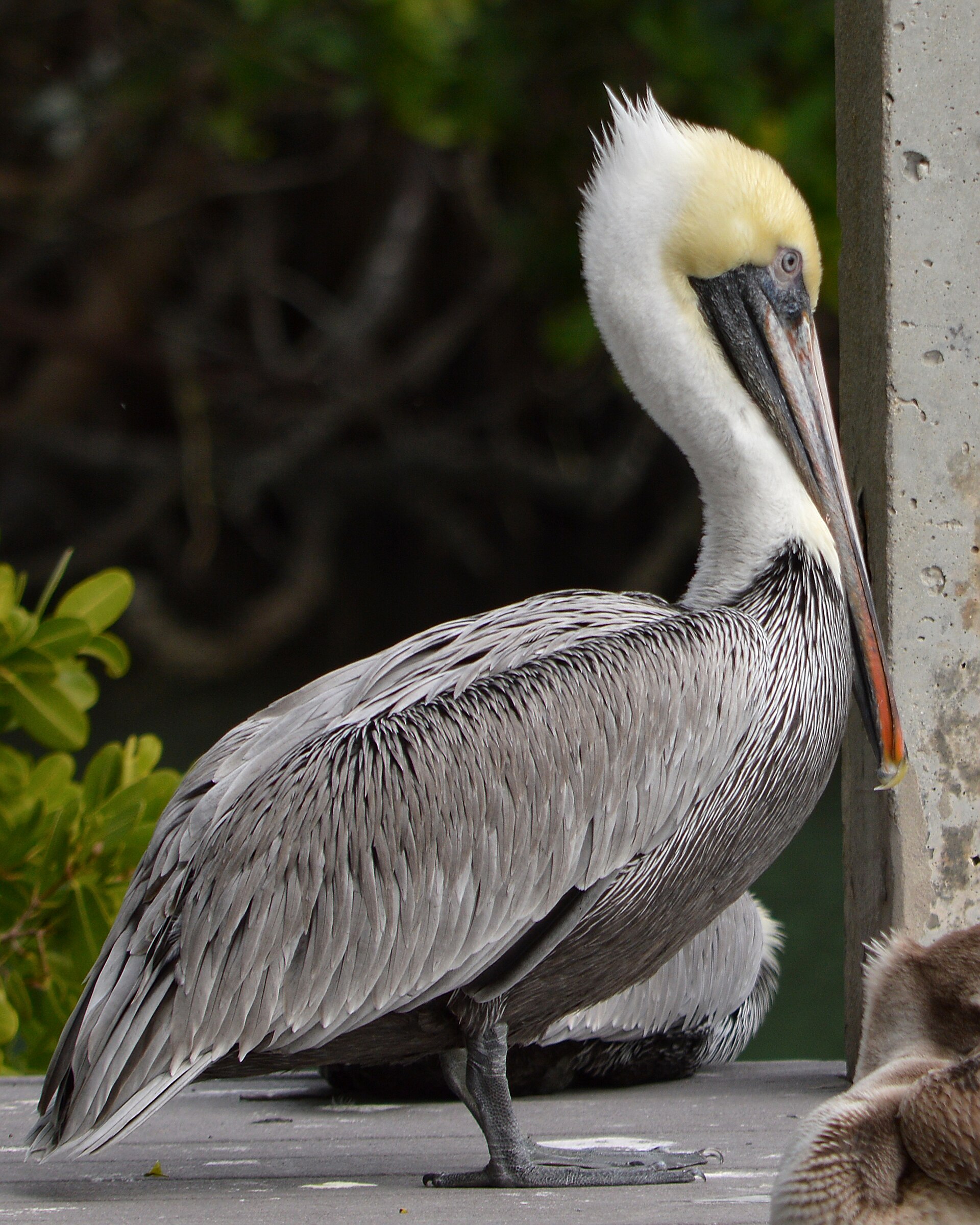
The throat pouch drains water after a dive before the bird swallows its fish.
The throat pouch drains water after a dive before the bird swallows its fish. Protected under the Migratory Bird Treaty Act. Never feed, hook, chase, or disturb nesting pelicans.
Habitat:
Estuaries and Bays, Coastal Waters, Beaches and Dunes
Area / Range:
Florida Keys, Atlantic Coast, Gulf Coast
Diet:
Primarily fish captured by plunge-diving.
Behavior:
Flies low over waves and dives headfirst into water. Often roosts on docks, pilings, and islands.
Day
Active Times:
Best time to see:
Look during day in suitable Florida habitat.
Florida Native Status:
Native
Conservation Status:
Protected migratory bird
Safety Level:
Harmless. Do Not Feed
Safety Information:
Protected under the Migratory Bird Treaty Act. Never feed, hook, chase, or disturb nesting pelicans.
Benefits to Property:
Consumes abundant coastal fish and signals active marine food webs.
Property Concerns:
Droppings and roosting groups sometimes create dock cleanup issues.
Fun Fact:
The throat pouch drains water after a dive before the bird swallows its fish.
Wildlife Laws:
Protected under the Migratory Bird Treaty Act. Never feed, hook, chase, or disturb nesting pelicans.
Identification:
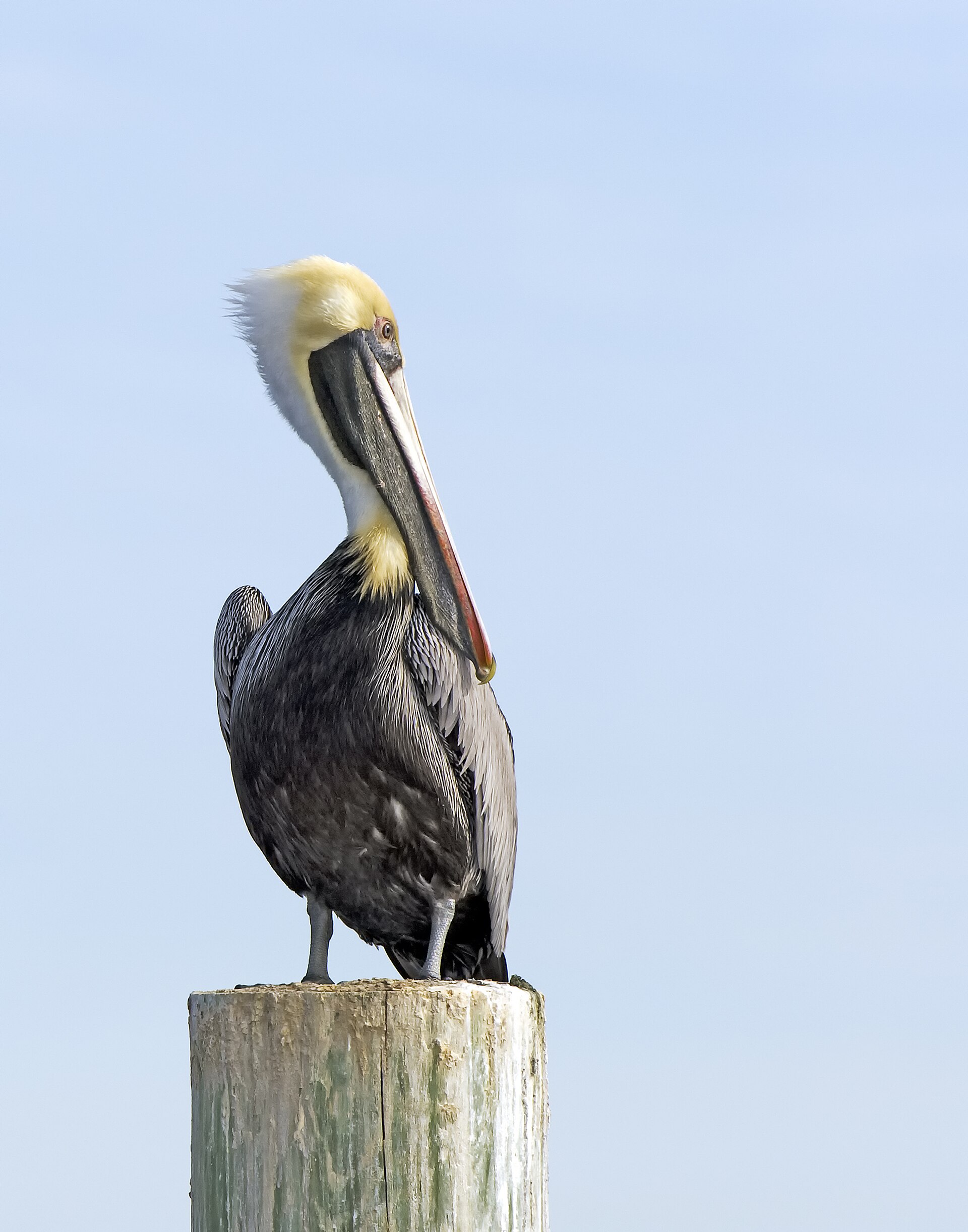
Large brown-gray seabird with a long bill and expandable throat pouch.
Credits:
Facts: wildlife reference. Images: primary image and secondary image, Wikimedia Commons.