
Calico Crab
Hepatus epheliticus
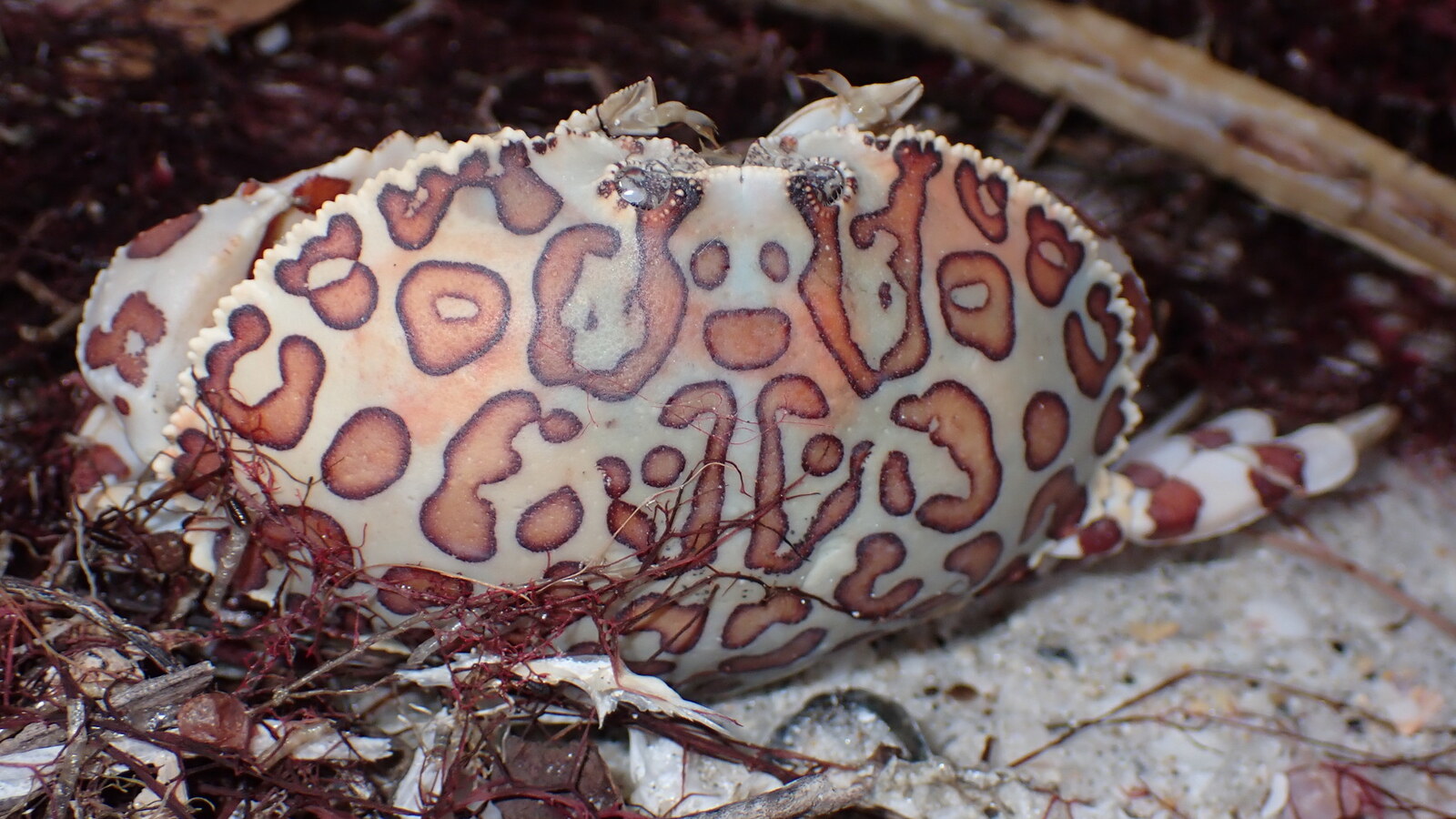
The Calico Crab is a colorful burrowing marine crab found on sandy bottoms along Florida's Atlantic and Gulf coasts.
Calico Crabs live in coastal waters over sand or shell where they bury themselves with only the eyes exposed.
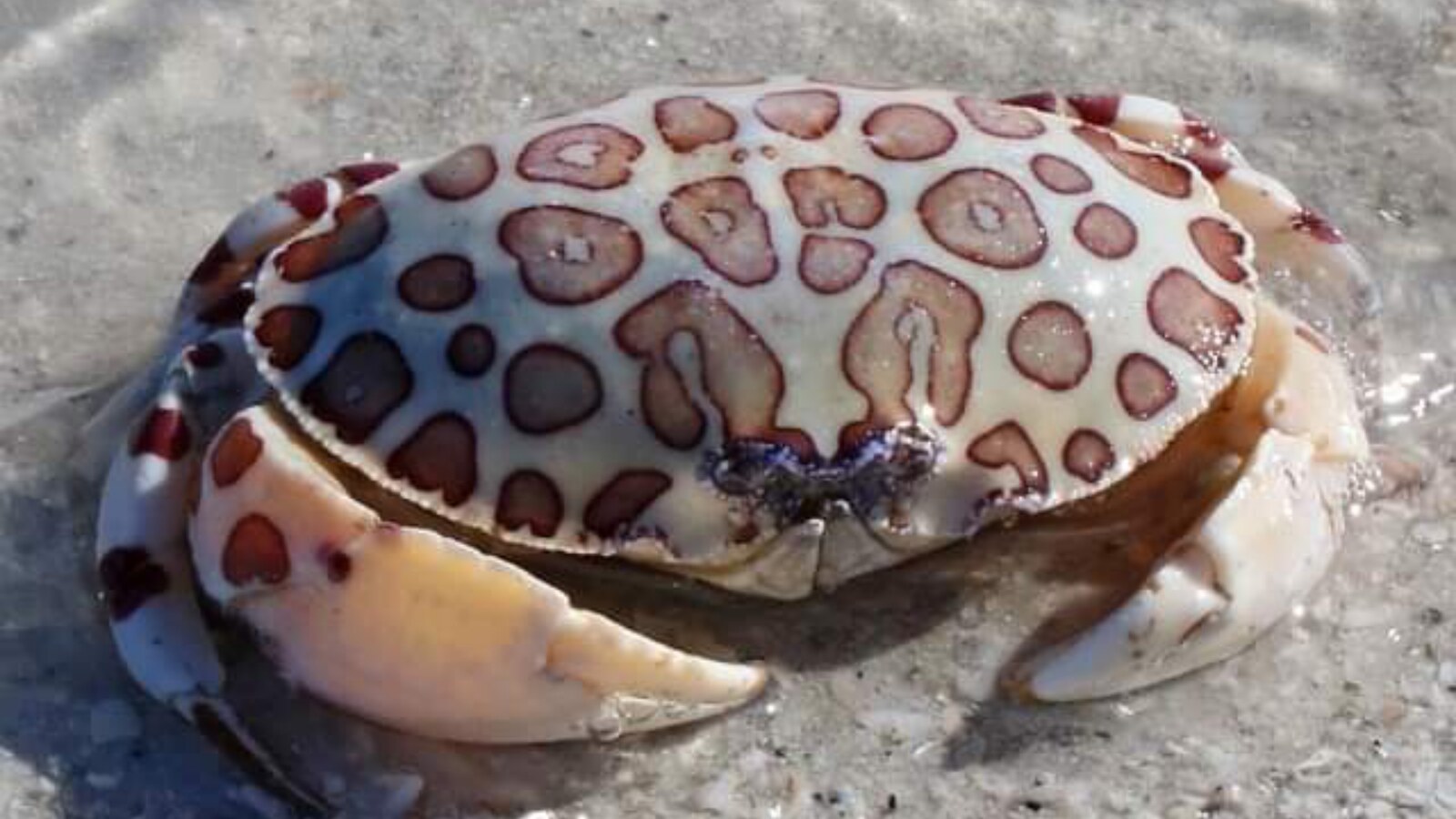
Storms and currents sometimes carry them into shallow surf, where beach visitors notice the cream shell marked with red and purple rings.
Habitat:
Coastal Waters, Beaches and Dunes, Estuaries and Bays
Area / Range:
Atlantic Coast, Gulf Coast
Diet:
Small clams, snails, worms, crustaceans, carrion, and other food found in sandy marine bottoms.
Behavior:
It buries backward into sand for camouflage and protection, then emerges to forage. Strong claws crush small shelled prey.
Night, Dusk, Dawn
Active Times:
Best time to see:
Low tide or calm shallow water after waves or storms expose sandy-bottom animals.
Florida Native Status:
Native
Conservation Status:
Widespread along the western Atlantic and generally secure where clean sandy-bottom habitat remains.
Safety Level:
Low Risk
Safety Information:
It can pinch when handled. Observe in place, keep fingers away from the claws, and return stranded live crabs gently to shallow water.
Benefits to Property:
Calico Crabs recycle organic material and support fish, sea turtles, and other coastal predators.
Property Concerns:
No property damage. Beach nourishment, pollution, and repeated bottom disturbance can affect sandy habitat.
Fun Fact:
The shell pattern resembles printed calico fabric and provides effective camouflage against shell-strewn sand.
Wildlife Laws:
Collection and possession must follow current Florida saltwater fishing rules, size limits, protected-area rules, and gear restrictions.
Identification:
A rounded oval crab with a smooth cream to yellow shell covered in reddish or purple ring-shaped spots. The claws are broad and pale with matching markings.
Credits:
Facts and photos: iNaturalist Calico Crab. Saltwater rules: Florida FWC.