
Cape May Warbler
Setophaga tigrina
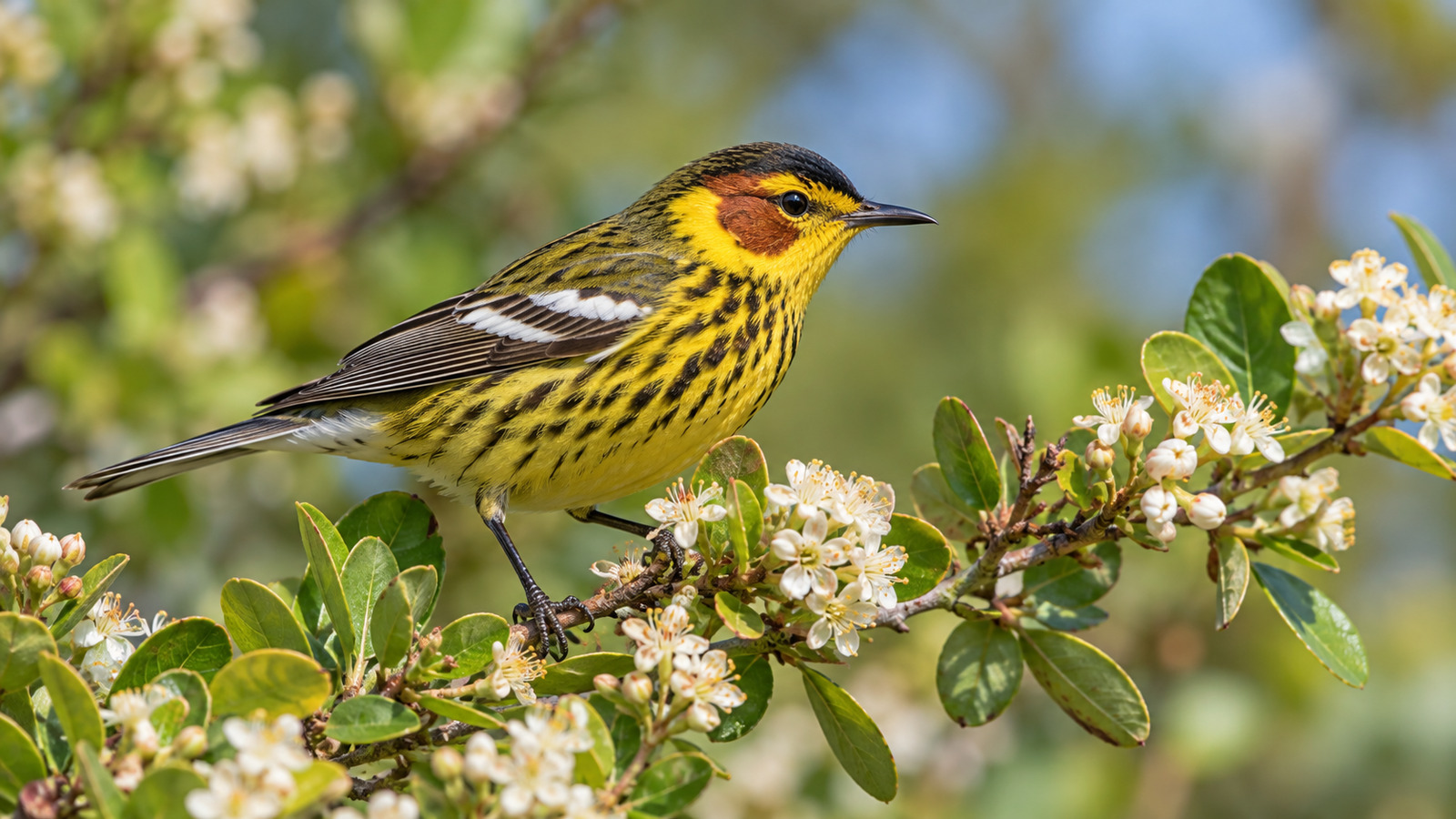
A finely billed migrant warbler marked by yellow plumage, tiger-like breast streaks, and a yellow-green rump.
The Cape May Warbler is a passage migrant across Florida, especially during spring and fall. It breeds in mature northern spruce and fir forests and winters mainly in the Caribbean, using Florida woodlands, scrub, parks, gardens, and coastal vegetation as stopover habitat.
Its slightly downcurved bill supports an unusually varied diet for a warbler. In addition to hunting insects, Cape May Warblers sip nectar and eat fruit during migration and winter.
Habitat:
Forests and Woodlands, Scrub and Dry Prairie, Urban and Residential Areas
Area / Range:
Statewide
Diet:
Cape May Warblers eat insects and spiders, with spruce budworms dominating the breeding diet. They also take beetles, flies, ants, bees, aphids, and moths. During migration and winter, they sip flower nectar and eat fruit and berries.
Behavior:
These active warblers pick and probe prey from foliage, chase flying insects, and sometimes hover at branch tips. Their curled tongues help them reach nectar. Migrants may forage from the canopy down to eye level and sometimes defend rich food sources.
Day
Active Times:
Best time to see:
Spring migration from April through May and fall migration from September into October
Florida Native Status:
Native Migrant
Conservation Status:
Low Concern
Safety Level:
Harmless. Respect Nests
Safety Information:
Cape May Warblers pose no danger to people or property. Observe quietly, keep cats indoors, and avoid crowding birds that are feeding after long migratory flights.
Benefits to Property:
Cape May Warblers remove caterpillars, aphids, scale insects, flies, beetles, and other small invertebrates. Native flowering plants, fruiting shrubs, and pesticide-free foliage improve stopover habitat.
Property Concerns:
This species does not damage landscaping. Window strikes, outdoor cats, bright nighttime lighting, and heavy insecticide use are the main risks around developed properties.
Fun Fact:
The species was named after Cape May, New Jersey, even though it is only a migrant there. Its scientific name tigrina refers to the tiger-like streaking on the breast. A long, curled tongue helps it sip nectar from flowers.
Wildlife Laws:
Protected migratory bird. Do not capture, harm, possess, or destroy active nests, eggs, or young. Federal authorization may be required before removing an active nest.
Identification:
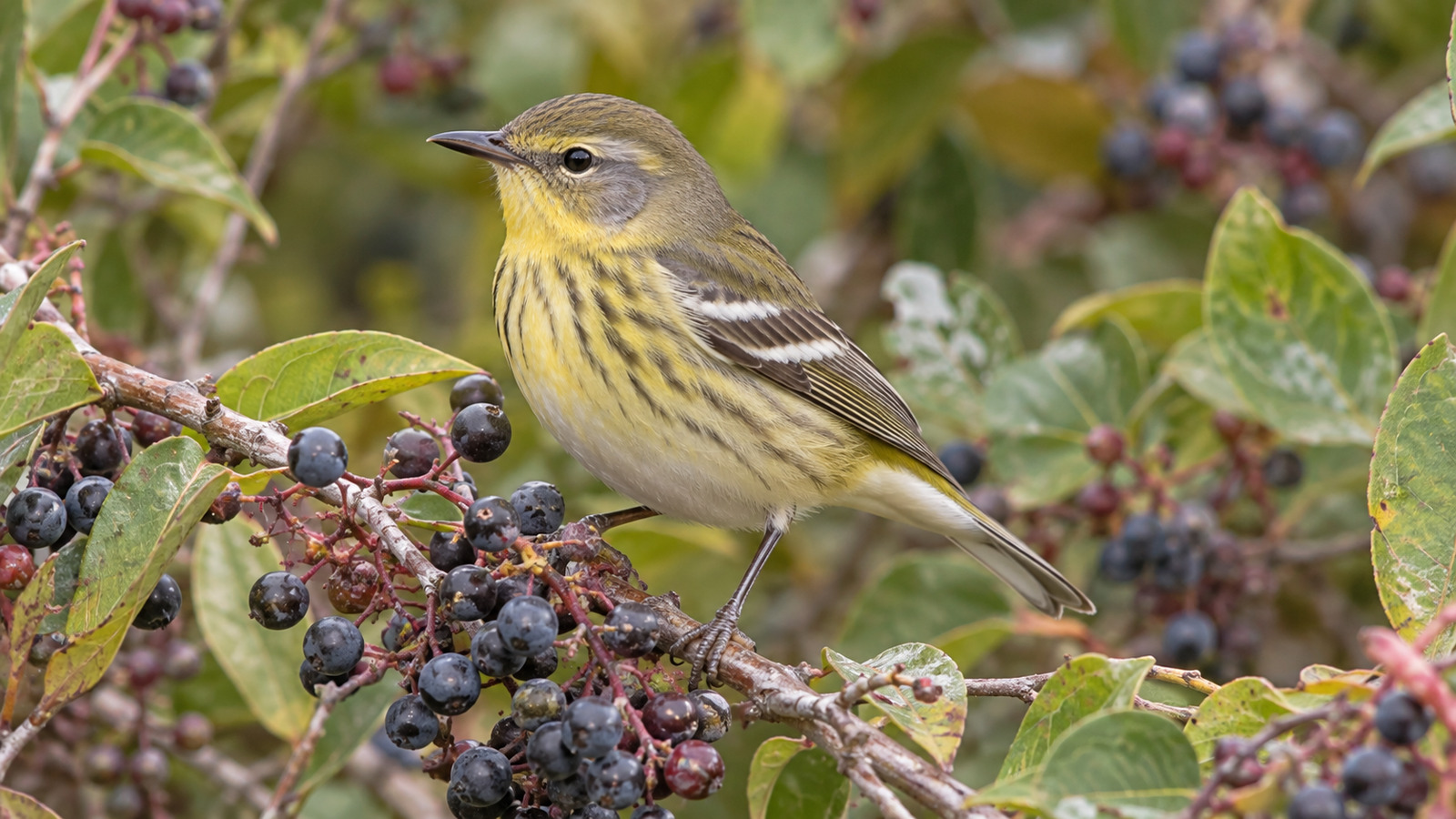
Adult males have yellow underparts with dark tiger-like streaks, a chestnut cheek patch framed in yellow, an olive back, and a large white wing patch. Females and immatures are duller, with a grayish cheek, pale streaking, a yellow-green rump, and white undertail coverts. The fine, slightly decurved bill is a useful field mark.