
Carolina Mantid
Stagmomantis carolina
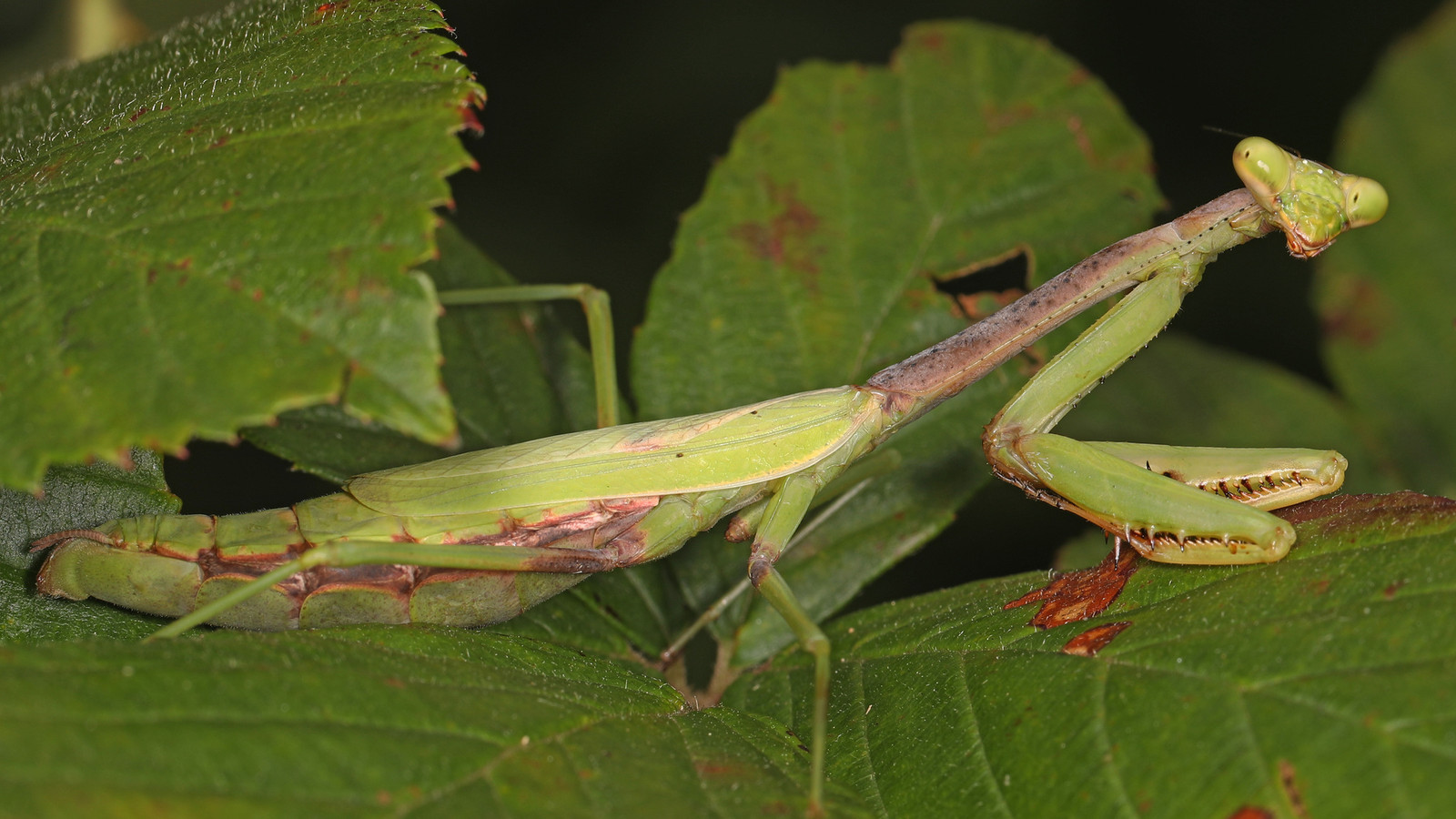
A native Florida ambush predator that blends into shrubs, grasses, and garden plants while hunting insects.
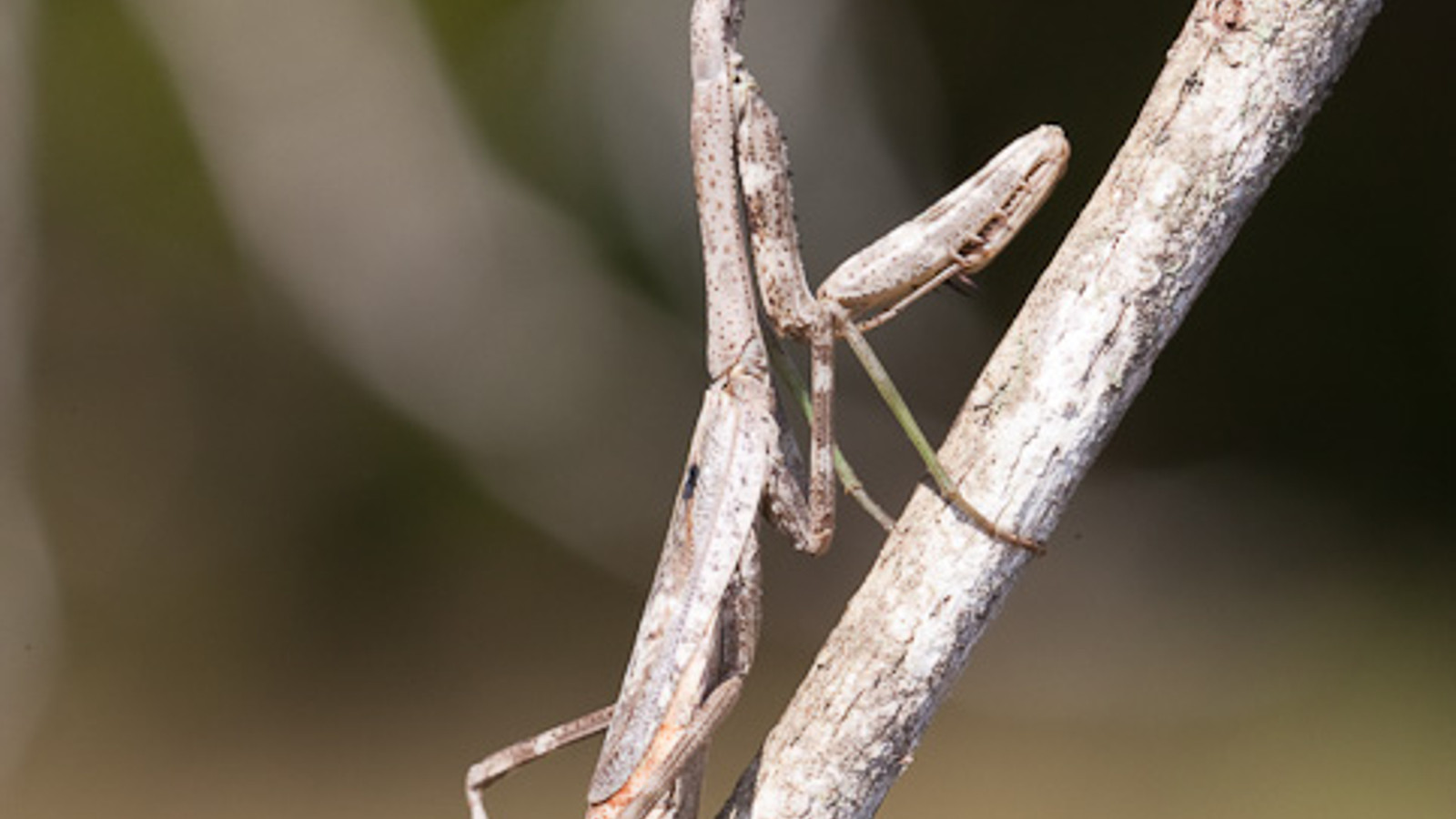
Carolina Mantids occur across Florida in gardens, fields, woodland edges, and shrubby landscapes. Individuals vary from green to mottled gray or brown.
They capture many kinds of insects with powerful folded forelegs. Because they also take bees and butterflies, they are general predators rather than targeted pest control.
Habitat:
Grasslands and Agricultural Areas, Forests and Woodlands, Urban and Residential Areas
Area / Range:
Statewide
Diet:
Preys on flies, moths, crickets, grasshoppers, bees, butterflies, and other arthropods.
Behavior:
Waits motionless, tracks prey with its head, and strikes rapidly. Egg cases persist on twigs and stems.
Daytime, Dawn and Dusk, Nighttime
Active Times:
Best time to see:
Summer through fall on flowering plants, shrubs, porch lights, and tall grasses.
Florida Native Status:
Native
Conservation Status:
Not listed; common where diverse vegetation and prey remain.
Safety Level:
Low
Safety Information:
Harmless to people and pets. Avoid squeezing or handling and leave egg cases when pruning is optional.
Benefits to Property:
Consumes many insects and adds native predator diversity to gardens and planting beds.
Property Concerns:
Also captures pollinators. Purchased egg cases may contain nonnative species and should be avoided.
Fun Fact:
- The head rotates widely.
- Color varies among green, gray, and brown forms.
- The egg case is called an ootheca.
Wildlife Laws:
No special protection applies to common populations. Pesticide use must follow labels, and protected-land collection requires authorization.
Identification:
Medium mantid with a triangular mobile head, long pronotum, grasping forelegs, and green, brown, or gray coloration.