
Carolina Saddlebags
Tramea carolina
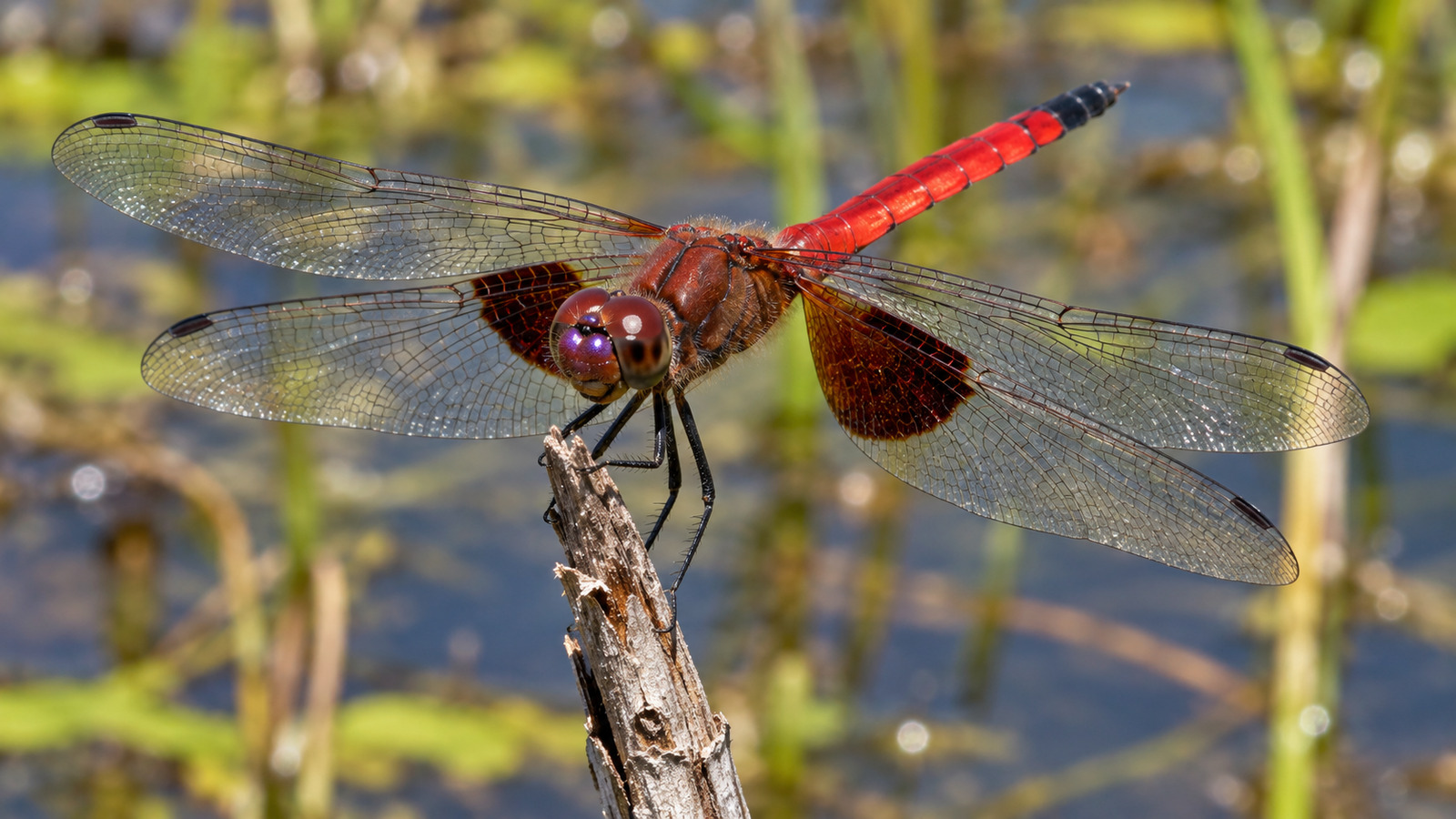
Carolina Saddlebags are powerful red-brown dragonflies named for the broad dark patches at the bases of their hindwings.
Carolina Saddlebags occur across Florida around sunny ponds, lakes, marshes, and slow waters with submerged or emergent vegetation. They are strong gliders and may disperse or migrate well beyond breeding sites.
Adults spend much of the day hunting over open areas and water. Their aquatic nymphs develop among vegetation below the surface before climbing out of the water and transforming into fast-flying adults.
Habitat:
Lakes and Ponds, Freshwater Wetlands, Canals and Ditches
Area / Range:
Statewide
Diet:
Adults capture mosquitoes, midges, flies, and other small flying insects in the air. Aquatic nymphs prey on insect larvae, small crustaceans, and other small freshwater animals.
Behavior:
Adults glide and patrol over shorelines and open water, then perch on exposed twigs or stems. Mating occurs in vegetation, and females deposit eggs around emergent aquatic plants while males may remain nearby.
Day
Active Times:
Best time to see:
Warm sunny hours from morning through afternoon around open ponds, marshes, canals, and lakes with emergent vegetation.
Florida Native Status:
Native
Conservation Status:
Common native dragonfly and not federally or state listed in Florida. Local abundance depends on suitable open water, aquatic vegetation, and good water quality.
Safety Level:
Harmless
Safety Information:
Carolina Saddlebags do not sting and are not aggressive toward people. Like other dragonflies, they may nip only if tightly handled, so observe without grabbing.
Benefits to Property:
Adults consume many small flying insects, while aquatic nymphs help regulate freshwater invertebrate communities. Their presence adds visible biodiversity to ponds and wetland landscapes.
Property Concerns:
They do not damage plants, lawns, buildings, or pond structures. Broad insecticide use, polluted runoff, shoreline clearing, and removal of aquatic vegetation can reduce breeding habitat.
Fun Fact:
The common name refers to the paired dark patches on the hindwings, which look like saddlebags straddling the abdomen in flight. An older common name is Violet-Masked Glider, describing the metallic violet forehead.
Wildlife Laws:
Carolina Saddlebags have no special statewide protected status in Florida, but collecting or disturbing wildlife may be restricted in parks, preserves, refuges, and other public lands. Follow all site-specific rules and obtain permission before collecting.
Identification:
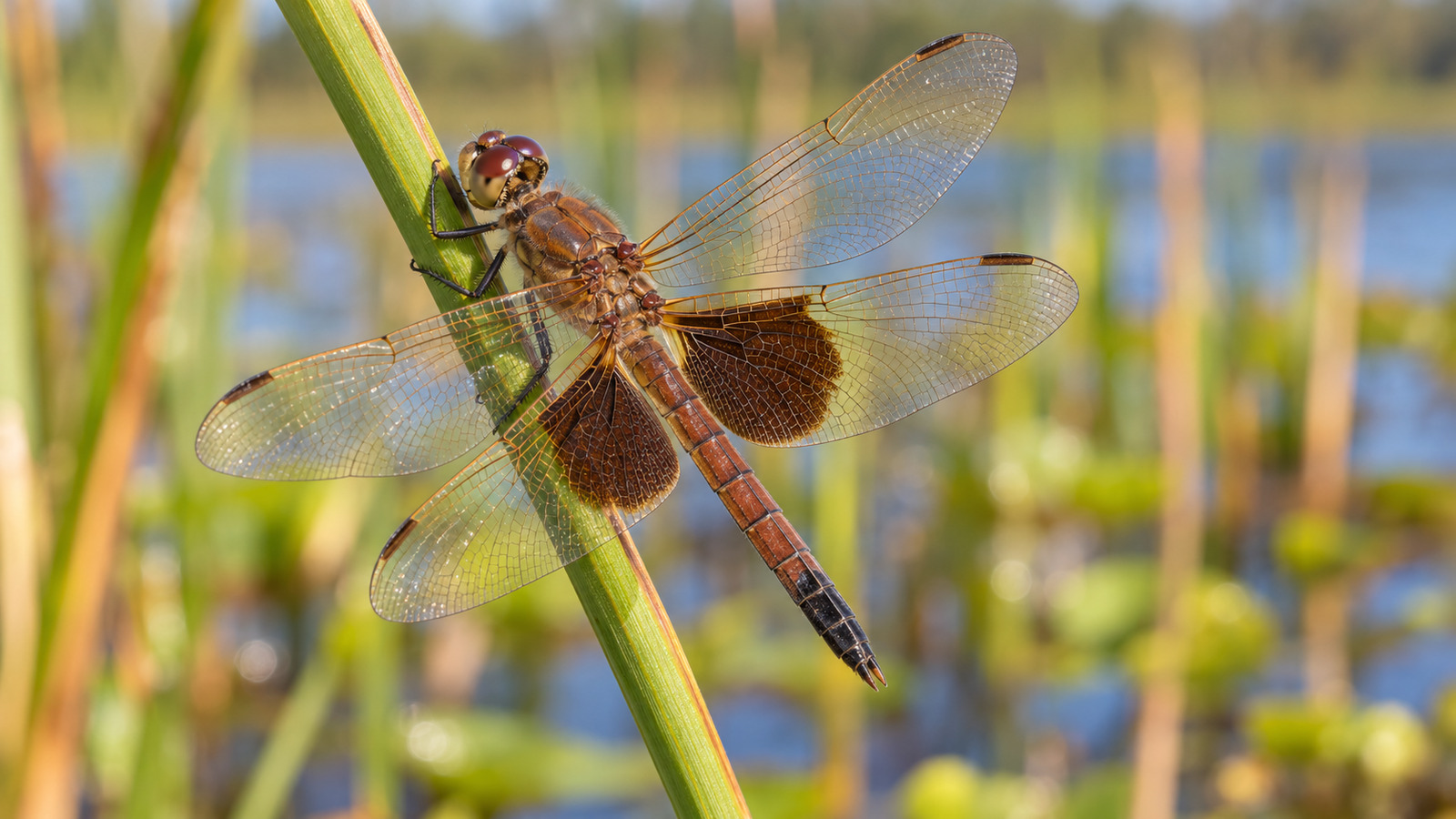
Males have a bright red abdomen, dull red-brown thorax, red-brown eyes, a violet forehead, and mostly black eighth and ninth abdominal segments. Females are duller reddish brown with a tan and violet face. Both sexes have clear wings with large dark red-brown saddle-shaped patches at the bases of the hindwings.