
Chuck-Will's-Widow
Antrostomus carolinensis
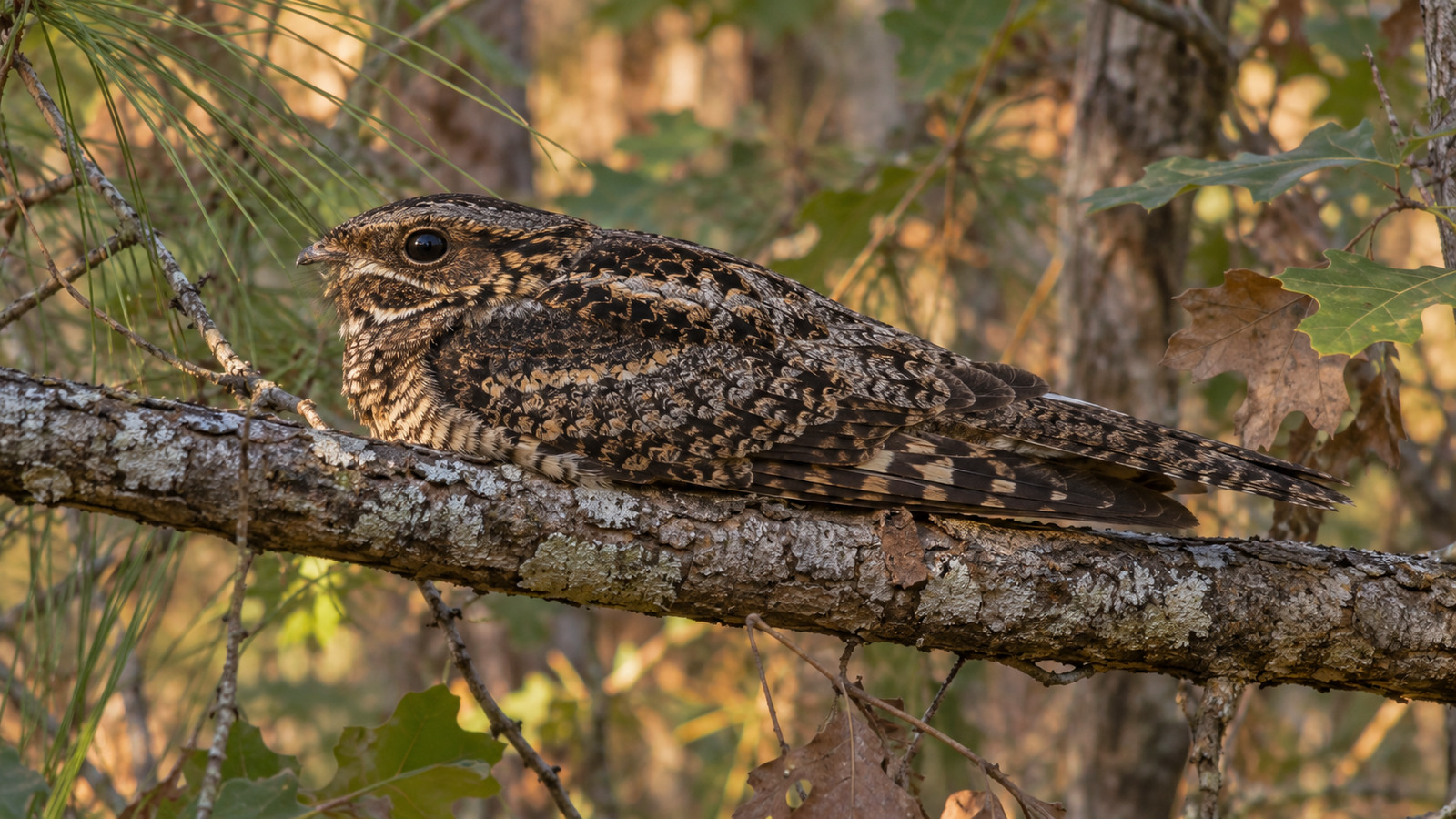
Florida's largest nightjar, the Chuck-Will's-Widow is a master of camouflage by day and a powerful aerial insect hunter after dusk.
Chuck-Will's-Widows are large native nightjars of dry pine woods, oak hammocks, mixed forests, wooded edges, and quiet residential areas with mature trees. Their intricate brown plumage nearly disappears against bark, leaf litter, and shaded branches.
They are heard widely in Florida during the warmer breeding season, and some birds remain in southern Florida during winter. Their repeated namesake call is one of the most recognizable nighttime sounds of southeastern woodlands.
Habitat:
Forests and Woodlands, Pine Flatwoods and Sandhills, Urban and Residential Areas
Area / Range:
Statewide
Diet:
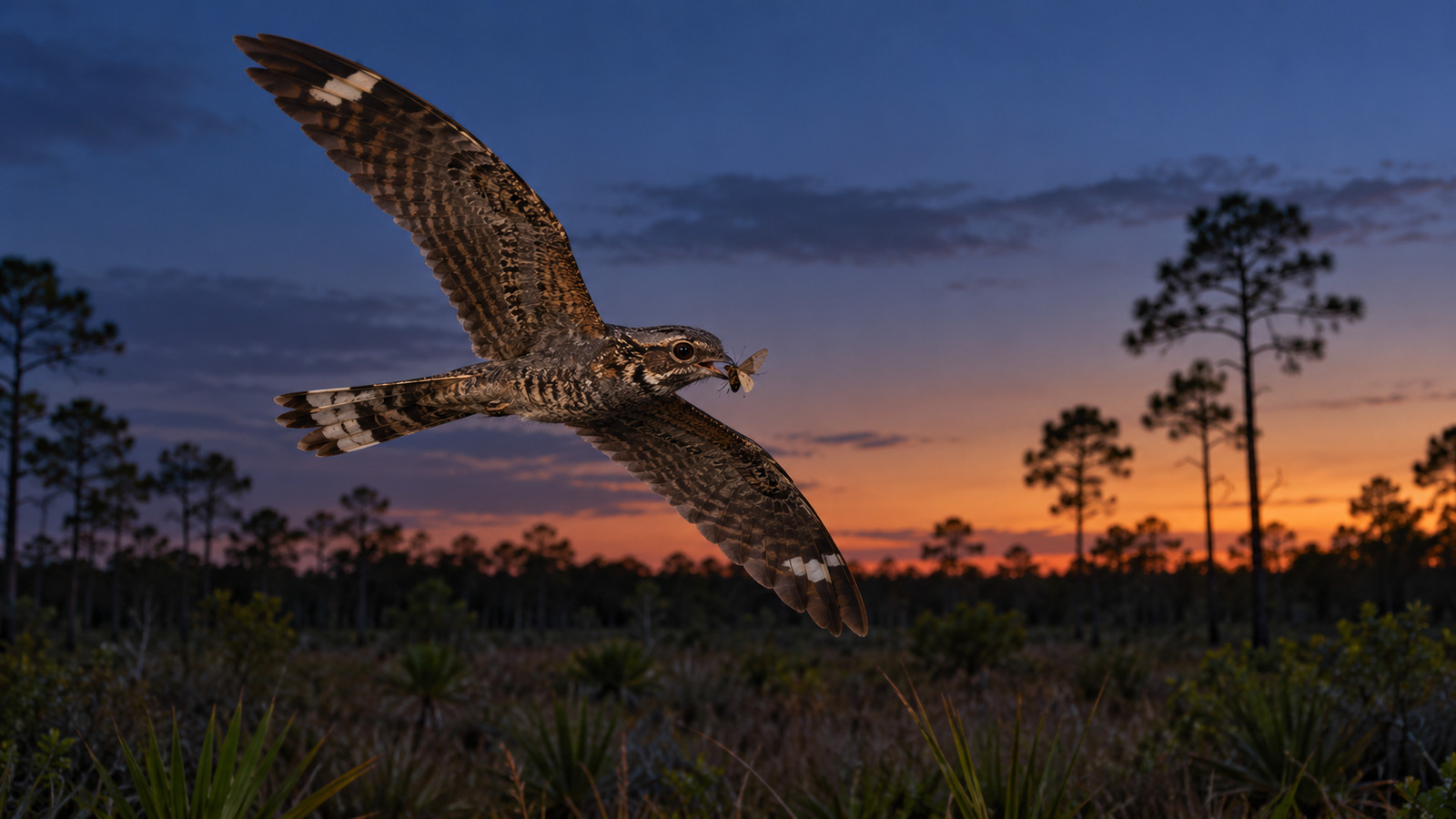
Chuck-Will's-Widows capture moths, beetles, flying ants, and other large nocturnal insects in flight. Their unusually broad gape helps them take sizable prey. Small birds and bats are occasionally recorded but make up only a minor part of the diet.
Behavior:
During the day, these birds rest motionless on the ground or lengthwise along a branch. They become active around dusk, before dawn, and through the night, flying low over clearings and roadsides while hunting insects. Eggs are laid directly on leaf litter, pine needles, or bare ground without a constructed nest.
Dusk, Night, Dawn
Active Times:
Best time to see:
Listen at dusk and before dawn in spring and summer near dry woodlands and pine flatwoods
Florida Native Status:
Native seasonal breeder
Conservation Status:
Common in suitable southeastern habitat but undergoing a steep long-term population decline
Safety Level:
Harmless. Respect Nests
Safety Information:
Chuck-Will's-Widows are harmless to people. Avoid approaching birds resting on the ground, keep pets on leash in woodland habitat, and never disturb eggs or young that are concealed directly in leaf litter.
Benefits to Property:
These birds consume many large nocturnal insects and add valuable native wildlife to wooded properties. Mature tree cover, leaf litter, quiet dark areas, and limited pesticide use help preserve feeding and roosting habitat.
Property Concerns:
Chuck-Will's-Widows do not damage landscapes or buildings. Night calls may be noticeable near wooded homes. Outdoor lighting, pesticide use, free-roaming pets, and clearing leaf litter during nesting season can reduce habitat or endanger birds and eggs.
Fun Fact:
The Chuck-Will's-Widow is North America's largest nightjar. Despite its size, its feather pattern can make a resting bird nearly invisible against a branch or forest floor.
Wildlife Laws:
Chuck-Will's-Widows, their feathers, active nests, eggs, and young are protected under the federal Migratory Bird Treaty Act. Do not capture, harm, possess, or disturb the birds or nesting sites without authorization.
Identification:
This large nightjar has a broad flat head, a tiny bill with a very wide gape, long wings, and a long tail. The plumage is mottled warm brown, buff, gray, and black. Males show narrow white areas on the outer tail feathers in flight, while females have buff-colored tail tips. The species is noticeably larger than a Common Nighthawk or Eastern Whip-poor-will.