
Clapper Rail
Rallus crepitans
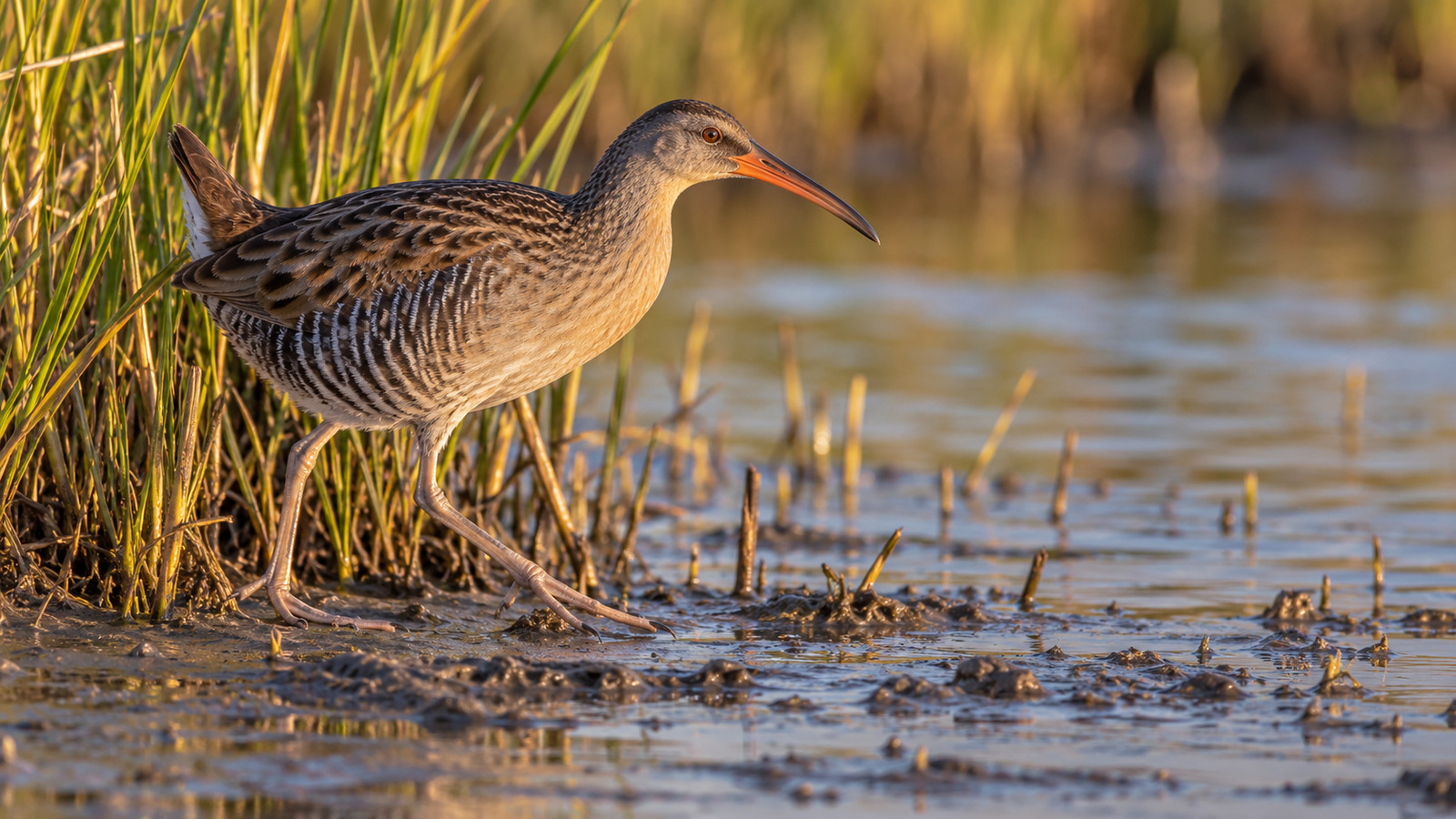
Clapper Rails are secretive, chickenlike coastal birds whose loud clattering calls carry across Florida salt marshes and mangroves.
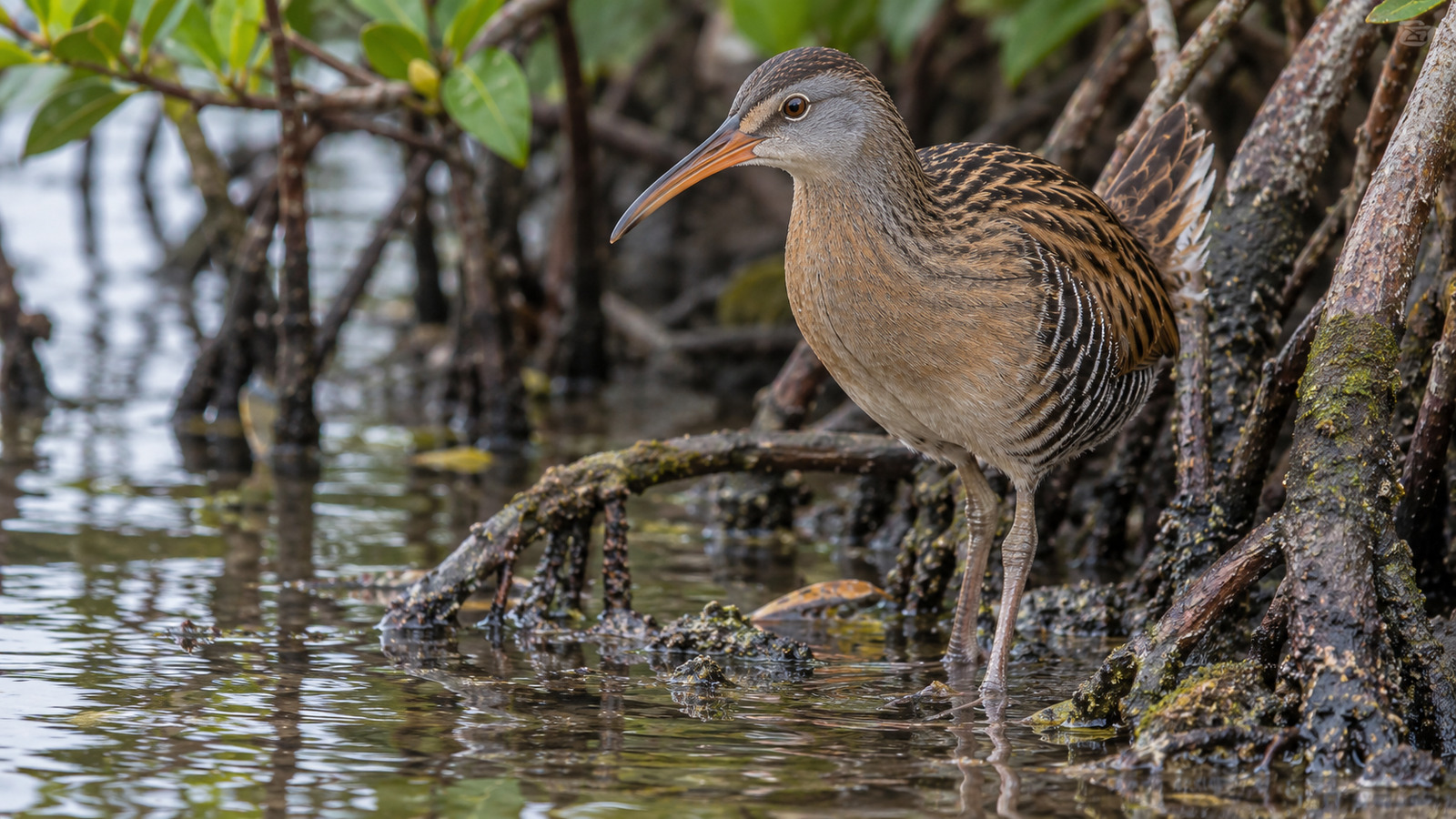
Clapper Rails live in shallow saltwater wetlands along Florida's Atlantic and Gulf coasts, using dense cordgrass, pickleweed, and mangroves for cover, nesting, and refuge at high tide.
They spend most of their lives walking through vegetation or along marsh-mudflat edges. Their narrow bodies slip between stems, and their far-carrying clapper calls are heard much more often than the birds are seen.
Habitat:
Mangroves and Salt Marshes, Estuaries and Bays, Coastal Waters
Area / Range:
Atlantic Coast, Gulf Coast, South Florida, Florida Keys
Diet:
Opportunistic and omnivorous, with fiddler crabs and other crustaceans, small fish, snails, clams, insects, eggs, seeds, and plant matter taken from marsh surfaces and shallow mud.
Behavior:
Clapper Rails usually walk or run through dense cover, probe shallow mud, swim well, and may dive when threatened. Breeding pairs are territorial and sometimes call in synchronized duets.
Dawn, Dusk, Day
Active Times:
Best time to see:
Year-round around dawn or dusk, especially when a rising tide moves birds toward higher marsh edges; listen before scanning openings.
Florida Native Status:
Native
Conservation Status:
Least Concern globally, but local populations depend on intact coastal wetlands and are vulnerable to habitat loss, altered tides, pollution, and severe storms.
Safety Level:
Low Risk
Safety Information:
Clapper Rails pose no danger. Stay on boardwalks or durable surfaces, keep dogs leashed, and avoid approaching calling birds or concealed nests.
Benefits to Property:
They consume crabs, insects, snails, and small fish and serve as indicators of functioning salt-marsh and mangrove ecosystems.
Property Concerns:
They do not damage property. Shoreline hardening, marsh filling, mangrove trimming, and rapid water-level changes can destroy feeding and nesting habitat.
Fun Fact:
A Clapper Rail looks unusually thin head-on because its body is compressed from side to side, helping it pass through dense marsh vegetation. A pair's duet can trigger neighboring pairs to answer across the marsh.
Wildlife Laws:
Clapper Rails are protected migratory birds and are also regulated game birds in Florida. Take is legal only during an open season and with all required federal and state licenses, permits, methods, and limits; active nests, eggs, and young must not be disturbed.
Identification:
Look for a large, slender rail with a long slightly curved orange bill, gray cheek patches, a pale gray-to-dull-cinnamon breast, a darker mottled back, bold black-and-white barred flanks, a short upright tail, and pale yellowish or pinkish legs.