
Clouded Skipper
Lerema accius
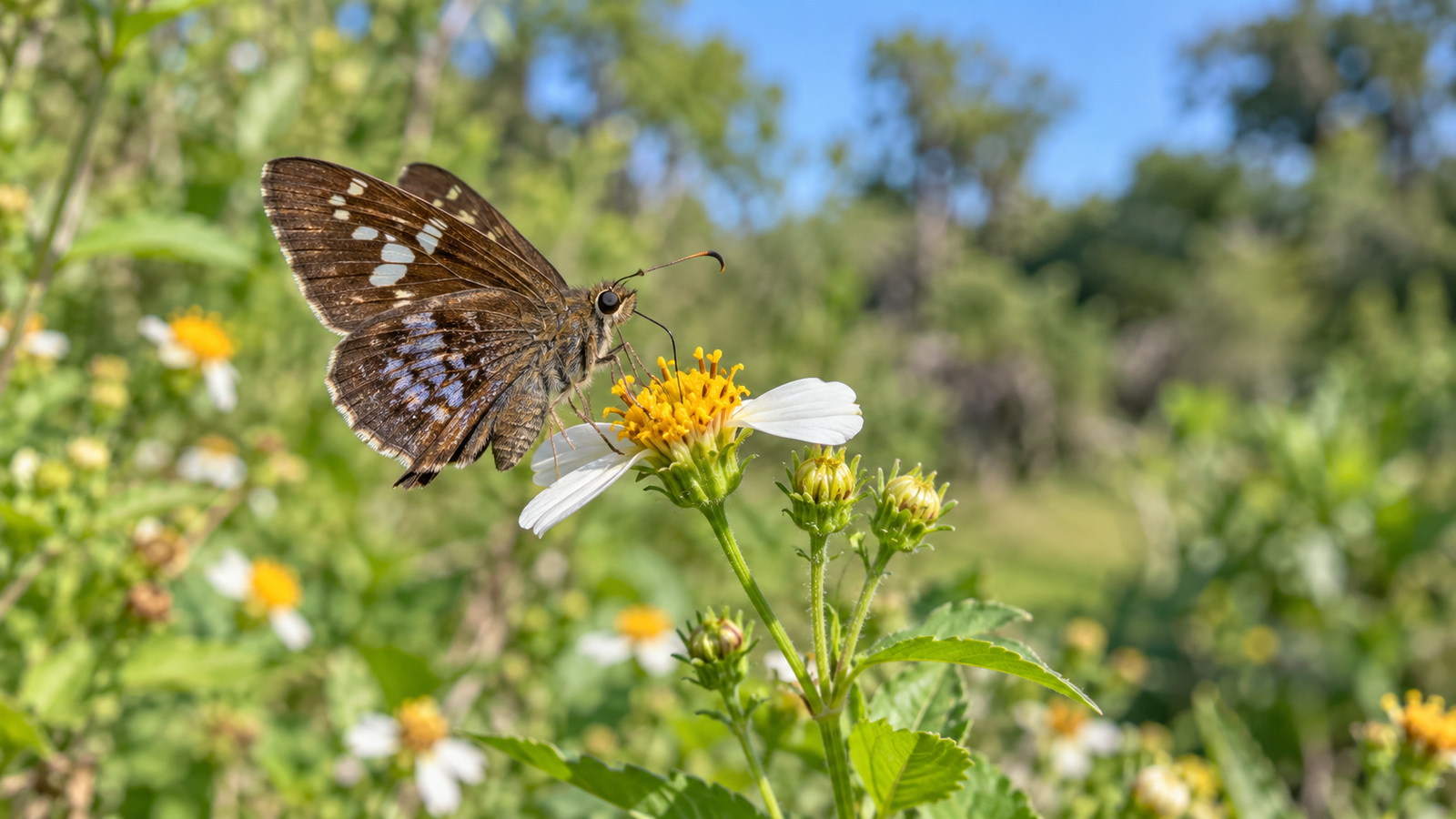
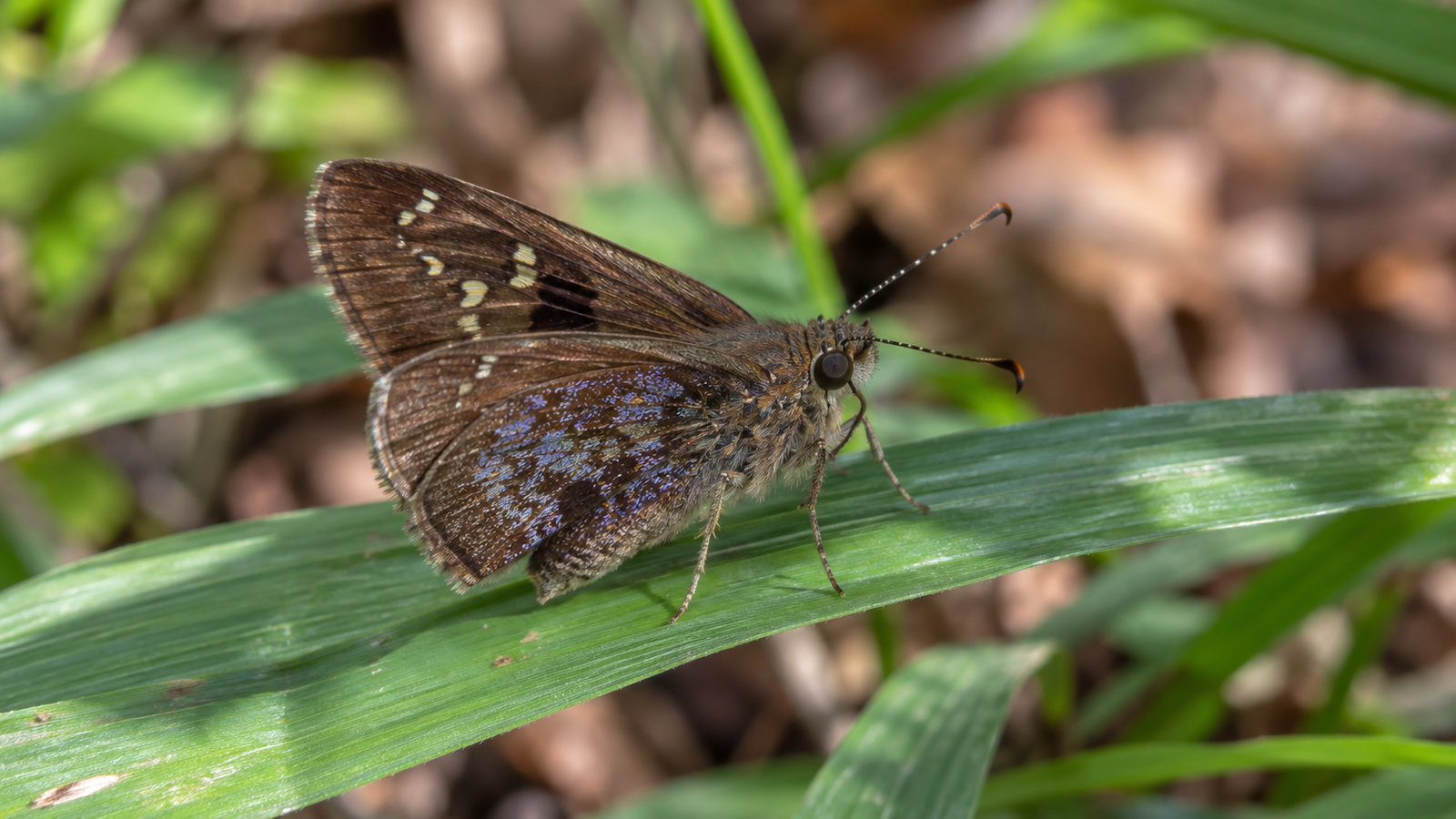
A small dark-brown grass skipper found across Florida, with pale forewing spots and violet-blue frosting beneath the hindwings.
The Clouded Skipper is a common native butterfly of moist woodland edges, wetlands, roadsides, gardens, and other grassy openings. Florida's warm climate allows adults to fly throughout the year, although numbers vary with season and weather.
Its caterpillars depend on grasses, while adults visit many pink, purple, and white flowers for nectar. Leaving patches of host grass and nectar plants can support the species through its full life cycle.
Habitat:
Forests and Woodlands, Freshwater Wetlands, Urban and Residential Areas
Area / Range:
Statewide
Diet:
Adults drink nectar from flowers including shepherd's needle, lantana, buttonbush, vervain, and other pink, purple, or white blooms. Caterpillars eat several grasses, including Florida paspalum, Indian woodoats, and eastern gamagrass.
Behavior:
Adults fly low and rapidly through grassy openings, pausing to nectar or bask. Males often perch near the ground in partial shade while watching for females; caterpillars fold or silk grass leaves into shelters.
Day
Active Times:
Best time to see:
Year-round in Florida on warm sunny days, especially near moist grassy edges and flowering gardens
Florida Native Status:
Native
Conservation Status:
NatureServe G5 globally; common and not federally or state listed in Florida, though local numbers benefit from host grasses and reduced pesticide use.
Safety Level:
Low
Safety Information:
Clouded Skippers do not sting or bite people and are safe around children and pets. Avoid touching the wings because their scales and delicate structures are easily damaged.
Benefits to Property:
Adults pollinate a variety of small flowers while feeding. Native nectar plants and a few unmown patches of host grass can turn a yard into useful butterfly habitat.
Property Concerns:
This small butterfly creates no significant property concern. Caterpillar feeding on grasses is minor and rarely noticeable in lawns or landscapes.
Fun Fact:
The word skipper describes the quick, darting flight shared by members of the family Hesperiidae. Clouded Skipper males often wait for females from low perches only a few inches above the ground.
Its muted brown upper wings can look plain at first, but the underside may reveal a distinctive violet-blue frosting in good light.
Wildlife Laws:
The Clouded Skipper is not federally or Florida state listed as threatened or endangered. Collection can be restricted on parks, preserves, refuges, and other managed lands; observation and photography are the lowest-impact choices.
Identification:
This compact skipper has dark brown wings and a wingspan of about 1.3 to 1.7 inches. The hindwing underside is mottled and often shows a smoky violet-blue sheen or frosting.
Females usually show several translucent white spots in the forewing. Males are generally darker and have a black stigma on the upper forewing; both sexes have stout bodies and hooked antenna clubs.