
Common Whitetail
Plathemis lydia
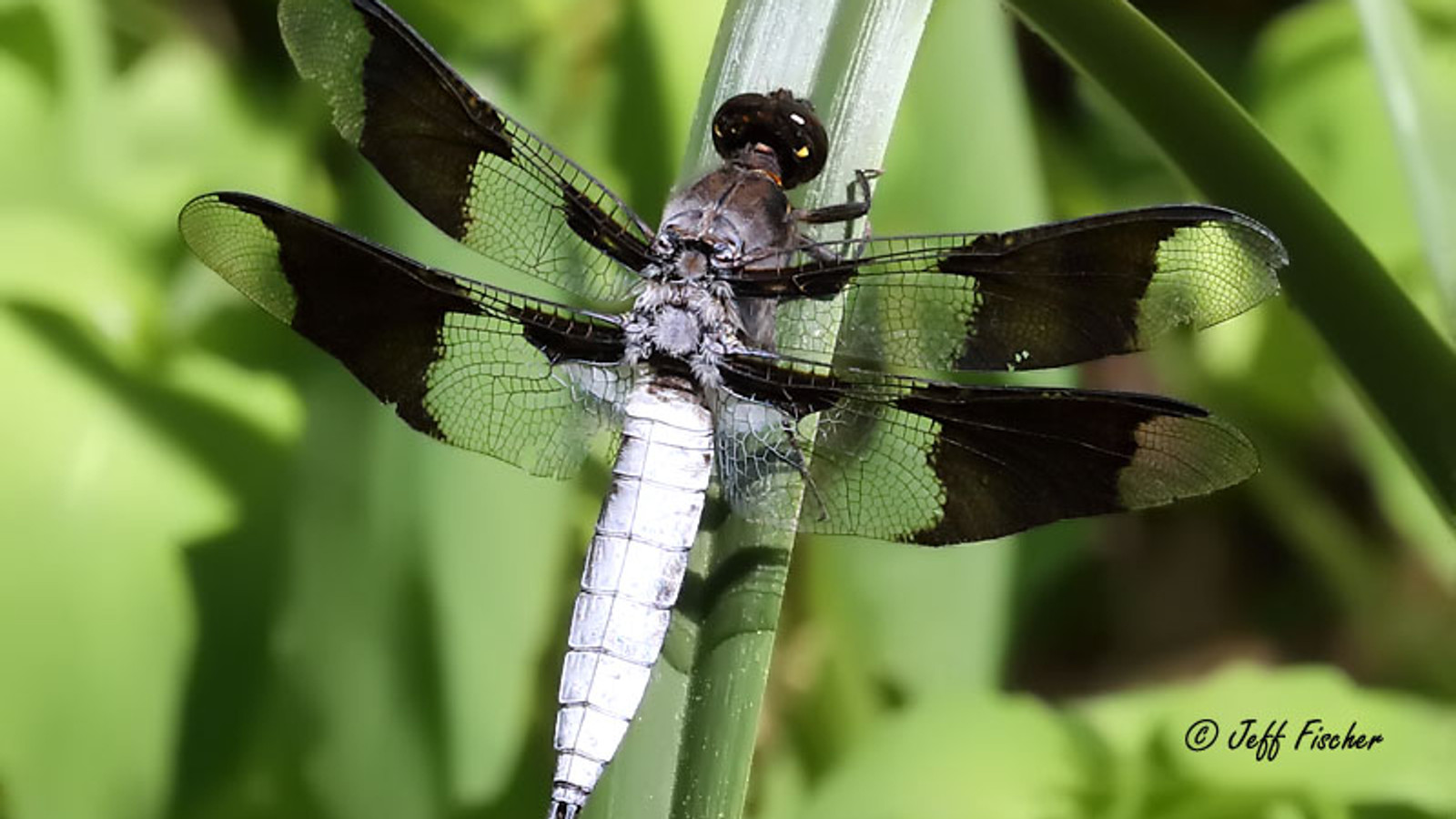
A familiar pond dragonfly whose chalk-white adult male and dark-banded wings are easy to recognize.
The common whitetail is a sturdy skimmer dragonfly found around ponds, lakes, marshes, and slow streams. Adults perch on low vegetation, rocks, paths, and sunny surfaces before darting after prey.
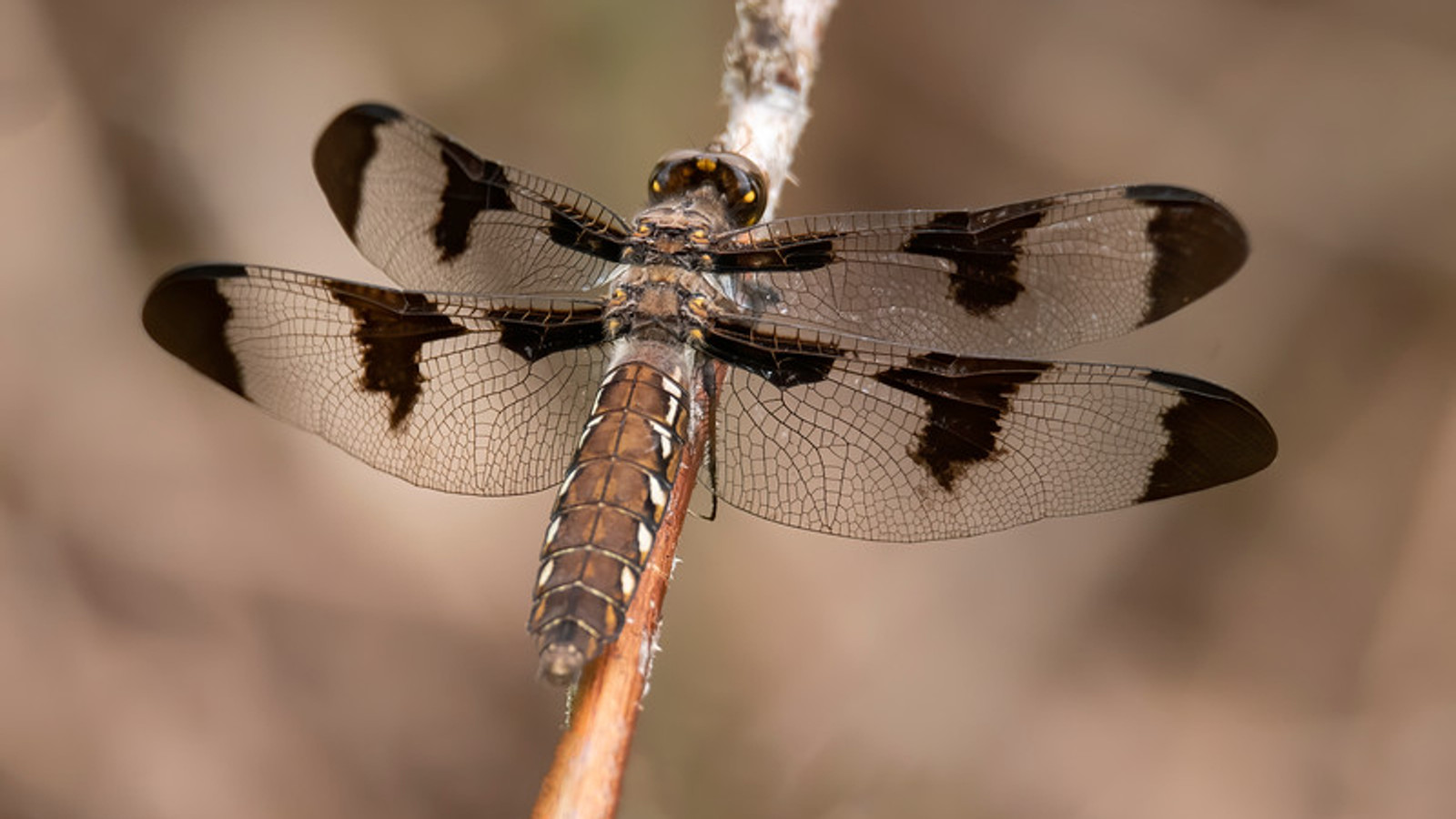
Mature males look strikingly different from females and young males, making this species an excellent example of age- and sex-related color change.
Habitat:
Freshwater Wetlands, Lakes and Ponds, Rivers and Springs
Area / Range:
Statewide
Diet:
Adults capture mosquitoes, flies, midges, and other small flying insects. Aquatic nymphs prey on insect larvae and other small aquatic animals.
Behavior:
Males defend shoreline territories and use aerial pursuit displays. Adults repeatedly return to favored perches, while females visit water to lay eggs.
Day
Active Times:
Best time to see:
Warm sunny days near still or slow freshwater
Florida Native Status:
Native
Conservation Status:
Common and not federally listed
Safety Level:
Harmless
Safety Information:
Dragonflies do not sting and are not dangerous to people or pets. Avoid grabbing them because their wings are delicate.
Benefits to Property:
Adults and aquatic nymphs prey on insects, including mosquitoes and midges, and contribute to a balanced pond food web.
Property Concerns:
It does not damage plants or structures. Broad-spectrum insecticides and removal of shoreline vegetation can eliminate adults and aquatic nymphs.
Fun Fact:
Whitetail refers to the waxy white coating on a mature male's abdomen. Females look so different that they are sometimes mistaken for another species.
Wildlife Laws:
Observe dragonflies without disturbing wetland habitat. Collection may require permission on public land, and pesticide use must follow label directions and water-protection rules.
Identification:
Mature males have a broad powdery white abdomen and one large dark band across each wing. Females and immature males have a brown abdomen with pale yellow spots and three dark spots on each wing. Adults are roughly 1.7 to 1.9 inches long.