
Eastern Cicada Killer
Sphecius speciosus
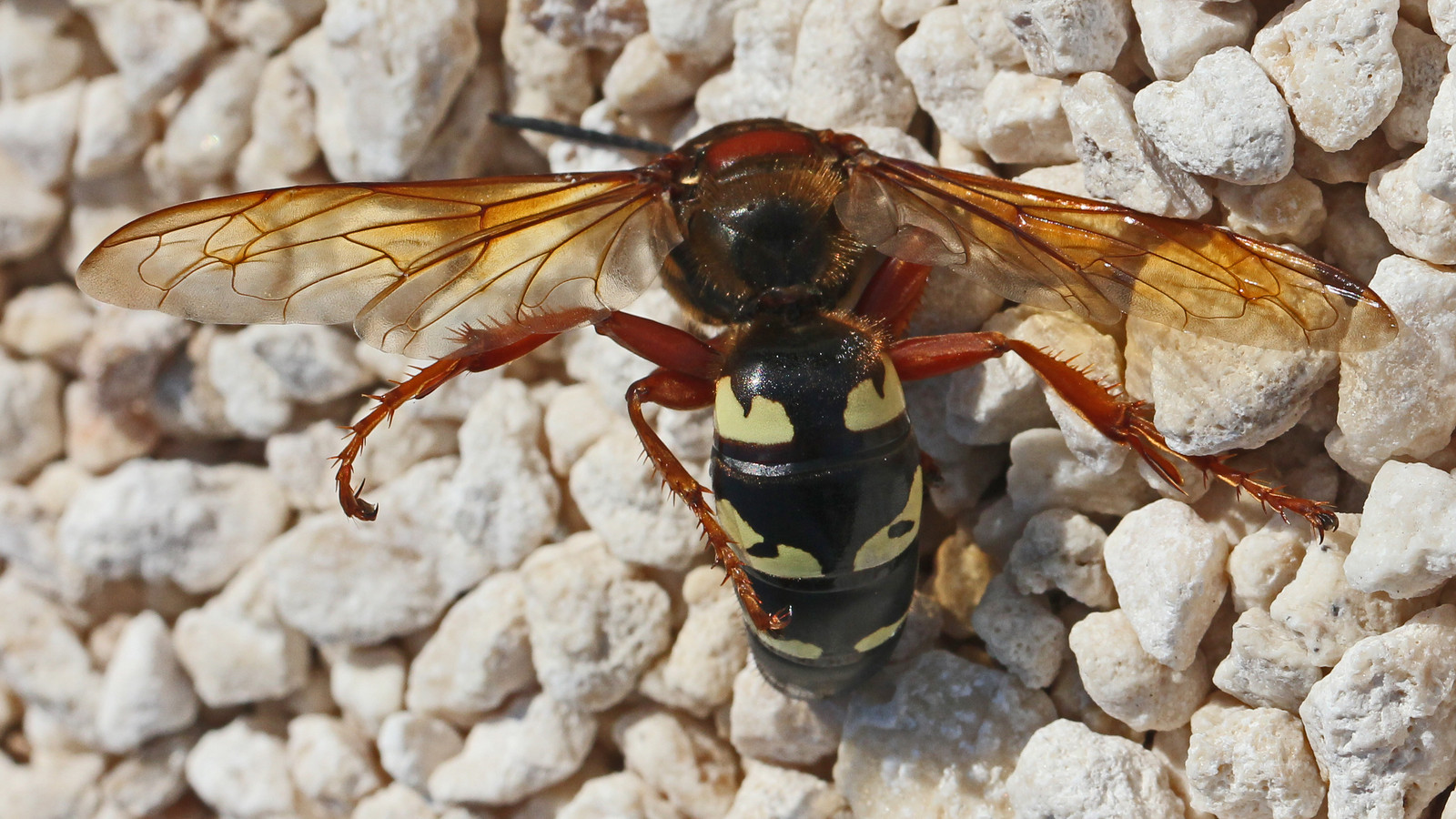
A large, mostly solitary Florida wasp that nests in sandy soil and provisions its young with cicadas.
The eastern cicada killer is a large native wasp seen locally in Florida, especially in summer. Females excavate burrows in well-drained soil and carry paralyzed cicadas into underground cells for their larvae.
Its size can be alarming, but the territorial wasps that approach people are often stingless males. Females can sting when handled or trapped, so give nests room and avoid direct contact.
Habitat:
Grasslands and Agricultural Areas, Urban and Residential Areas, Forests and Woodlands
Area / Range:
North Florida, Central Florida, South Florida
Diet:
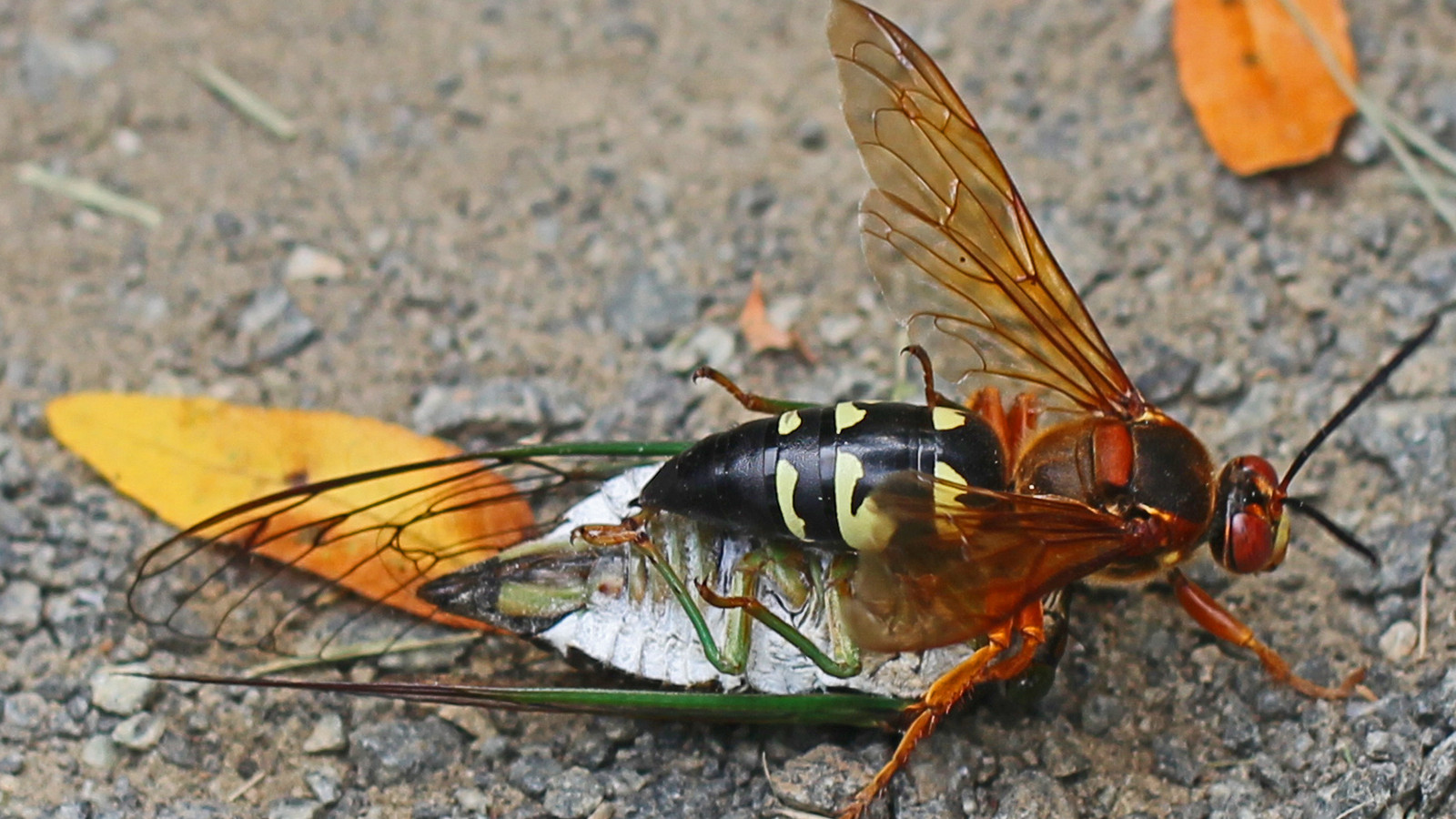
Adults take nectar and other flower resources. Females capture cicadas, paralyze them, and place them in nest cells as food for developing larvae.
Behavior:
Females rake soil into a mound while digging branched burrows. Males patrol and defend territories near nesting areas; they may investigate passersby but cannot sting.
Day
Active Times:
Best time to see:
Warm summer days near open sandy soil, garden edges, and flowering areas
Florida Native Status:
Native
Conservation Status:
Not federally or Florida state listed as threatened or endangered; locally present where cicadas and suitable nesting soil occur.
Safety Level:
Low
Safety Information:
Males cannot sting. Females can sting if seized, stepped on, or trapped, so do not handle the wasps or block an active burrow. People with sting allergies should keep a prudent distance.
Benefits to Property:
By hunting cicadas for their young, these wasps are part of the local insect food web. Adults also visit flowers and need no treatment when nests are away from high-use areas.
Property Concerns:
Nesting females can create small soil mounds in lawns, paths, or garden beds. Burrows are temporary, but clusters near play spaces or walkways may warrant advice from a local extension office.
Fun Fact:
A female can haul a cicada that is heavier than herself back to a burrow. The species has also appeared in older literature as Sphex speciosus and Stizus speciosus.
Wildlife Laws:
No species-specific Florida protected status was identified in the sources reviewed. Check property and park rules before disturbing a nest, and use the least disruptive response where people and nests overlap.
Identification:
Adults may reach about 1 1/2 inches (40 mm). The body is largely black with prominent yellow marks on the first three abdominal segments, rust-orange legs and thoracic details, and amber-tinted wings.
Florida also has the mostly rust-orange Sphecius hogardii. Yellow-spotted black abdominal segments help distinguish the eastern cicada killer from that species.