
Eastern Copperhead
Agkistrodon contortrix
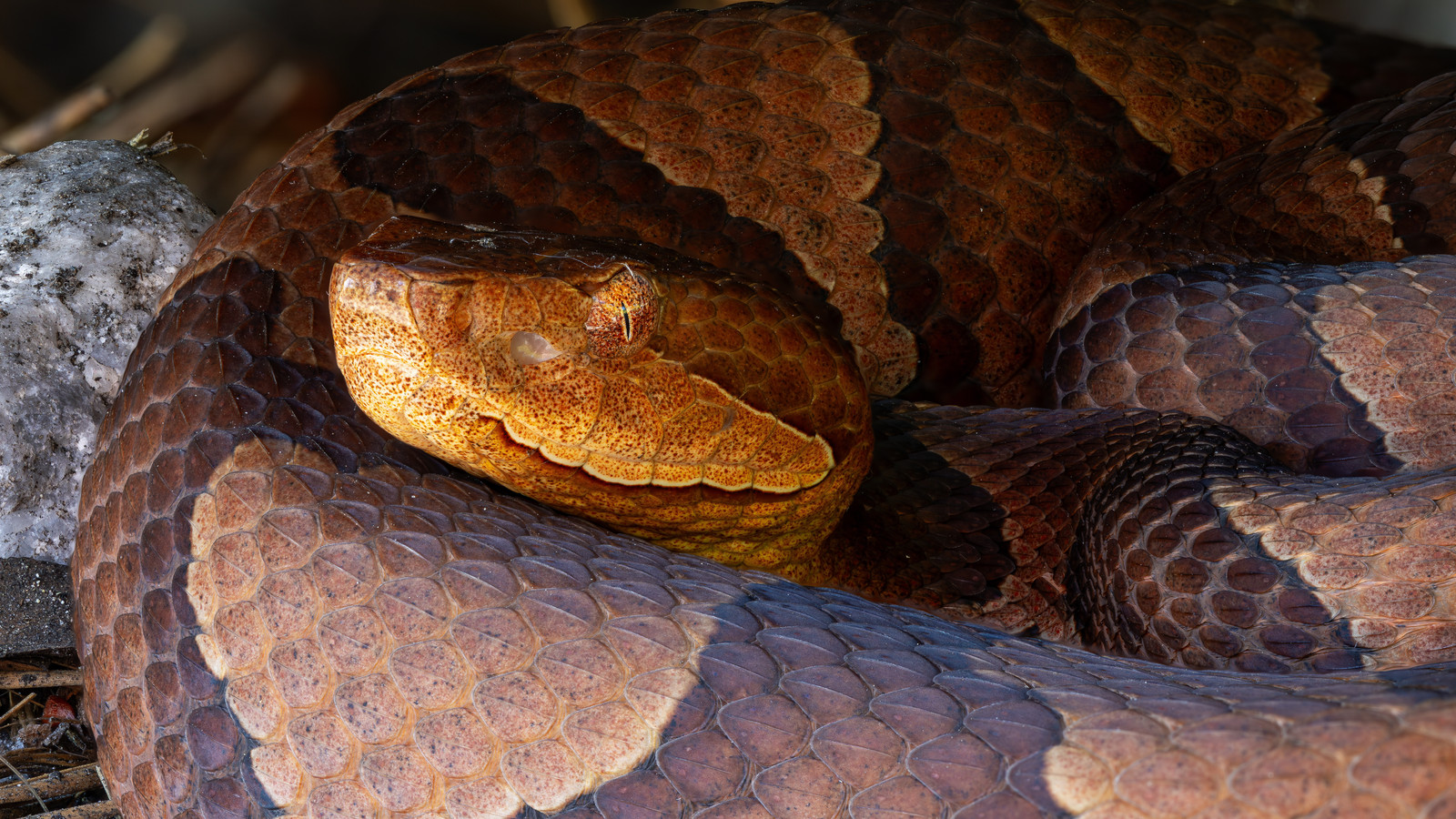
A venomous pit viper limited to small areas of the Florida Panhandle.
Eastern Copperheads occur in a limited part of the Florida Panhandle, mainly in wooded habitats near streams, ravines, and upland forests. They are absent from the Tampa area as an established native population.
Their copper-colored head and dark hourglass-shaped crossbands provide useful clues, but identification from a distance is safest. Do not approach or handle a snake for a photograph.
Habitat:
Forests and Woodlands, Pine Flatwoods and Sandhills, Rivers and Springs
Area / Range:
Florida Panhandle
Diet:
Takes small mammals, frogs, lizards, and other available prey.
Behavior:
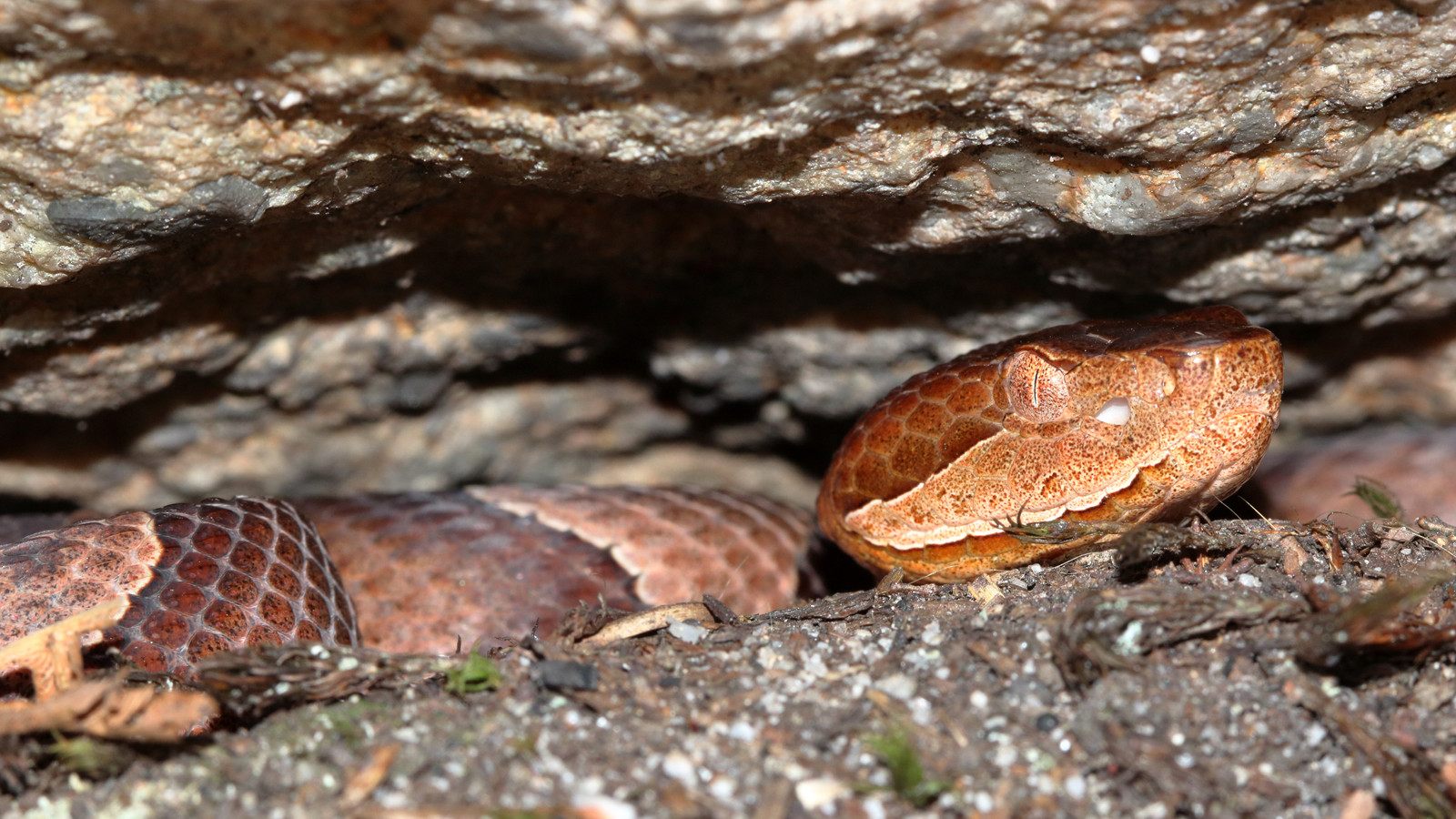
Often relies on camouflage among leaves and rocks. It may remain still when approached; leave ample room to move away.
Dawn and Dusk
Active Times:
Best time to see:
Most likely in suitable Panhandle woodlands during warm weather
Florida Native Status:
Native
Conservation Status:
Localized in Florida's Panhandle; not widespread across the peninsula
Safety Level:
Venomous. Keep a safe distance
Safety Information:
Stay back and do not handle the snake. If bitten, seek emergency medical care promptly.
Benefits to Property:
Predates rodents and contributes to native woodland food webs.
Property Concerns:
A bite requires prompt medical evaluation. Keep children and pets away, and never try to catch or kill the snake.
Fun Fact:
Florida's copperhead range is far smaller than that of the state's common cottonmouth.
Wildlife Laws:
Florida regulates possession of venomous reptiles. Do not capture, transport, or keep one without the required authorization; contact qualified wildlife help when needed.
Identification:
A stout snake with a broad copper-toned head and darker crossbands that narrow over the back and widen down the sides. The pattern may look like hourglasses when viewed from above.
Young snakes may have a yellowish tail tip. Pattern and color vary, and other snakes can resemble copperheads, so use location and a clear photograph for expert identification.