
Eastern Tiger Salamander
Ambystoma tigrinum
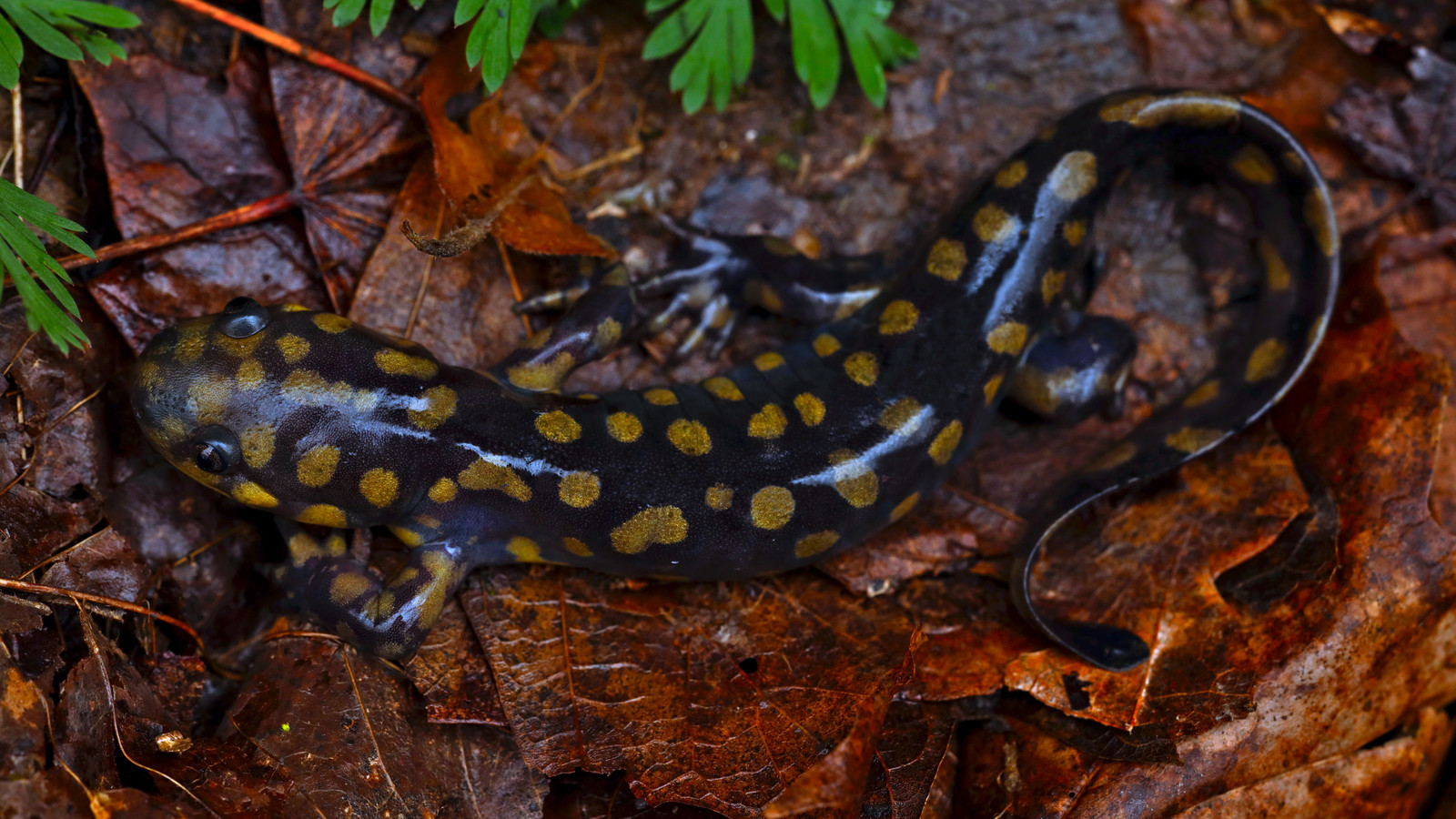
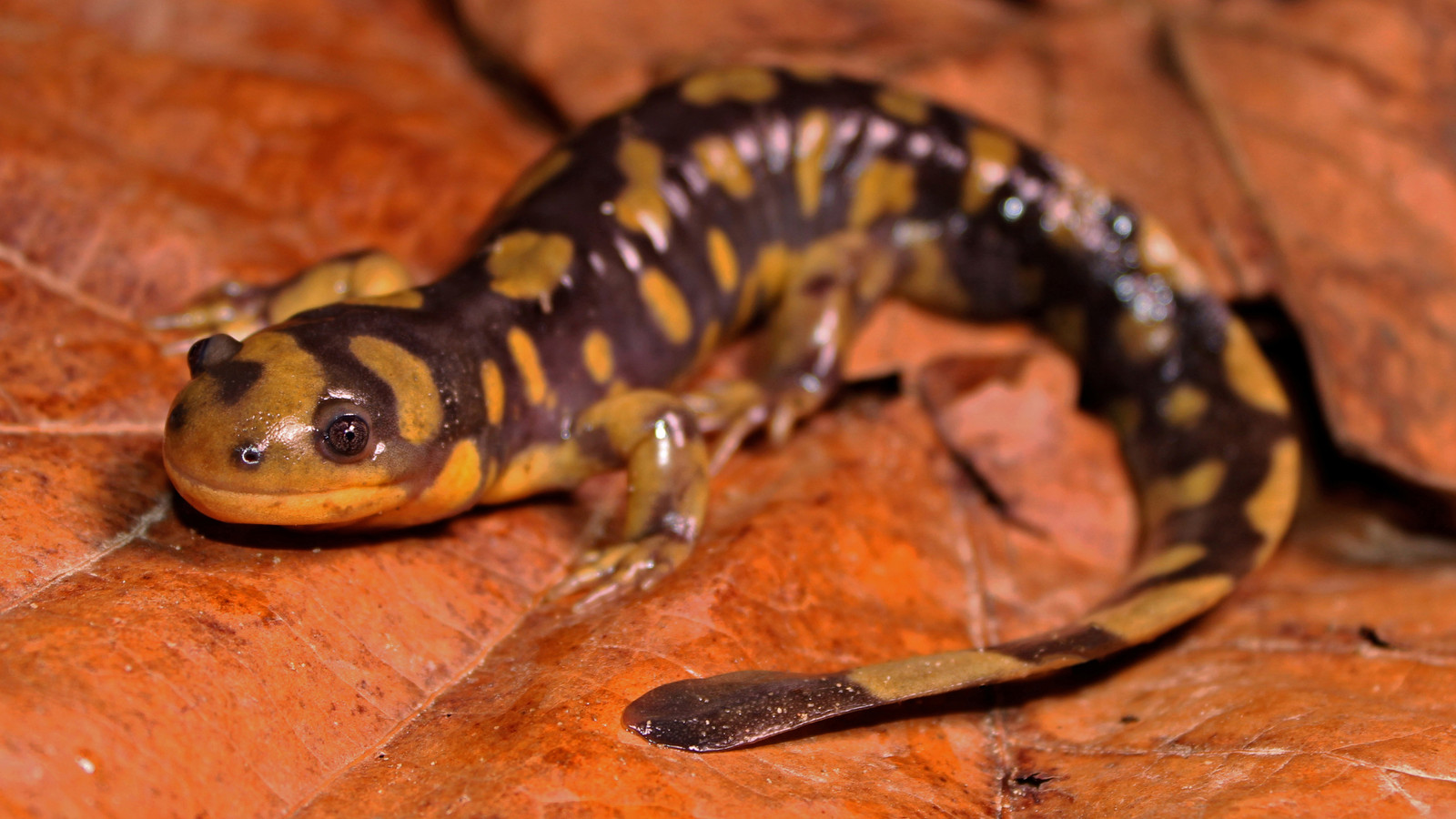
A large, boldly blotched salamander of northern Florida woodlands and seasonal ponds.
Eastern Tiger Salamanders occur in northern and north-central Florida, including parts of the Panhandle. Adults live mostly underground in forested uplands and emerge to breed in isolated ponds without predatory fish.
Loss of seasonal wetlands and nearby upland habitat can isolate breeding populations.
Habitat:
Forests and Woodlands, Pine Flatwoods and Sandhills, Freshwater Wetlands
Area / Range:
Florida Panhandle, North Florida, Central Florida
Diet:
Eats earthworms, insects, and other small invertebrates; larger individuals may take other small animals.
Behavior:
Adults usually remain hidden below ground and travel to seasonal ponds in cool, wet weather. Larvae grow in the water before moving into upland habitat.
Night
Active Times:
Best time to see:
Rainy winter nights near fish-free breeding ponds in northern Florida
Florida Native Status:
Native
Conservation Status:
Regionally uncommon in Florida; vulnerable to wetland loss and road mortality
Safety Level:
Harmless. Avoid Handling
Safety Information:
Observe from a short distance without handling. Keep pets away and avoid moving a salamander across habitat boundaries.
Benefits to Property:
Consumes invertebrates and indicates connections between seasonal wetlands and surrounding uplands.
Property Concerns:
Filling isolated ponds, adding fish, clearing nearby uplands, and road traffic can harm local breeding populations.
Fun Fact:
Adults may remain underground for most of the year, making a large salamander surprisingly hard to encounter.
Wildlife Laws:
Florida regulates the taking and possession of native amphibians. Check current FWC rules before collecting or keeping one; protect breeding ponds and leave wild animals undisturbed.
Identification:
A heavy-bodied salamander with a broad head and irregular cream, yellow, or greenish blotches on a dark back and tail. Its blotches differ from the narrow pale crossbars of the Marbled Salamander.
Larvae are aquatic, with bushy external gills. Adults lose the gills and spend much of their time underground.