
Everglades Crayfish
Procambarus alleni
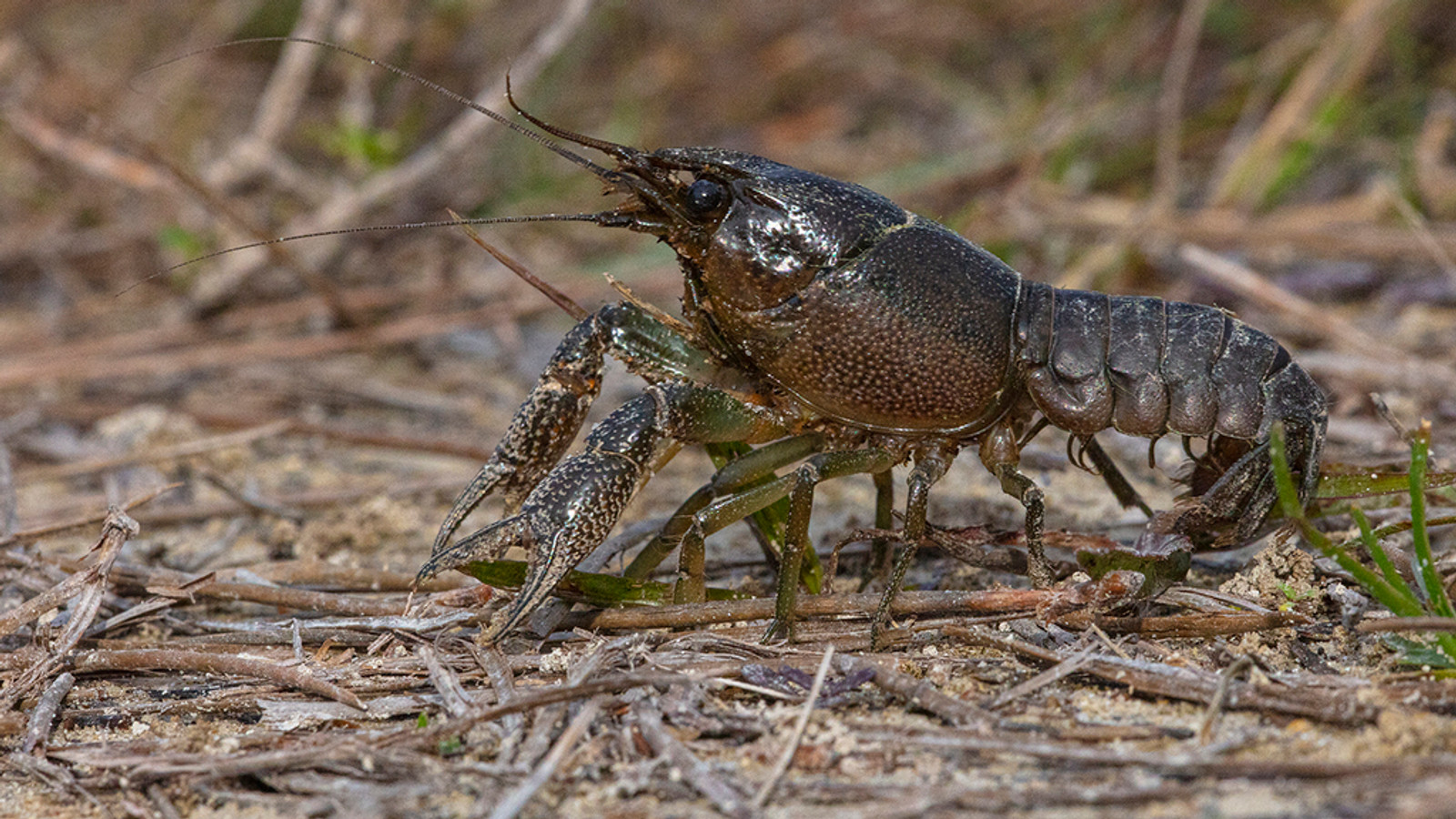
A Florida-endemic freshwater crayfish that is an important burrower, scavenger, and prey animal in marsh food webs.
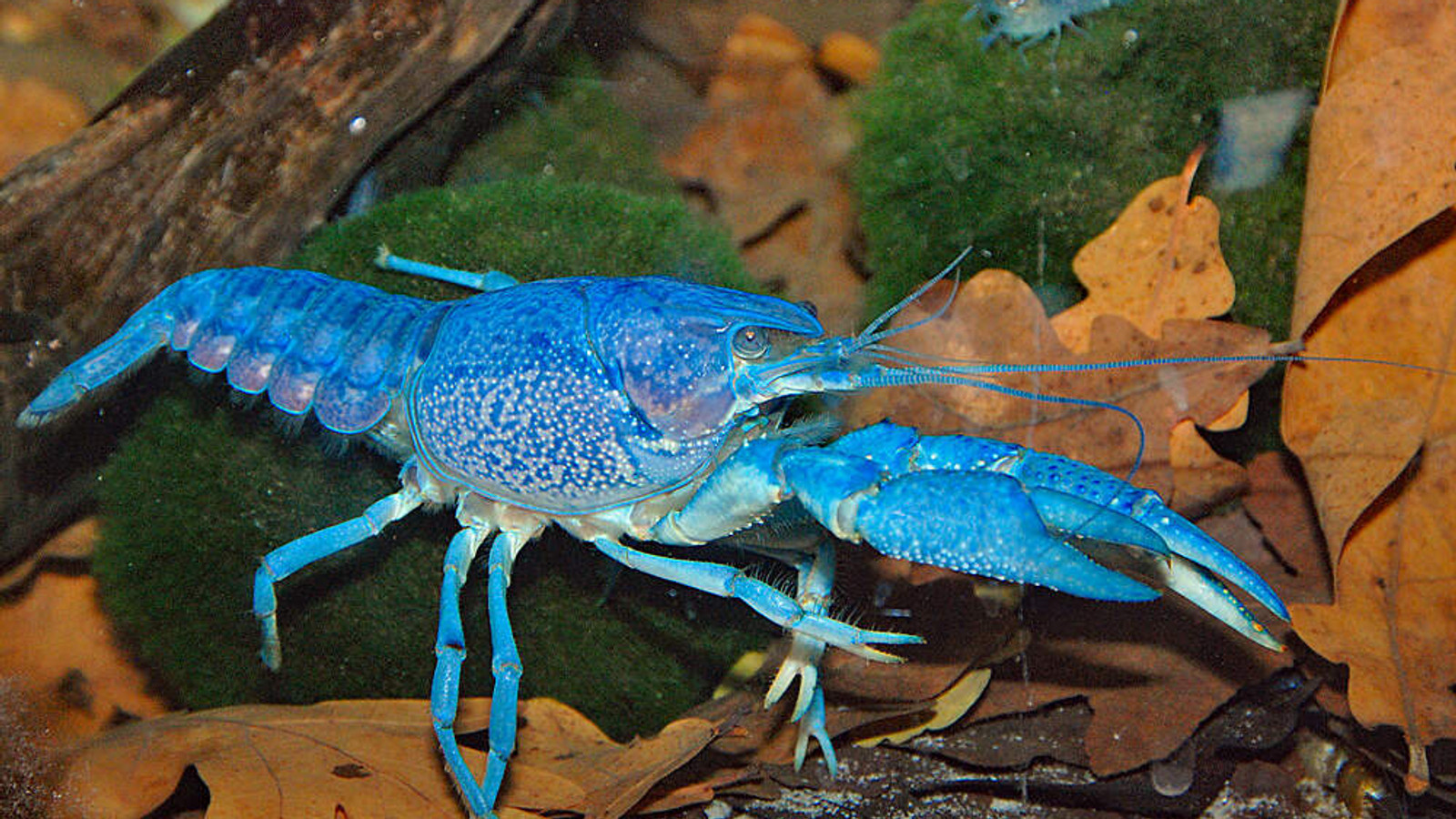
The Everglades Crayfish is a freshwater crustacean endemic to Florida. Wild individuals are commonly brown, tan, olive, or muted blue; brilliant cobalt aquarium animals are selectively bred color forms.
It occurs in marshes, wet prairies, ponds, ditches, and other shallow freshwater habitats, especially across central and southern Florida and parts of the Keys.
Habitat:
Freshwater Wetlands, Lakes and Ponds, Canals and Ditches
Area / Range:
Central Florida, South Florida, Florida Keys
Diet:
An opportunistic omnivore and scavenger that eats aquatic plants, algae, detritus, carrion, insects, snails, and other small aquatic animals.
Behavior:
Most active from dusk through the night. It shelters beneath vegetation or in burrows and can persist through seasonal drying by retreating into moist soil.
Evening and nighttime
Active Times:
Best time to see:
Warm wet-season evenings in shallow freshwater marshes, ponds, and ditches.
Florida Native Status:
Native; Florida endemic
Conservation Status:
IUCN Least Concern; NatureServe Apparently Secure.
Safety Level:
Low
Safety Information:
Not venomous, but the claws can pinch when handled. Observe without picking up, and keep fingers away from the claws.
Benefits to Property:
Breaks down organic matter, recycles nutrients, aerates wet soils through burrowing, and provides important food for wetland wildlife.
Property Concerns:
Burrows can create small mounds in wet lawns or pond edges. Crayfish may eat aquatic plants or very small pond animals in ornamental water features.
Fun Fact:
The famous electric-blue aquarium crayfish is a selectively bred form of this Florida species. Its burrows help it endure strongly seasonal wetlands.
Wildlife Laws:
Do not release aquarium crayfish or move wild animals between waters. Collection and possession rules can vary by location, land ownership, and intended use.
Identification:
A robust crayfish with two large claws, long antennae, and a segmented abdomen ending in a broad tail fan. Color varies from dark brown and olive to blue, but wild animals are often less vivid than aquarium strains.