
Fish Crow
Corvus ossifragus
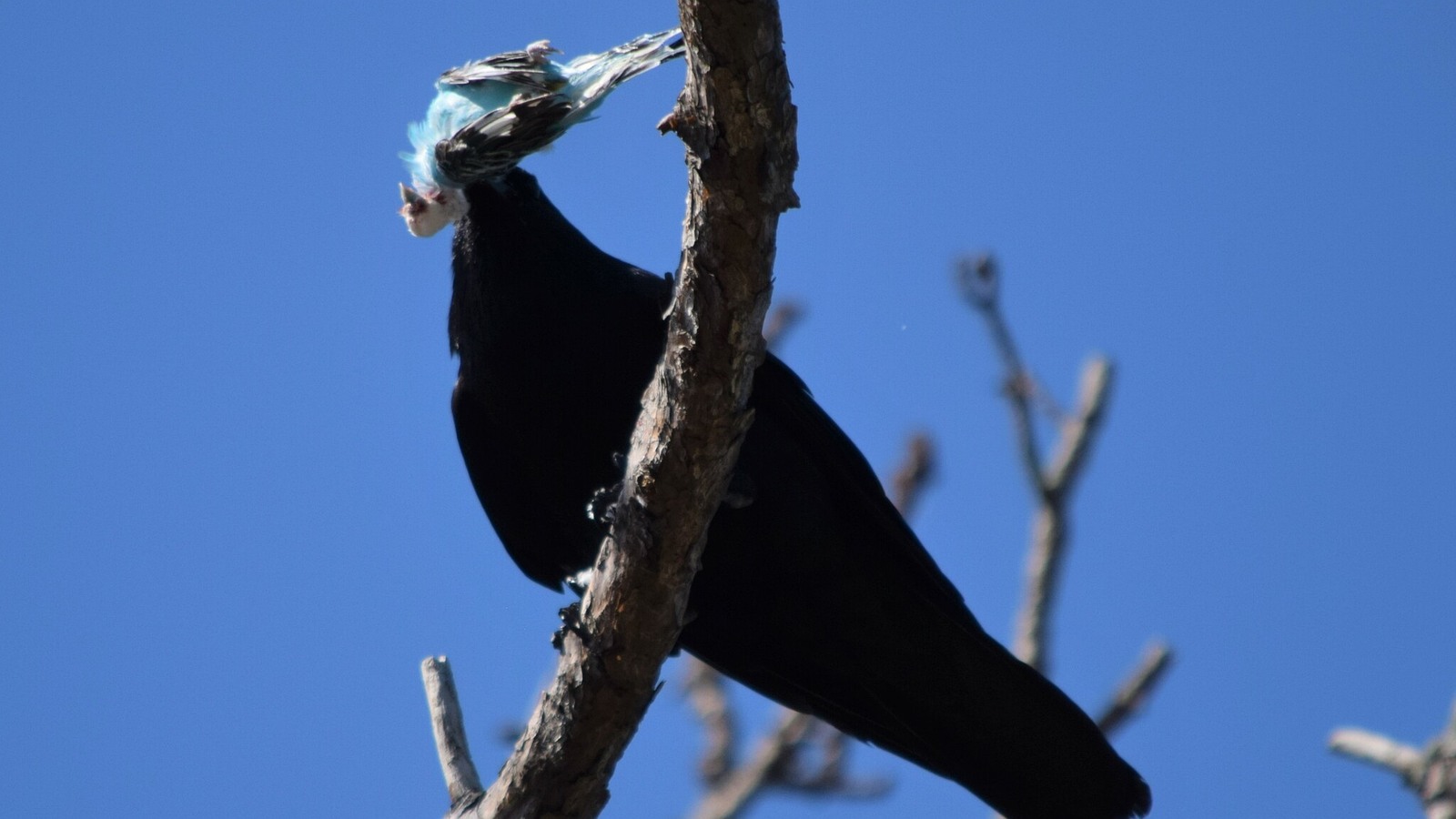
A compact coastal crow best separated from the American Crow by its nasal, two-part call.
Fish Crows are familiar around Florida coasts, rivers, wetlands, neighborhoods, and commercial areas. They look nearly identical to American Crows, so voice remains the most reliable field mark.
They are intelligent generalists that use natural foods and human refuse. Secure trash, avoid feeding, and preserve mature nesting trees to reduce conflicts while supporting normal behavior.
Habitat:
Estuaries and Bays, Mangroves and Salt Marshes, Beaches and Dunes, Urban and Residential Areas
Area / Range:
Statewide
Diet:
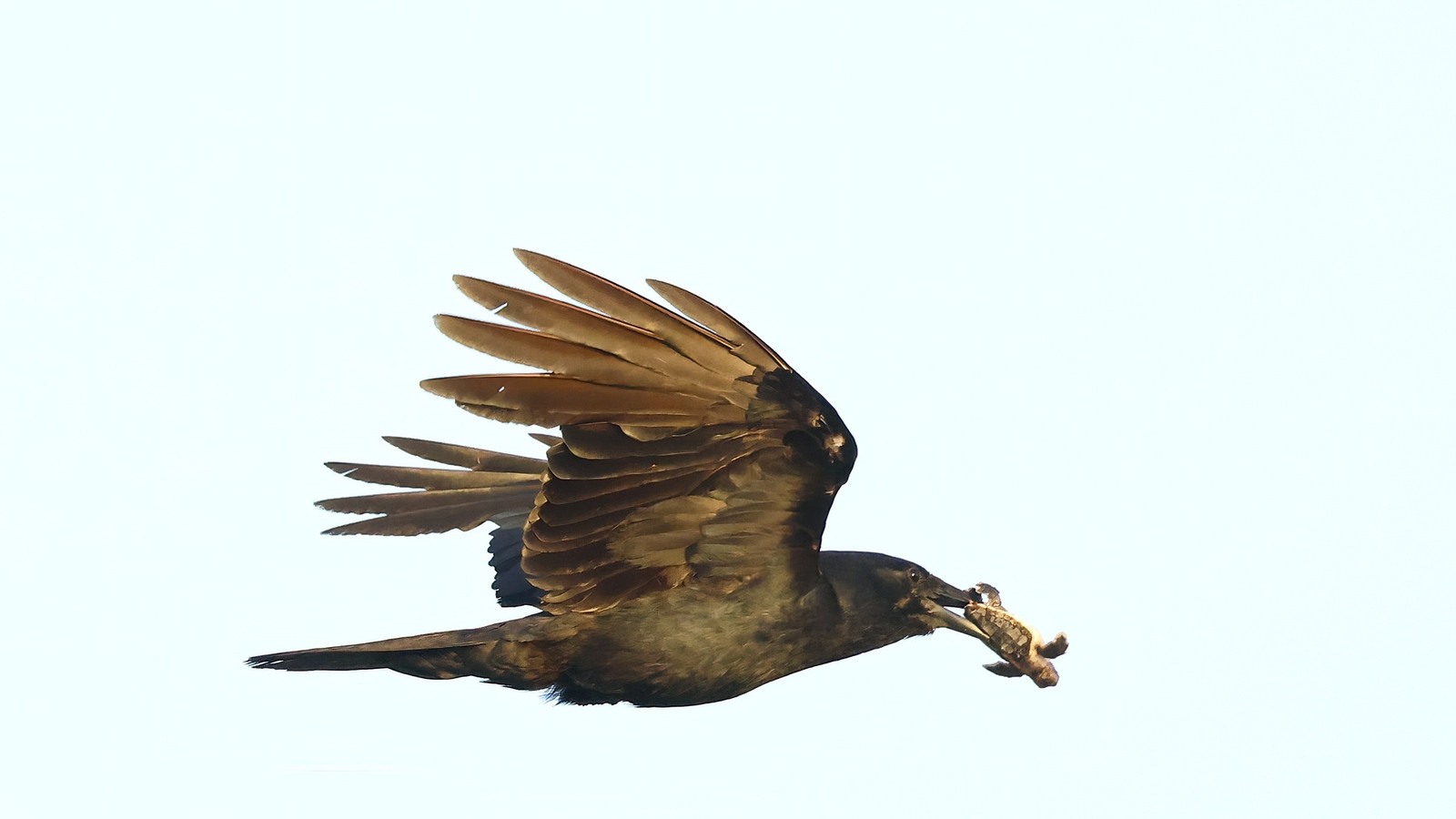
Eats crabs, fish, eggs, nestlings, insects, fruit, carrion, pet food, garbage, and other available foods.
Behavior:
Forages on shorelines, lawns, parking lots, and rooftops, often in social groups. Fish Crows cache food, investigate novel objects, and nest high in trees.
Daytime
Active Times:
Best time to see:
Year-round during morning and late afternoon near water, parks, and urban gathering sites.
Florida Native Status:
Native
Conservation Status:
Least Concern and expanding in parts of its range.
Safety Level:
Low
Safety Information:
Do not feed crows. Secure refuse and give defensive nesting birds space. Avoid handling sick or dead birds.
Benefits to Property:
Removes carrion and food waste and consumes many insects, small animals, and discarded scraps.
Property Concerns:
Groups may scatter trash, raid unsecured pet food, create noise, or prey on eggs and young birds. Secure attractants instead of using lethal control.
Fun Fact:
- Its nasal call is the best identification clue.
- Fish Crows often hold the body forward while calling.
- They learn quickly and remember productive food sites.
Wildlife Laws:
Protected under the Migratory Bird Treaty Act and Florida law. Lethal control, nest removal, or possession requires applicable authorization.
Identification:
Entirely glossy black with a stout bill, squared tail, and relatively compact build. Its nasal uh-uh or cah call distinguishes it more reliably than size or plumage.