
Florida Bog Frog
Lithobates okaloosae
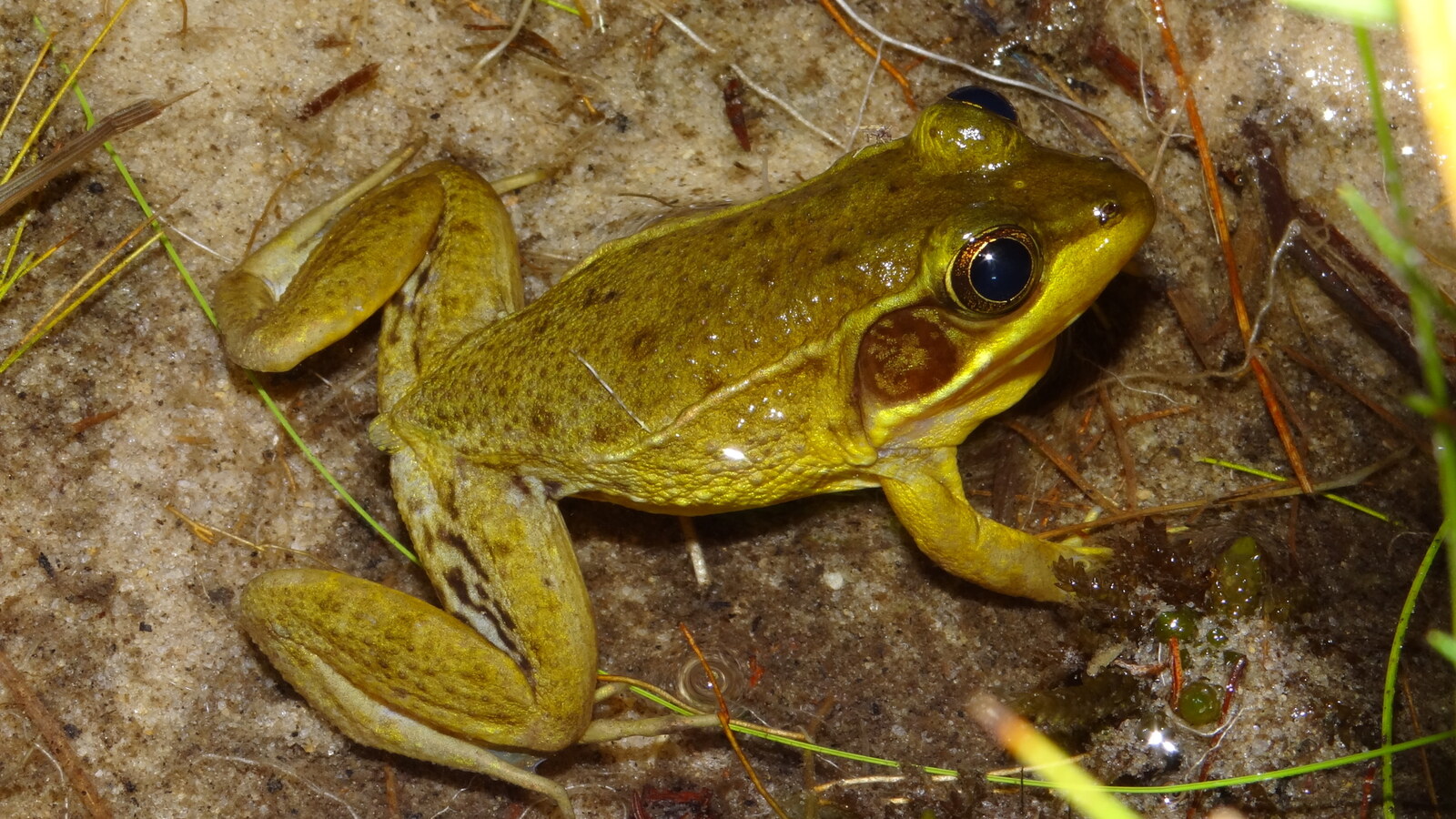
The Florida Bog Frog is a rare Panhandle endemic that lives beside cool, clear seepage streams and wet bogs.
This frog occurs in a small area of the western Florida Panhandle, where it depends on open seepage slopes, shallow flowing water, and surrounding pine habitat.
Fire exclusion, erosion, sediment, and changes to groundwater flow reduce the open bog conditions it needs.
Habitat:
Freshwater Wetlands, Rivers and Springs, Pine Flatwoods and Sandhills
Area / Range:
Florida Panhandle
Diet:
Insects, spiders, and other small invertebrates captured at the water's edge.
Behavior:
Adults remain close to shallow flowing water and escape into pools when disturbed. Males call during warm wet periods.
Night, Dusk, Dawn
Active Times:
Best time to see:
Warm evenings from spring through summer near protected seepage streams. Observe from established paths.
Florida Native Status:
Native
Conservation Status:
Rare, highly localized, and state-protected because nearly its entire global range lies in the western Florida Panhandle.
Safety Level:
Low Risk
Safety Information:
Harmless. Do not handle amphibians because skin oils and chemicals can injure them or spread disease.
Benefits to Property:
It consumes insects and signals clean water, natural groundwater flow, and high-quality bog habitat.
Property Concerns:
No property damage. Sediment, fertilizer runoff, drainage changes, and unplanned fire suppression damage habitat.
Fun Fact:
The species was formally described in 1985 and occurs nowhere outside a small part of Florida.
Wildlife Laws:
Protected under Florida wildlife rules. Do not capture, harm, possess, sell, or relocate this species without authorization.
Identification:
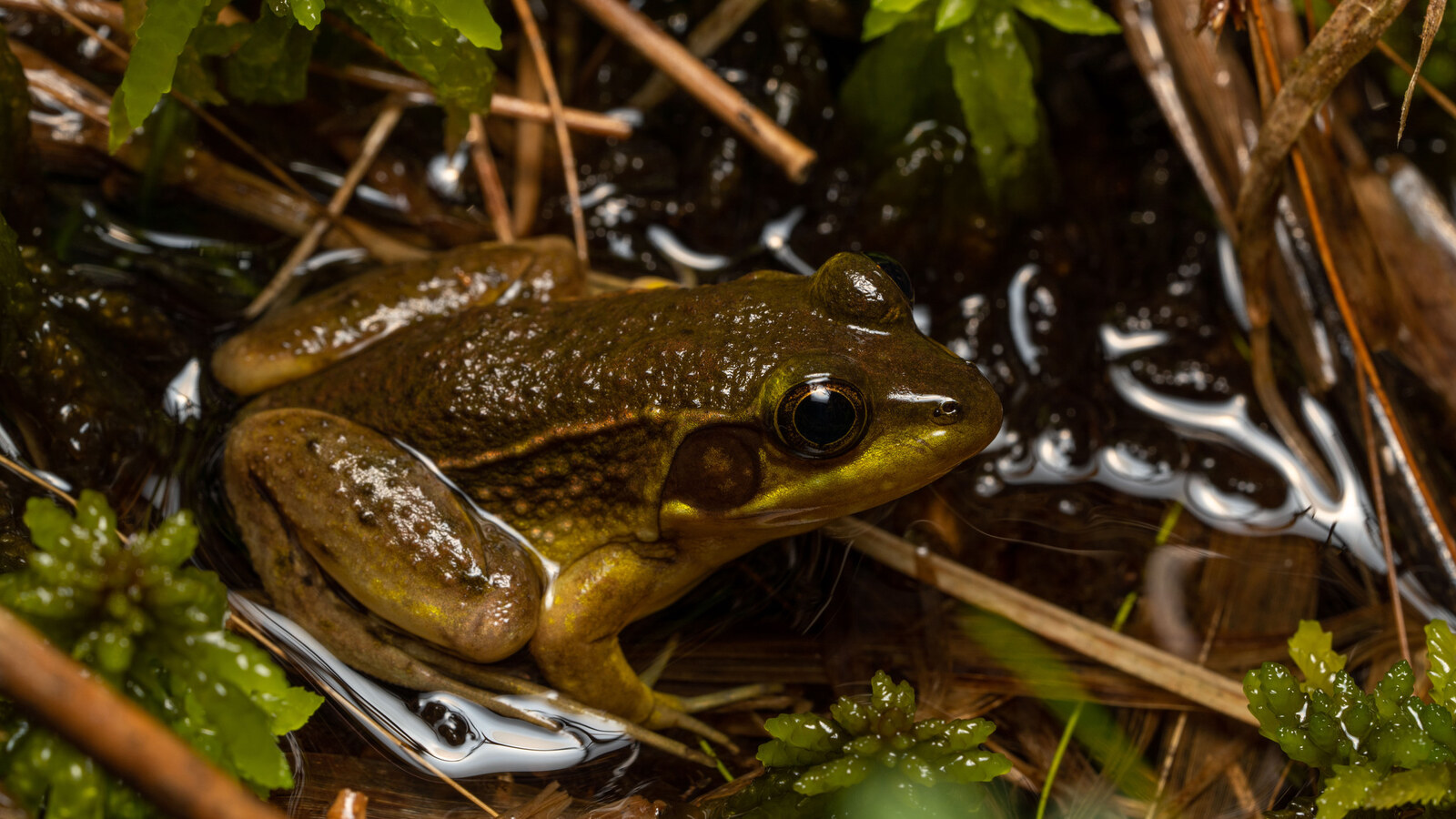
A medium olive to brown frog with a yellow throat, dark spots or mottling, and strong dorsolateral ridges along the back. Males call with a chuckling or clucking series.
Credits:
Facts and photos: iNaturalist Florida Bog Frog. Wildlife guidance: Florida FWC Wildlife and Habitats.