
Florida Burrowing Owl
Athene cunicularia floridana
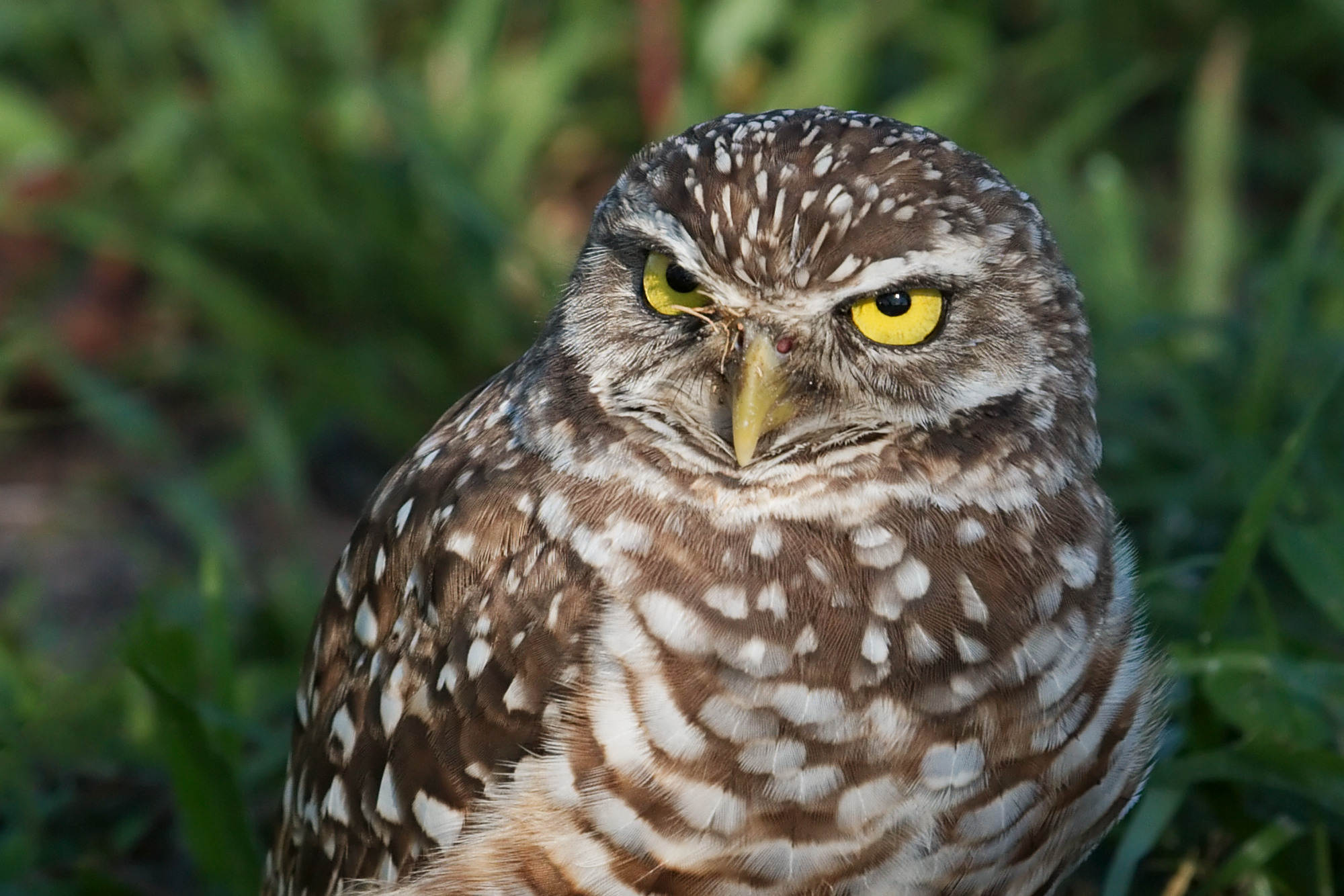
Unlike most owls, Florida Burrowing Owls spend much of their time on the ground and remain active by day.
Unlike most owls, Florida Burrowing Owls spend much of their time on the ground and remain active by day. Keep people, pets, equipment, and vehicles away from marked burrows. Contact FWC before work nearby. Protected by state and federal law. Burrows, eggs, young, and adults must not be disturbed.
Habitat:
Scrub and Dry Prairie, Grasslands and Agricultural Areas, Urban and Residential Areas
Area / Range:
Central Florida, South Florida
Diet:
Insects, lizards, frogs, rodents, and small birds.
Behavior:
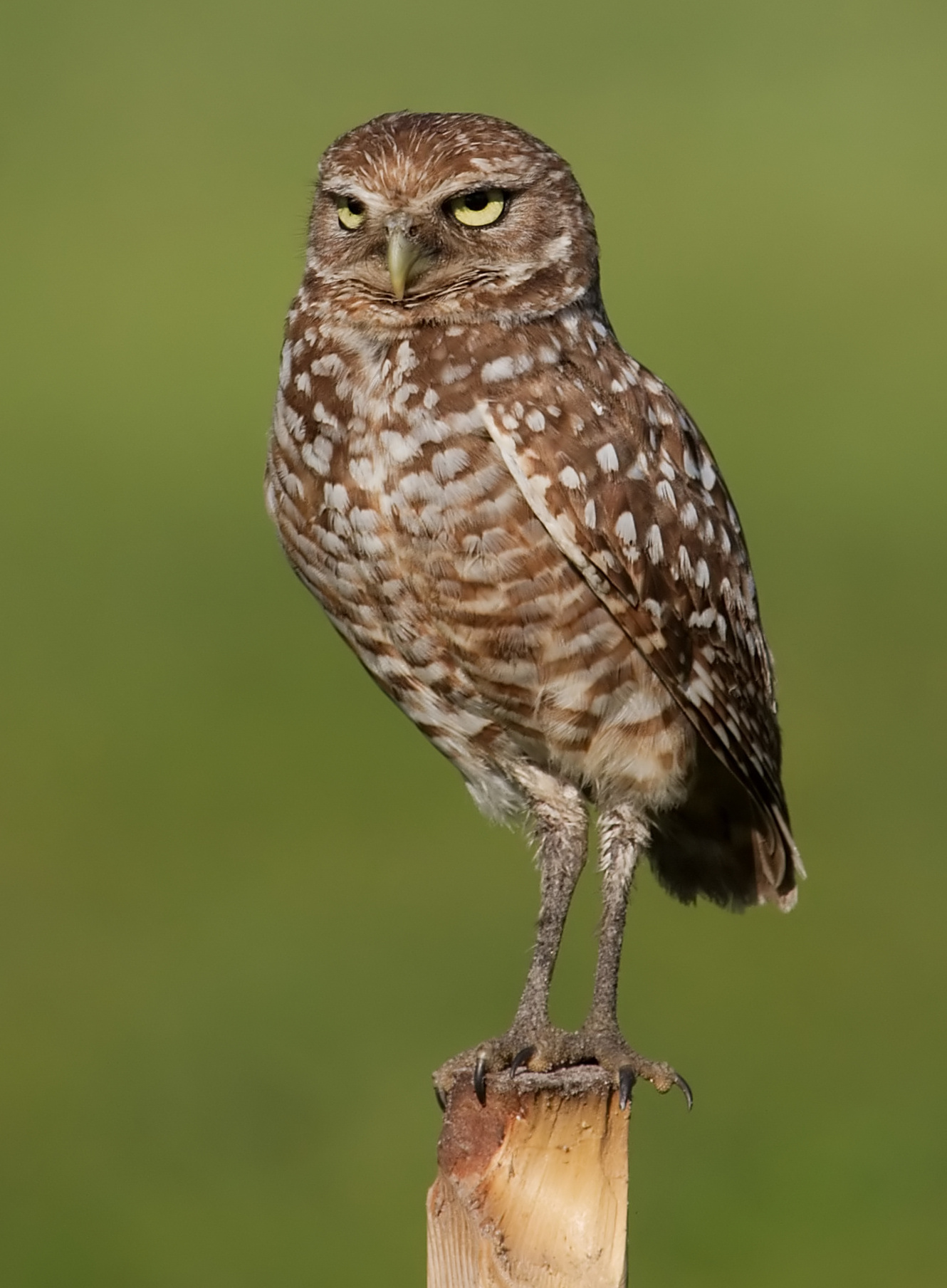
Lives and nests underground in open habitat. Often stands upright near its burrow.
Day, Dawn, Dusk
Active Times:
Best time to see:
Observe from a respectful distance in suitable Florida habitat.
Florida Native Status:
Native
Conservation Status:
State-designated threatened
Safety Level:
Protected. Keep Away From Burrows
Safety Information:
Keep people, pets, equipment, and vehicles away from marked burrows. Contact FWC before work nearby.
Benefits to Property:
Controls insects, rodents, and small reptiles.
Property Concerns:
Mowing, construction, pets, vehicles, and pesticide use threaten active burrows.
Fun Fact:
Unlike most owls, Florida Burrowing Owls spend much of their time on the ground and remain active by day.
Wildlife Laws:
Protected by state and federal law. Burrows, eggs, young, and adults must not be disturbed.
Identification:
Small long-legged owl with bright yellow eyes, white eyebrows, and brown-and-white spotting.
Credits:
Facts: wildlife reference. Images: Wikimedia Commons.