
Florida Manatee
Trichechus manatus latirostris
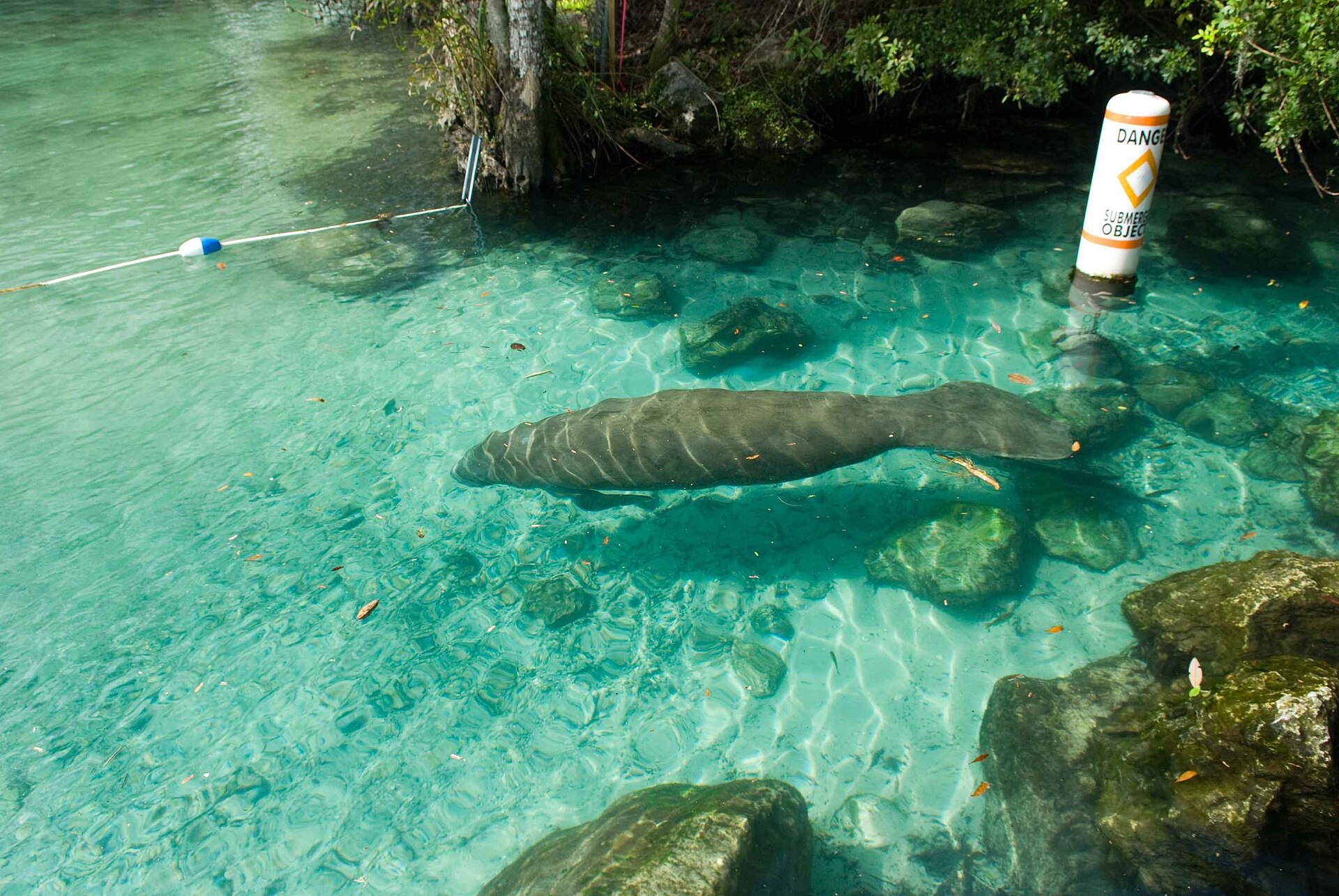
The Florida manatee is a gentle native aquatic mammal found in rivers, springs, bays, canals, and coastal waters.
Florida manatees are a subspecies of the West Indian manatee. Adults are usually gray, about 9 to 10 feet long, and near 1,000 pounds, though larger animals occur.
They depend on seagrasses, freshwater vegetation, and warm-water refuges. Boat strikes, loss of food, cold stress, and entanglement remain major threats.
Habitat:
Rivers and Springs, Canals and Ditches, Estuaries and Bays, Coastal Waters
Area / Range:
Central Florida, South Florida, Atlantic Coast, Gulf Coast
Diet:
Manatees graze on seagrasses and many freshwater plants. They spend several hours each day feeding.
Behavior:
Manatees move between coastal feeding areas and warm-water refuges. They surface regularly to breathe and often travel alone or in loose groups.
Day, Night
Active Times:
Best time to see:
Winter at warm-water springs and refuges. Observe from legal viewing areas.
Florida Native Status:
Native
Conservation Status:
Threatened under the federal Endangered Species Act.
Safety Level:
Harmless. Protected Wildlife
Safety Information:
Observe from a distance. Never chase, touch, ride, surround, feed, or give water to a manatee. Boaters should follow posted speed zones and wear polarized glasses.
Benefits to Property:
Manatees are an important part of Florida’s aquatic ecosystems and help residents understand the health of waterways and seagrass habitat.
Property Concerns:
They do not normally damage landscapes or waterfront property. Human activity poses the greater risk to the animal.
Fun Fact:
Manatees use their flippers to steer and handle vegetation. Individuals often return to the same winter refuges year after year.
Wildlife Laws:
Manatees receive protection under the Marine Mammal Protection Act, the Endangered Species Act, and Florida law. Harassment, feeding, touching, or injuring them is prohibited.
Identification:
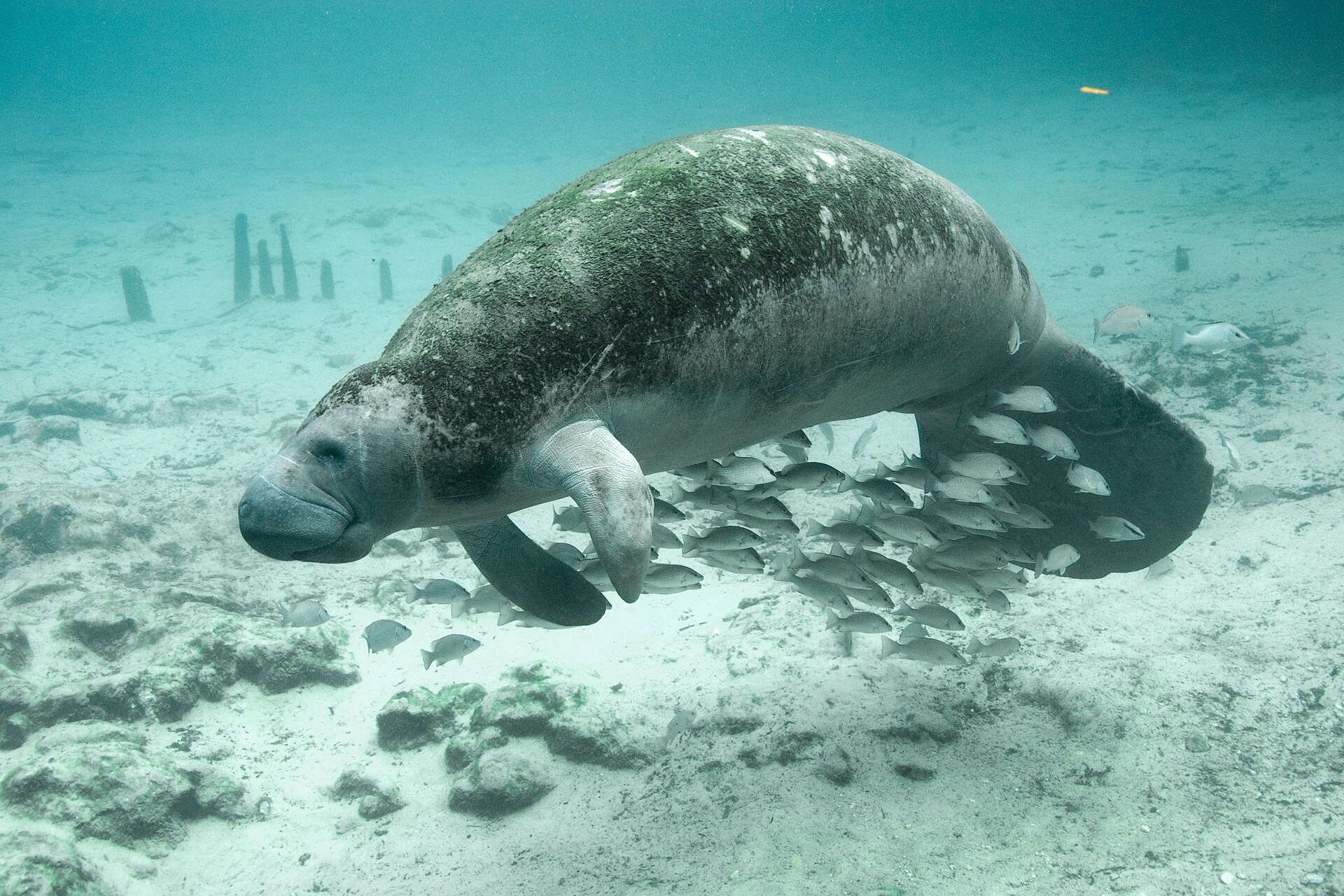
Manatees have a rounded body, whiskered snout, paired flippers, and a broad paddle-shaped tail. Many adults carry scars from boat collisions.
Credits:
Facts: Florida Fish and Wildlife Conservation Commission. Images: manatee portrait and Crystal River manatee, public-domain USFWS photographs via Wikimedia Commons.