
Florida Purplewing
Eunica tatila
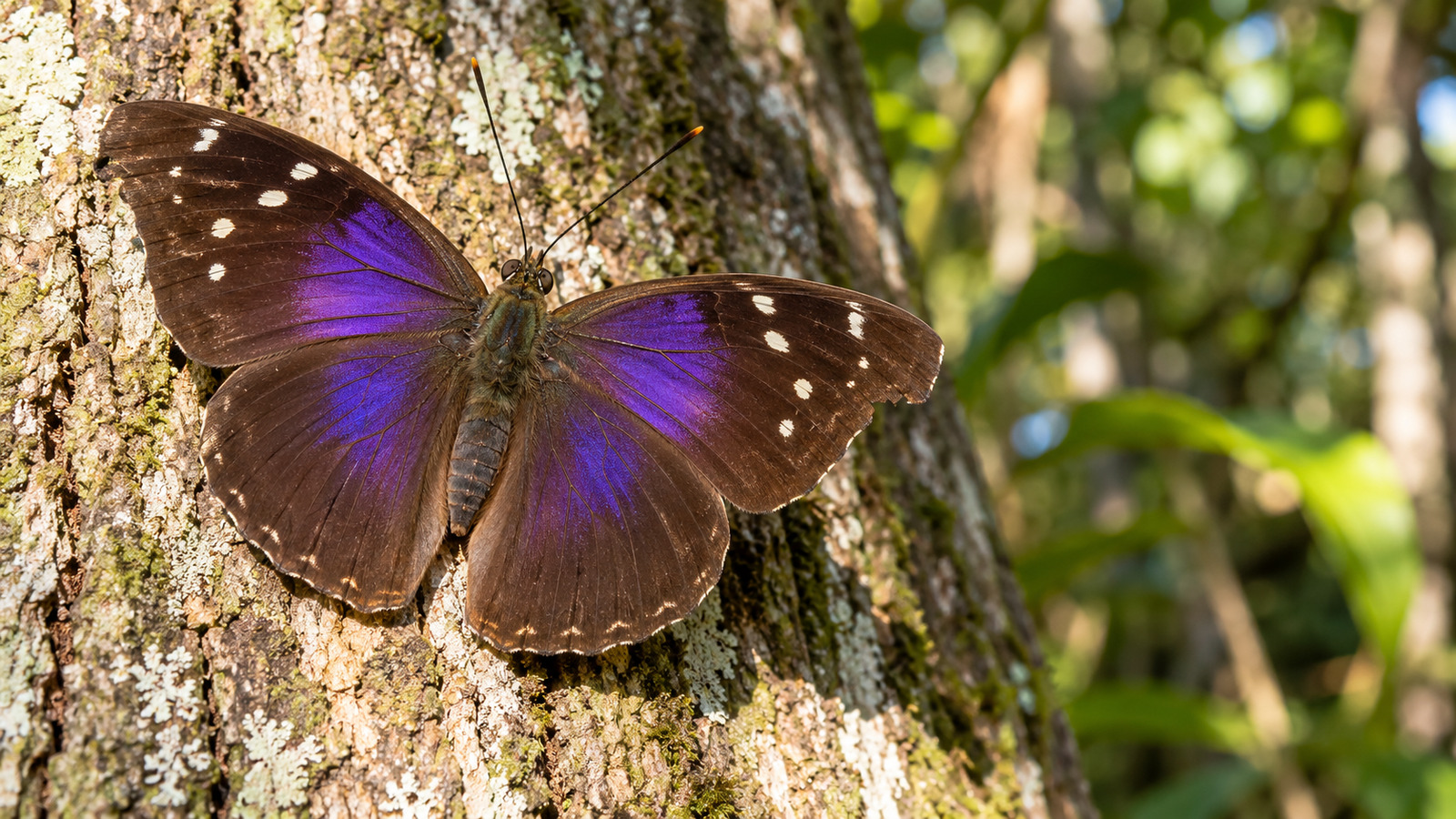
Florida Purplewings are tropical brown butterflies whose wings flash vivid violet in sunlight, occurring mainly in hardwood hammocks of South Florida and the Keys.
Florida Purplewings are tropical brush-footed butterflies at the northern edge of their regular range in southern Florida. They are associated with shaded hardwood hammocks, especially in the Florida Keys, and may spend much of their time on trunks or higher in the canopy.
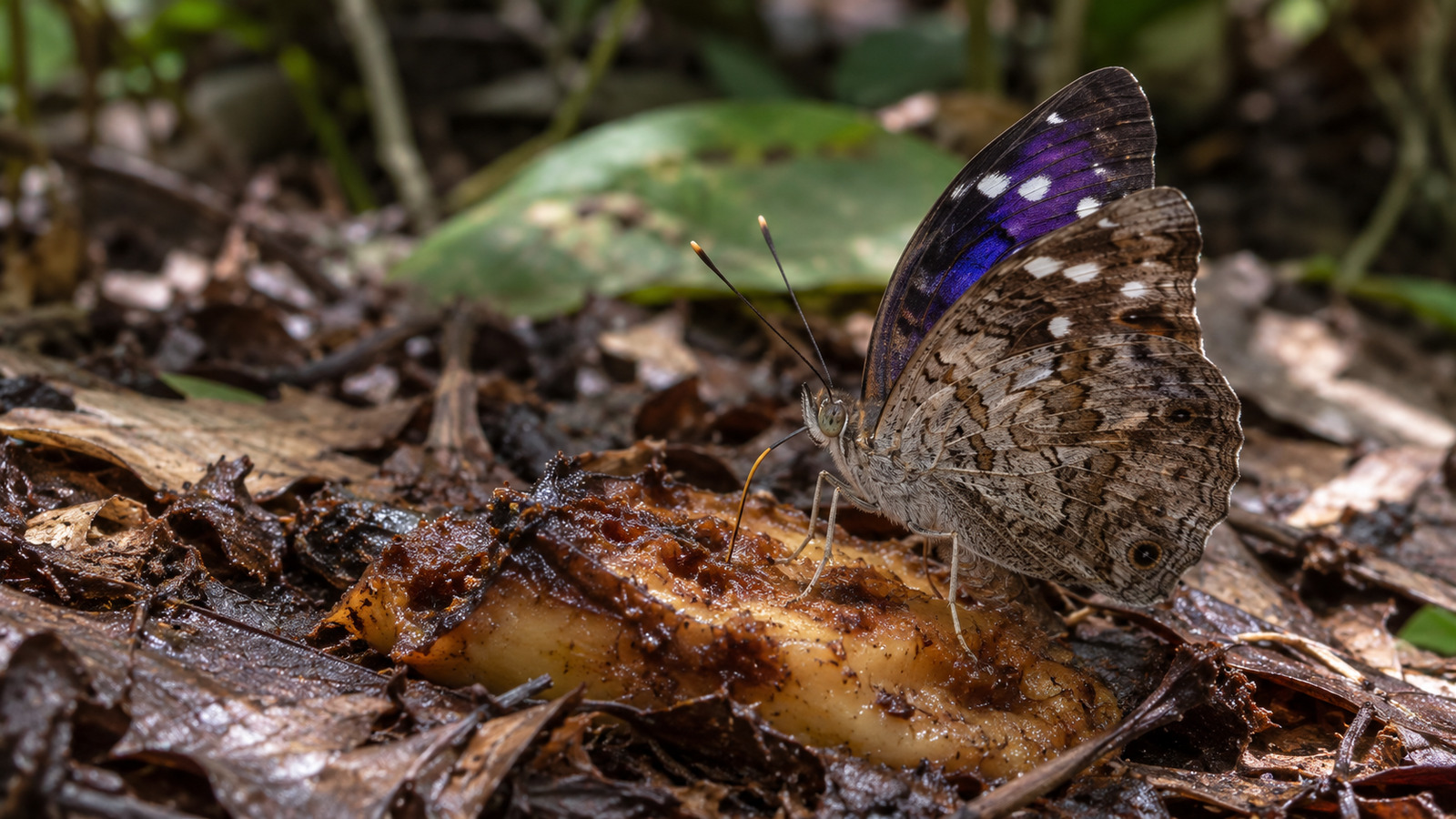
Adults are present through the year in suitable South Florida habitat. Unlike many garden butterflies, they often visit fermenting fruit and tree sap, though they may also take nectar from flowers such as lantana and Cordia.
Habitat:
Forests and Woodlands
Area / Range:
South Florida, Florida Keys
Diet:
Adults feed primarily on decaying fruit, tree sap, and other fermenting liquids, and they also visit some flowers for nectar. The larval host relationship remains poorly documented in widely used North American references.
Behavior:
Adults often perch on tree trunks, rest in the shaded canopy, or descend to feed on fallen fruit. Their brown wings provide camouflage in shade, while direct light reveals the vivid violet structural color on the upper surface.
Day
Active Times:
Best time to see:
Warm, still daylight hours throughout the year in intact hardwood hammocks of extreme South Florida and the Florida Keys, especially near fallen fruit or sap.
Florida Native Status:
Native
Conservation Status:
Globally secure, but uncommon and localized in the United States. Florida populations depend on conserving tropical hardwood hammock habitat, particularly in the Keys.
Safety Level:
Harmless
Safety Information:
Florida Purplewings do not sting, bite, or damage people or pets. Observe without capturing or touching the delicate wing scales, and avoid disturbing feeding butterflies.
Benefits to Property:
They contribute to native insect diversity and may provide limited pollination when visiting flowers. Protecting shaded native hammocks and reducing pesticide use also supports many other butterflies and beneficial insects.
Property Concerns:
They do not damage homes, lawns, or landscape plants. Habitat clearing, loss of hardwood hammocks, broad-spectrum insecticides, and removal of fallen fruit resources can reduce local occurrence.
Fun Fact:
The butterfly can look mostly brown in shade and then flash intense violet-purple when sunlight strikes microscopic structures in its wing scales. The species was originally described under the name Cybdelis tatila.
Wildlife Laws:
Florida wildlife may not be taken, transported, sold, or possessed except as authorized by state rules. Observe butterflies in place, follow all park and refuge regulations, and obtain permission or any required permit before collecting.
Identification:
The upper wings are brown with strong violet-purple iridescence near the bases and six or seven white spots across the outer forewing. The forewing tip has a slightly irregular outline, and the underside is mottled gray-brown with white forewing spots and small eyespots. Wingspan is about 1.6 to 2.4 inches.