
Florida Woods Cockroach
Eurycotis floridana
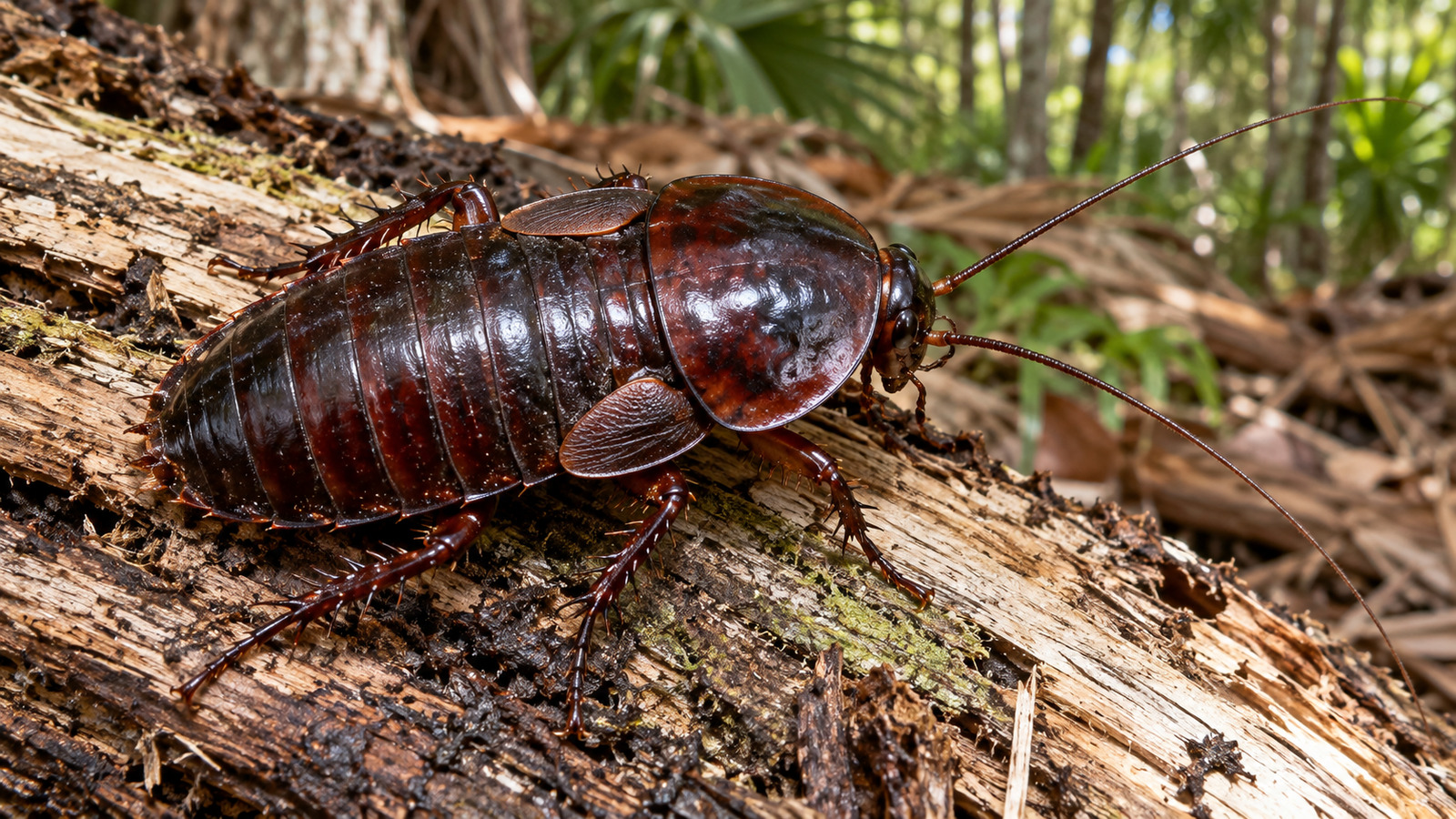
The Florida Woods Cockroach is a large native forest decomposer known for its broad wingless body and strong defensive odor.
The Florida Woods Cockroach is a large native roach of forests, hammocks, palmetto thickets, and wooded yards. Adults are broad, dark reddish brown to nearly black, and lack functional wings.
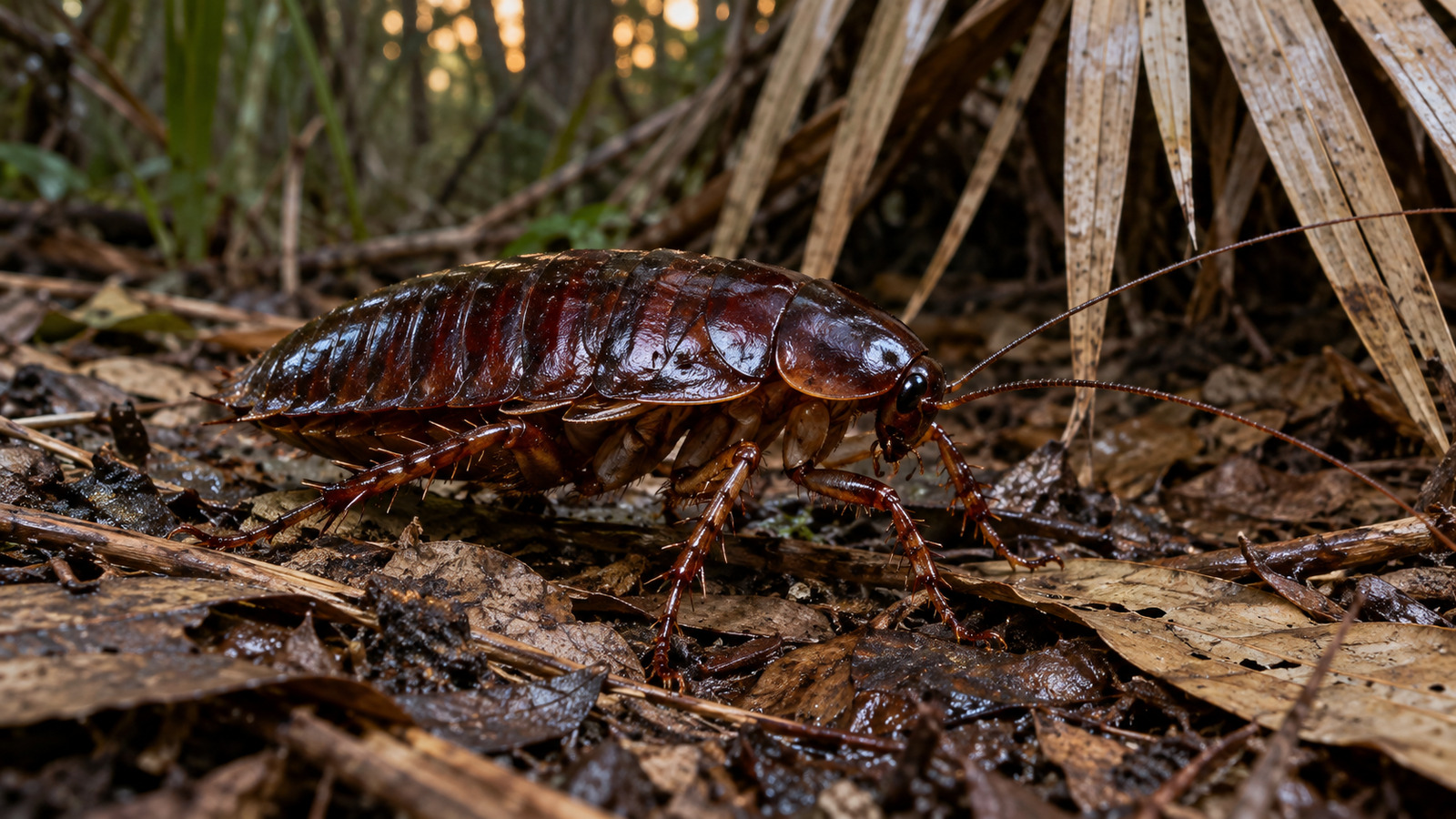
Unlike the small pest cockroaches that reproduce inside buildings, this species normally lives outdoors under logs, loose bark, leaf litter, and woodpiles. It feeds on decaying plant material and may wander indoors accidentally.
Habitat:
Forests and Woodlands, Pine Flatwoods and Sandhills, Urban and Residential Areas
Area / Range:
Statewide
Diet:
Decaying leaves, rotting wood, bark, fungi, lichens, and other decomposing organic material on the forest floor.
Behavior:
Mostly nocturnal and slow moving. It shelters by day beneath logs, bark, boards, palmetto debris, and woodpiles. When threatened, adults can release a strong-smelling defensive spray.
Night
Active Times:
Best time to see:
Look after dark beneath loose bark, fallen logs, palmetto litter, or outdoor woodpiles in shaded, humid areas. Avoid touching or cornering the animal.
Florida Native Status:
Native
Conservation Status:
Common native species and not federally or state listed. It remains widespread where moist forest litter and decaying wood are available.
Safety Level:
Harmless. Strong Defensive Odor
Safety Information:
This cockroach does not bite or sting, but it can spray a strong-smelling defensive secretion that may irritate sensitive eyes or skin. Observe without handling and wash exposed skin.
Benefits to Property:
Breaks down dead leaves and wood, returns nutrients to the soil, and provides food for reptiles, amphibians, birds, and small mammals.
Property Concerns:
It may enter garages, sheds, or homes by accident but does not usually establish indoor infestations. Reduce entry by sealing gaps and keeping damp woodpiles away from walls.
Fun Fact:
The defensive odor has earned this species the names Florida stinkroach and skunk cockroach. Adults are wingless and rely on chemical defense instead of flight.
Wildlife Laws:
This common native insect has no special federal or Florida protected status. Use pesticides only as labeled and avoid broad outdoor treatments that harm beneficial decomposers.
Identification:
Look for a broad, shiny dark reddish-brown to black cockroach with a thick oval body, stout legs, and very short wing pads rather than full wings. Adults cannot fly.
Its large size, slow heavy appearance, outdoor habitat, and powerful musky defensive odor distinguish it from German, American, and smokybrown cockroaches commonly associated with structures.