
Four-Spotted Pennant
Brachymesia gravida
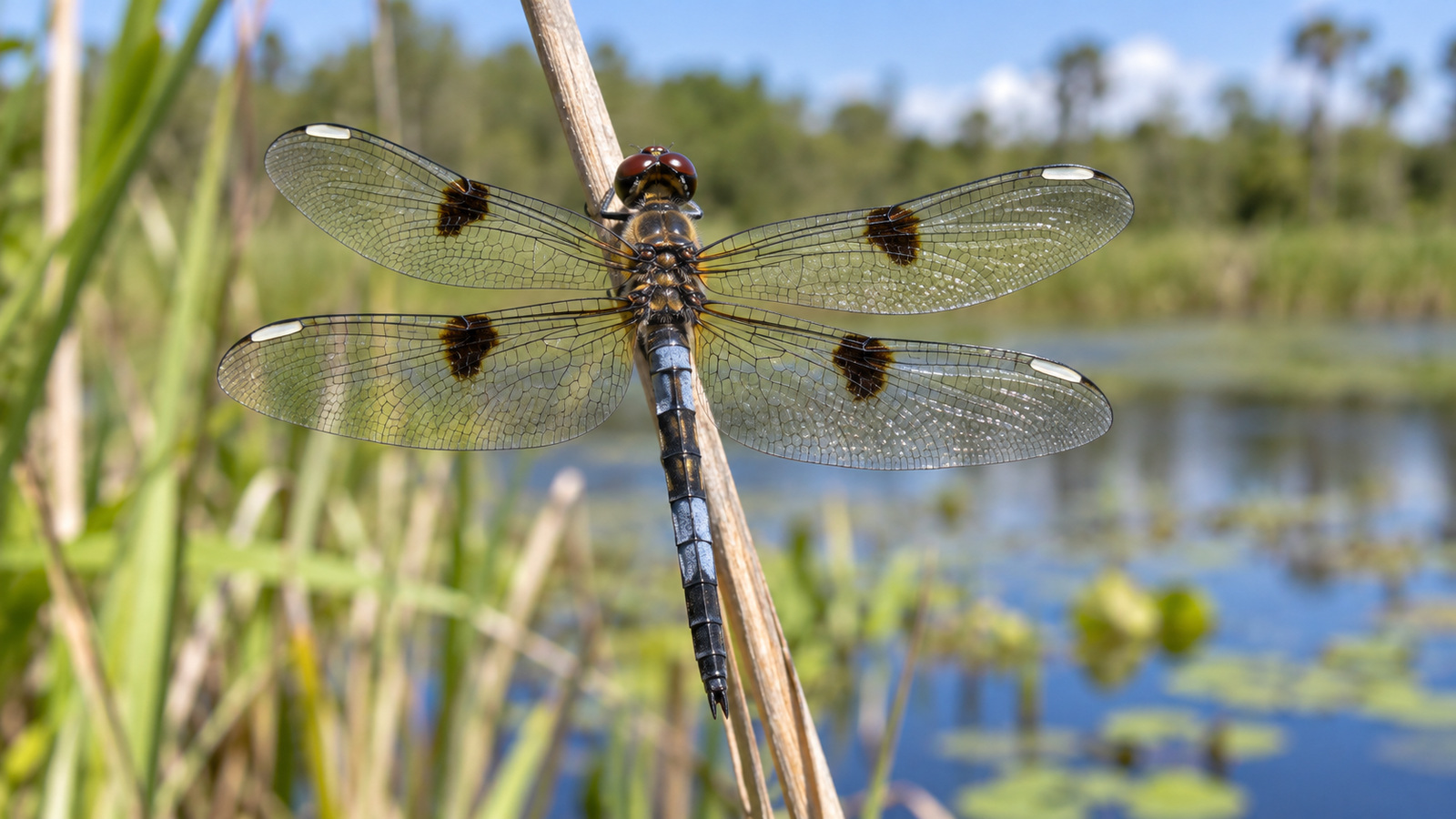
A conspicuous Florida pond dragonfly named for the dark patch near the middle of each of its four clear wings.
The Four-Spotted Pennant is a medium-sized skimmer dragonfly of open ponds, lakes, marshes, and other sunny still-water habitats. It ranges across the southern United States and is well established in Florida.
Adults patrol over water and perch on exposed stems, where the four dark wing patches are often visible from a distance. Like other dragonflies, both the aquatic young and flying adults are active predators.
Habitat:
Lakes and Ponds, Freshwater Wetlands
Area / Range:
Statewide
Diet:
Adults capture mosquitoes, midges, flies, and other small flying insects in the air. Aquatic nymphs prey on insect larvae, small crustaceans, and other tiny aquatic animals.
Behavior:
Adults make short hunting flights from exposed perches and frequently return to the same stem. Males patrol sunny shorelines and defend productive areas, while females approach the water to mate and lay eggs.
Day
Active Times:
Best time to see:
Warm, sunny late mornings and afternoons from spring through fall around open ponds and marsh edges
Florida Native Status:
Native
Conservation Status:
NatureServe G5 globally and considered secure; local abundance still depends on suitable open-water wetlands and water quality.
Safety Level:
Low
Safety Information:
Four-Spotted Pennants do not sting and are not dangerous to people or pets. A handled dragonfly may nip defensively, so observe it without capturing or squeezing it.
Benefits to Property:
Adults consume many small flying insects, and their presence adds biodiversity around ponds. Nymphs are part of healthy aquatic food webs and also prey on insect larvae.
Property Concerns:
This dragonfly does not damage buildings, plants, ponds, or landscaping. Broad-spectrum insecticides and removal of all shoreline vegetation can reduce local populations.
Fun Fact:
The dark wing marks sit near the nodus, the joint-like structural point along the leading edge of each wing. With one patch on every wing, a perched adult displays the species' four-spot signature clearly.
The pale wing-tip cells called pterostigmas help separate this species from the similar Tawny Pennant, whose pterostigmas are darker.
Wildlife Laws:
The Four-Spotted Pennant is not federally or Florida state listed as threatened or endangered. Collection rules may apply in parks, preserves, refuges, and other public lands; protect wetland vegetation and avoid unnecessary handling.
Identification:
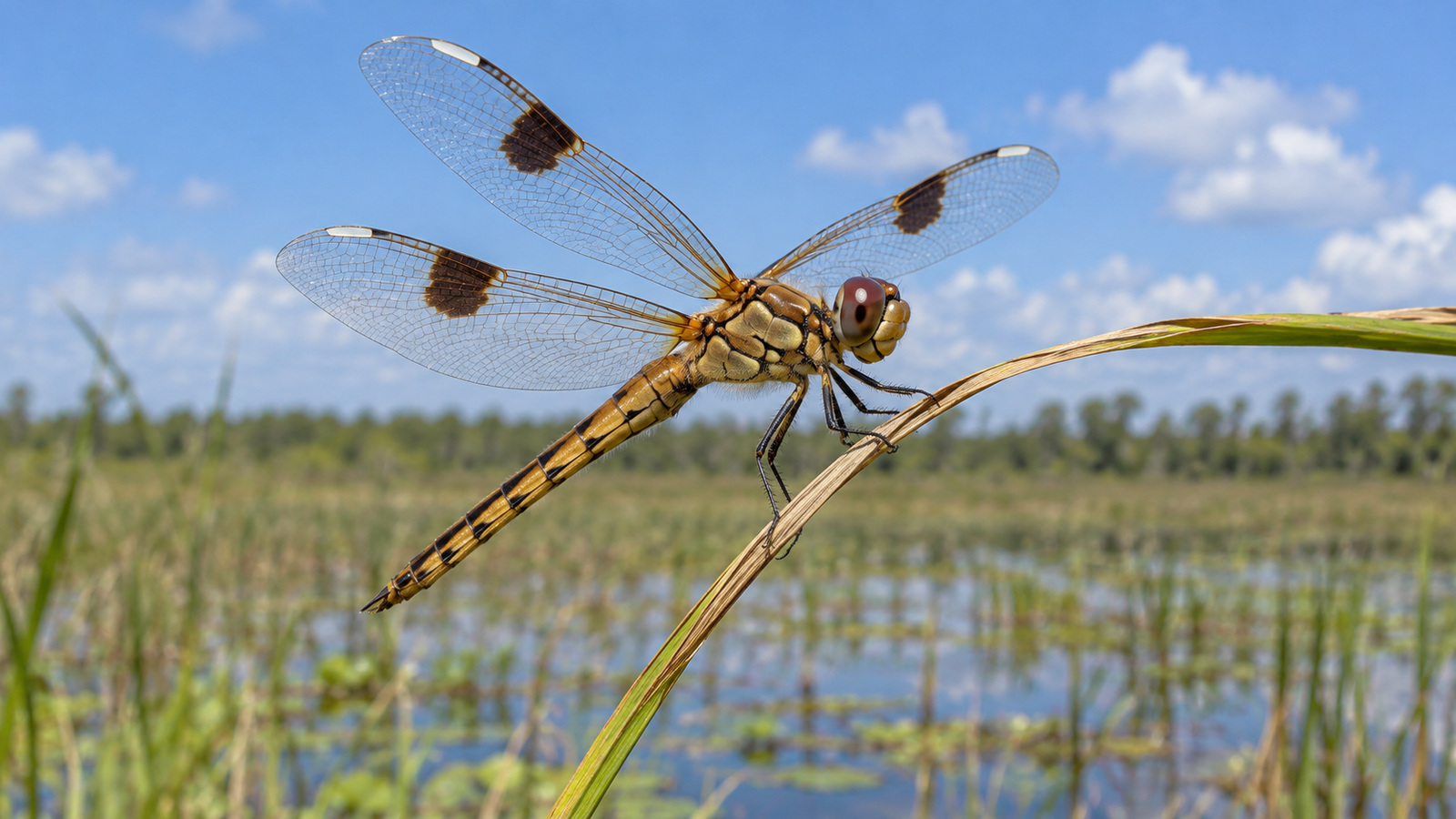
Each of the four mostly clear wings carries a conspicuous dark patch near the nodus, creating the four-spotted pattern behind the common name. The pale or whitish pterostigmas near the wing tips help distinguish it from the similar Tawny Pennant.
Females and young males are golden tan with darker markings. Mature males develop a darker abdomen with bluish-gray pruinescence.