
French Angelfish
Pomacanthus paru
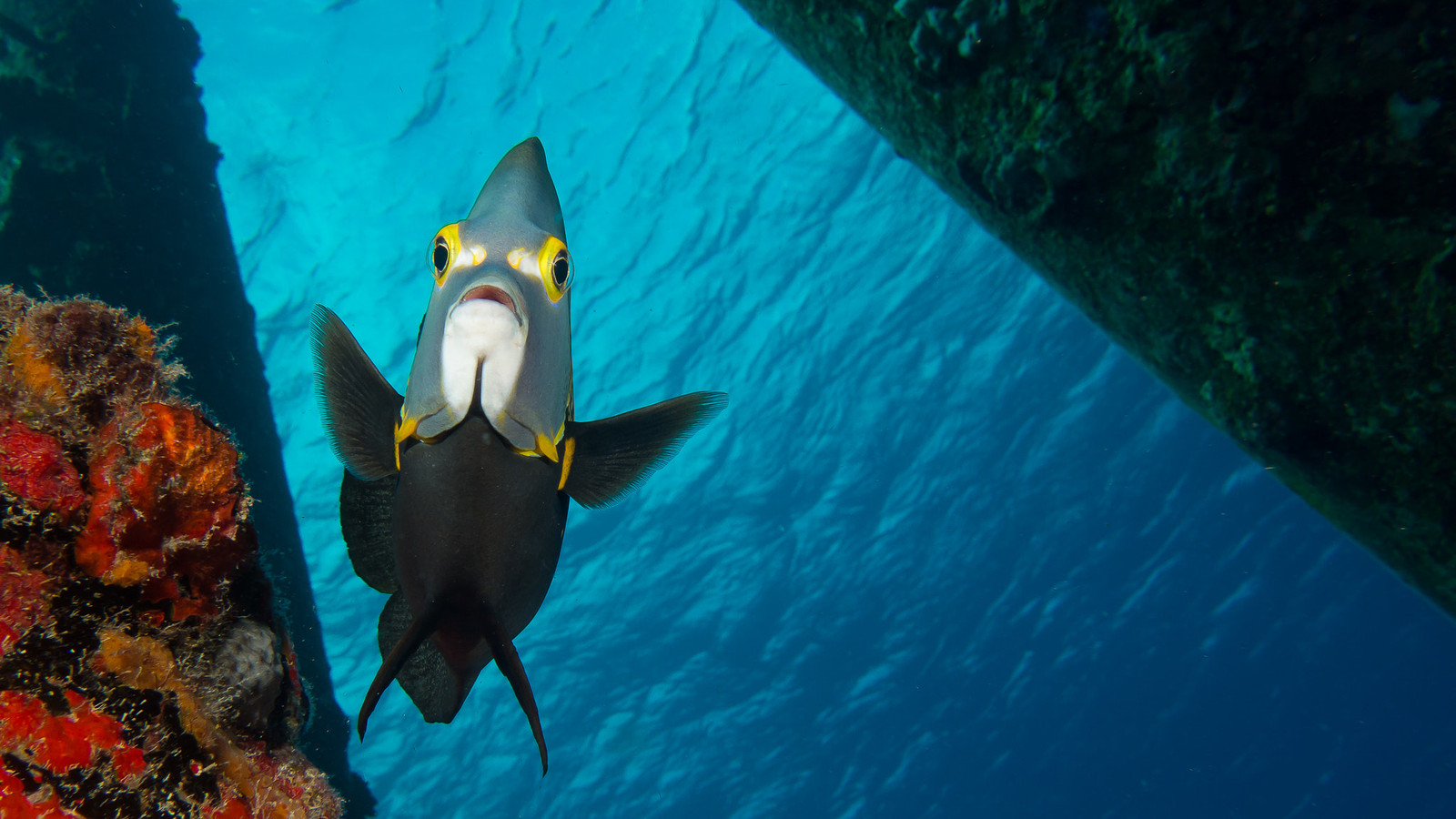
A large, dark reef angelfish with gold-edged scales, often encountered in pairs and curious about passing divers.
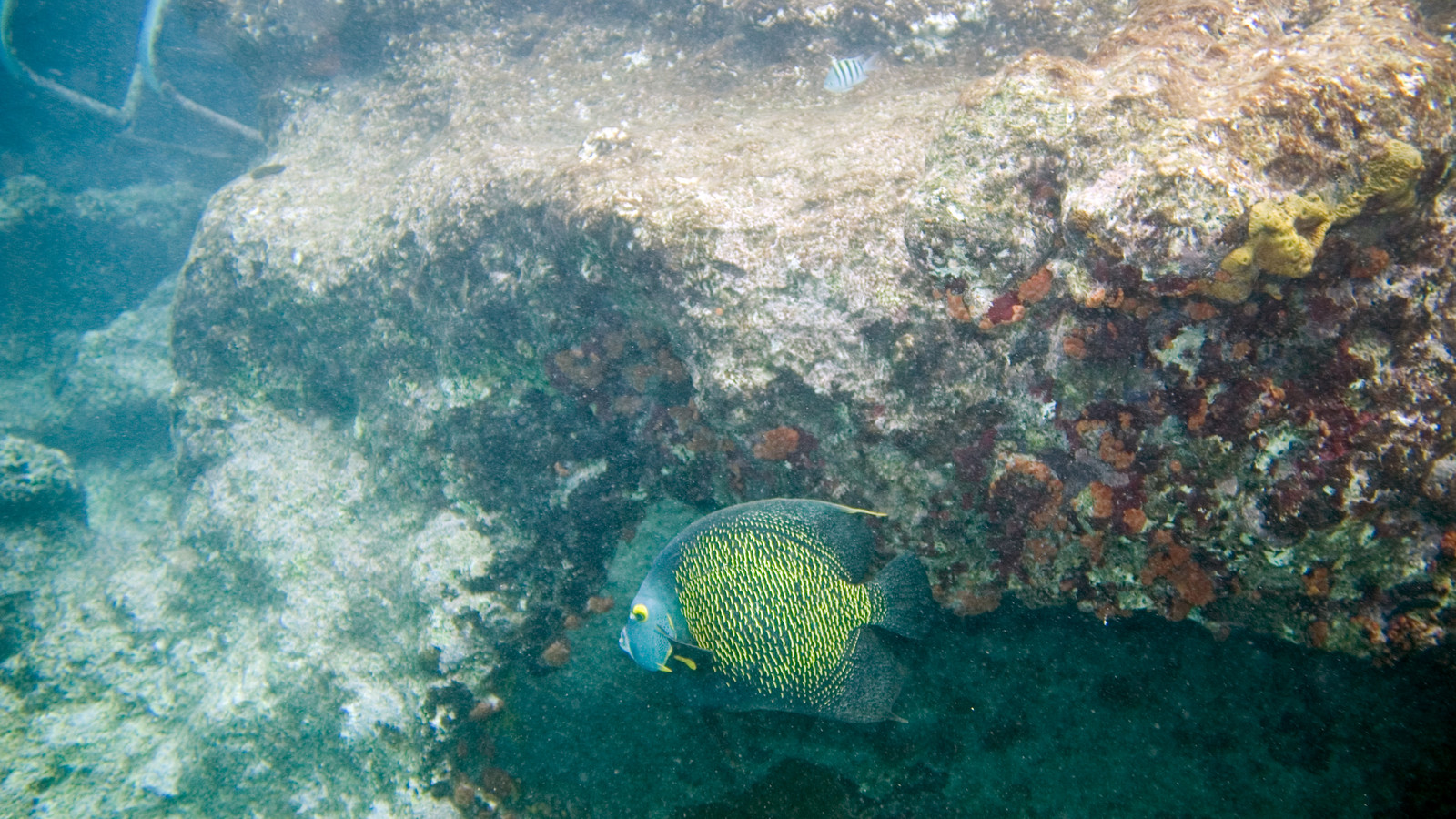
French angelfish are native reef fishes of South Florida and the Keys. Adults are strikingly patterned, with golden scale edges against a dark body.
Young fish wear bold yellow bands instead of the adult pattern. Comparing age-related markings helps avoid confusion with the closely related gray angelfish.
Habitat:
Coastal Waters
Area / Range:
South Florida, Florida Keys
Diet:
Adults eat mainly sponges along with tunicates, algae, and other attached invertebrates. Juveniles also eat detritus and parasites.
Behavior:
Often paired and territorial, adults browse around reef shelter. Juveniles advertise cleaning stations with fluttering movements and remove parasites from other fishes.
Day
Active Times:
Best time to see:
Daylight around coral heads, sponge-covered rock, and sheltered reef edges in South Florida and the Keys.
Florida Native Status:
Native
Conservation Status:
Least Concern (IUCN global assessment); habitat protection and responsible collection remain important.
Safety Level:
Low Risk
Safety Information:
Observe without touching, feeding, or cornering this reef fish. Maintain safe swimming or diving practices, keep fins clear of coral, and leave shelter and feeding areas undisturbed.
Benefits to Property:
This native sponge feeder and juvenile cleaner contributes to reef food webs. Coastal landscapes that retain runoff help protect nearby marine habitat.
Property Concerns:
There is no normal land-property damage. Territorial behavior and adult size make this a demanding aquarium species rather than an impulse collection animal.
Fun Fact:
A juvenile French angelfish can clean a much larger fish that would otherwise be a potential predator.
Wildlife Laws:
Florida marine-life licensing, size, bag, gear, and closed-area rules apply to collection. Check current FWC requirements and additional park or sanctuary restrictions before taking this species.
Identification:
Adults have black scales edged in gold, a pale chin, and a yellow patch at the outer pectoral-fin base. Juveniles are dark with yellow bands; the forehead band stops at the lips.
Credits:
- Florida Museum french angelfish species profile
- Taxonomy or conservation reference
- FWC recreational marine-life collection rules
- Primary photo by Kris Mikael Krister; CC BY 3.0; resized to 1600 by 900
- Primary photo license: CC BY 3.0
- Secondary photo by Paul Asman and Jill Lenoble; CC BY 2.0; bottom-aligned crop
- Secondary photo license: CC BY 2.0