
French Grunt
Haemulon flavolineatum
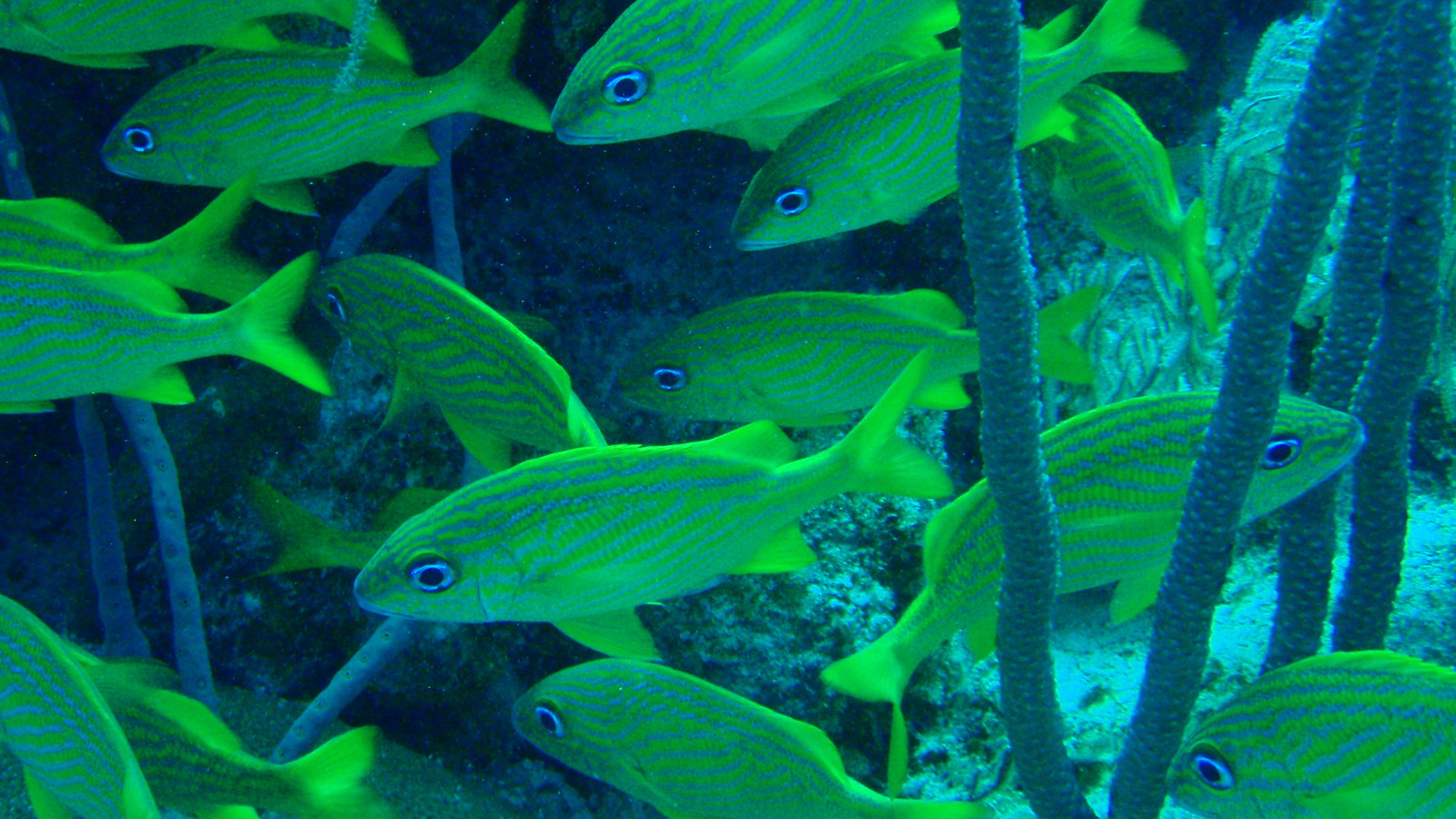
A yellow-striped Florida reef fish that gathers in large daytime schools and forages around sand and seagrass at night.
The French grunt is a native western Atlantic reef fish found in Florida coastal waters. It often forms dense schools around coral and rocky cover by day, while juveniles use sheltered seagrass habitat in bays and lagoons.
Habitat:
Coastal Waters, Estuaries and Bays
Area / Range:
Atlantic Coast, Gulf Coast, Florida Keys
Diet:
At night it feeds mainly on small crustaceans, marine worms, and mollusks over sand flats and seagrass near reefs.
Behavior:
Large groups shelter around reefs, rocky ledges, and coral during daylight, sometimes numbering in the thousands. At night fish spread out to forage in nearby seagrass and sandy areas.
Day and Night
Active Times:
Best time to see:
Daylight while snorkeling or diving over clear reefs; nighttime is the main feeding period.
Florida Native Status:
Native
Conservation Status:
Widespread western Atlantic species; not identified here as a Florida threatened species.
Safety Level:
Low Risk
Safety Information:
Generally poses little risk to people. Observe underwater without chasing or handling fish, and avoid touching coral or other reef life.
Benefits to Property:
Contributes to coastal food webs and the natural character of healthy reef and seagrass habitat; it has no direct residential-landscape benefit.
Property Concerns:
No direct concern for residential property. The species depends on healthy coastal habitat rather than lawns or structures.
Fun Fact:
Grunts make their namesake sound by grinding teeth together. French grunts can gather in schools of several thousand fish.
Wildlife Laws:
If fishing or collecting marine life, check current Florida Fish and Wildlife Conservation Commission license, bag, gear, and location rules first. Marine-life collection has additional requirements, and protected areas may prohibit collection.
Identification:
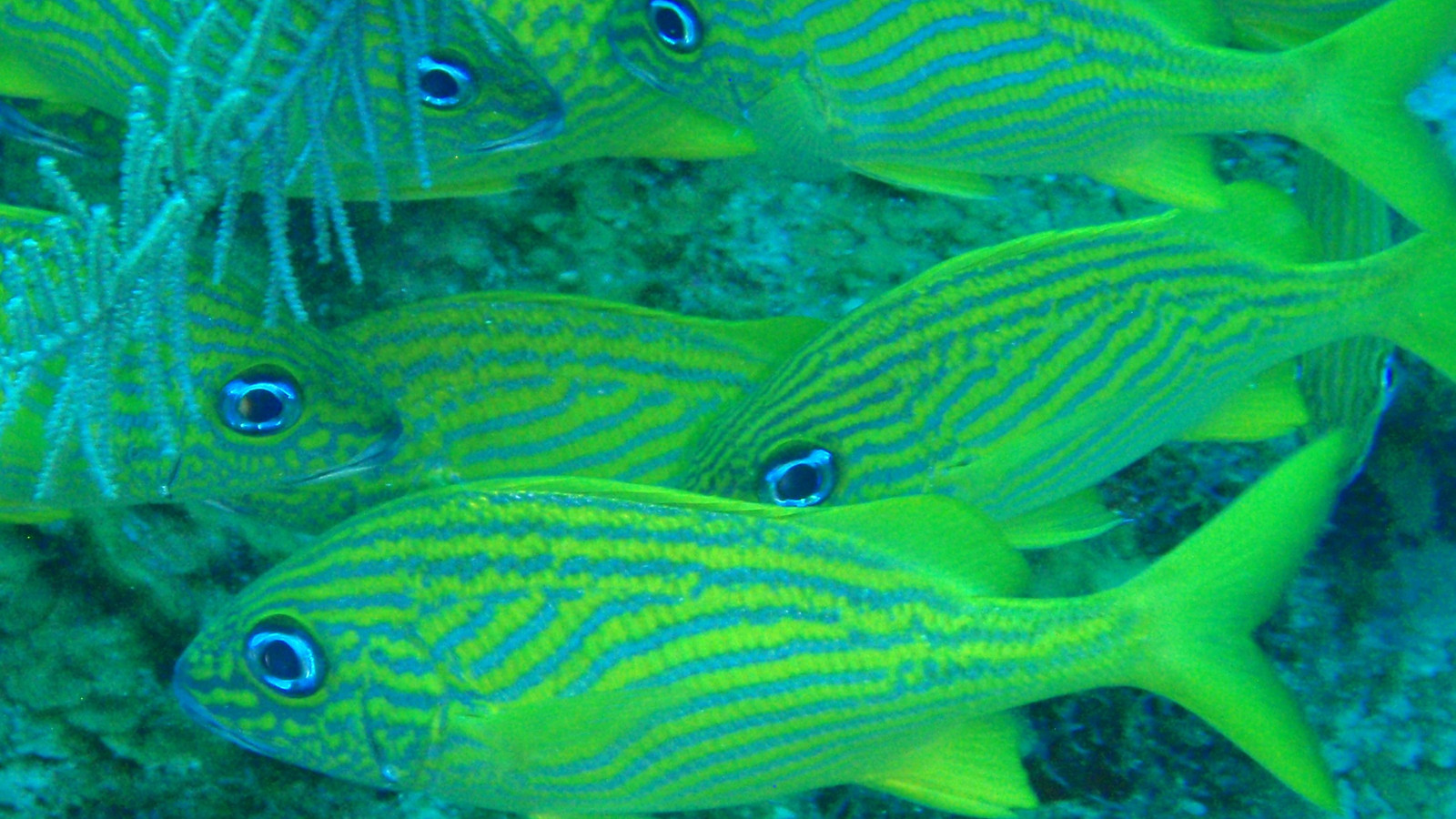
Look for an oblong, silvery to pale body crossed by bright yellow to orange stripes. The first three stripes run straight; lower stripes angle diagonally. The head is blunt, the lips can look thick, the fins are yellow, and the inside of the mouth is red.