
Georgia Blind Salamander
Eurycea wallacei
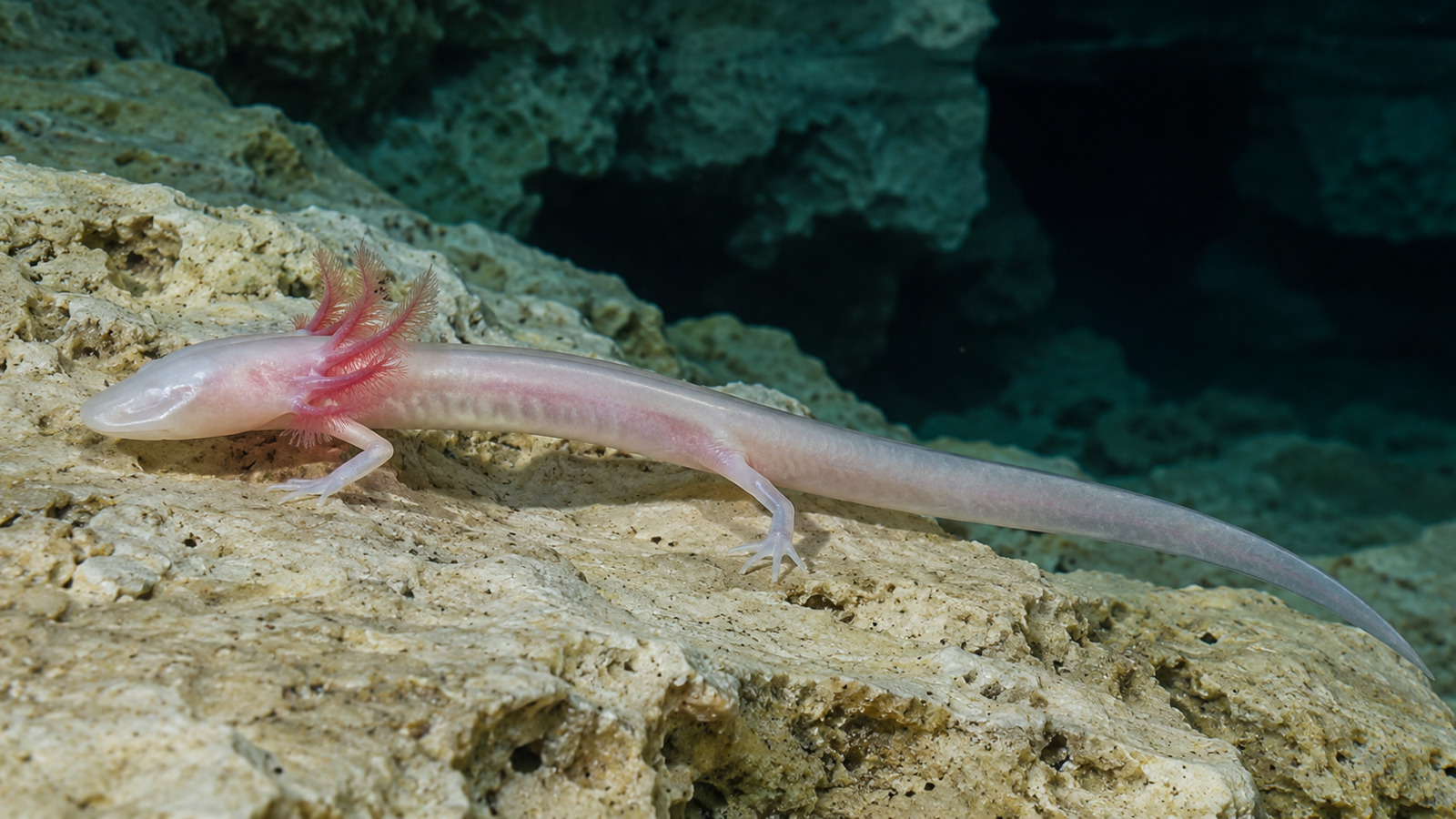
The Georgia Blind Salamander is a tiny, eyeless cave amphibian found in the dark groundwater passages of Florida's Panhandle karst region.
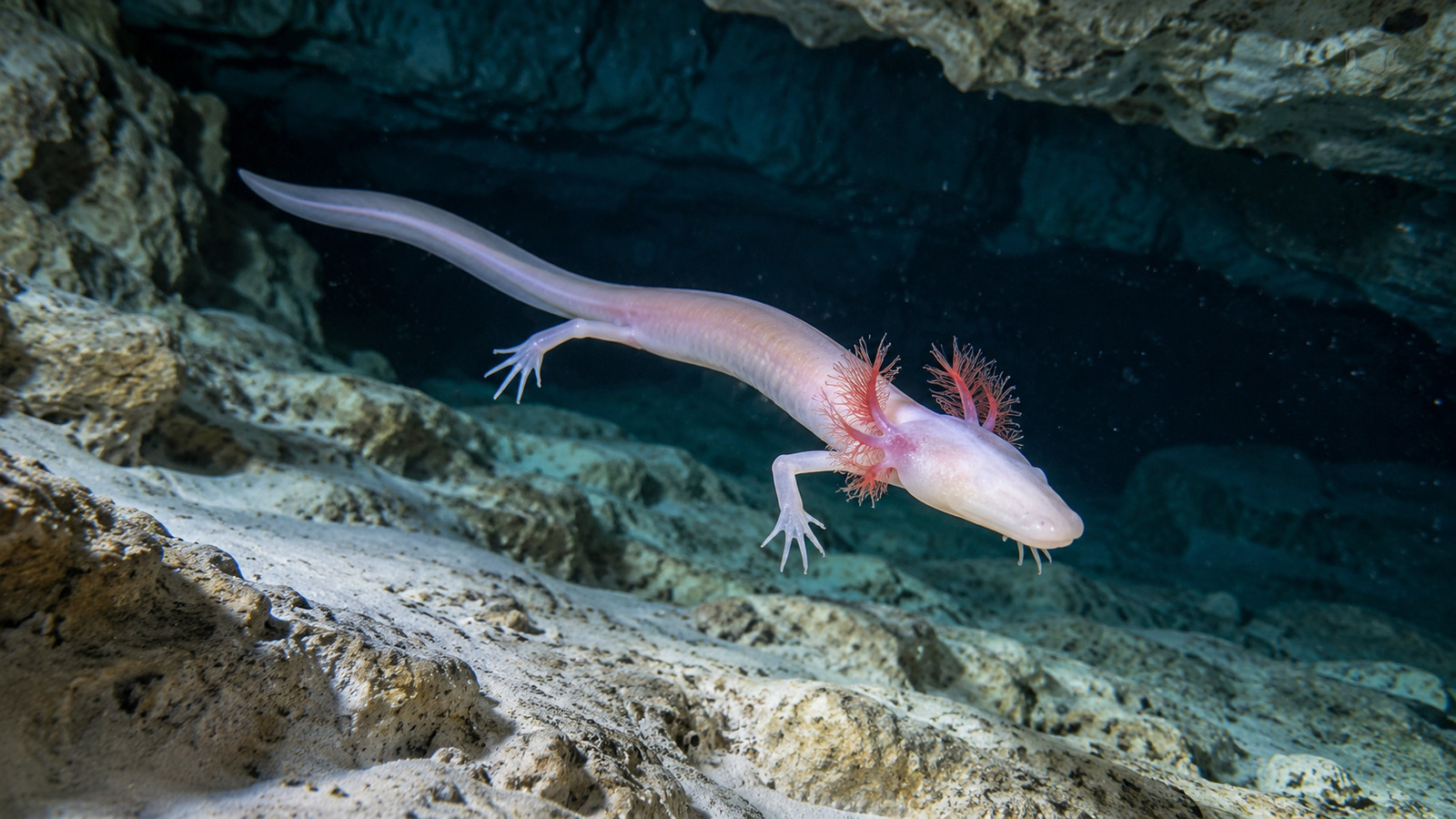
The Georgia Blind Salamander is a permanently aquatic cave species adapted to life in the Floridan aquifer. Its translucent white to pale pink body, bright red external gills, flattened head, and reduced eyes reflect a lifetime spent in complete darkness.
In Florida, the species is known from cool underground streams and pools associated with caves, springs, and sinkholes in Jackson, Washington, and Calhoun counties. Because these habitats are difficult to reach, much of its range and life history remain unknown.
Habitat:
Rivers and Springs
Area / Range:
Florida Panhandle
Diet:
Small aquatic invertebrates, especially seed shrimp, amphipods, isopods, copepods, and other tiny crustaceans living in underground water.
Behavior:
Lives entirely in cool subterranean streams and pools and does not voluntarily come to the surface. It uses chemical and tactile senses to locate prey in perpetual darkness.
Day, Night
Active Times:
Best time to see:
This protected species should not be pursued. Sightings are rare and generally occur during permitted cave research or responsible cave diving in known Panhandle spring-cave systems.
Florida Native Status:
Native
Conservation Status:
State-Threatened in Florida. Its limited cave range is vulnerable to groundwater pollution, sediment, aquifer drawdown, and unauthorized collection.
Safety Level:
Harmless. Protected Species
Safety Information:
This tiny salamander is harmless to people. Never handle, collect, chase, or disturb it, and avoid stirring sediment or damaging cave habitat.
Benefits to Property:
Serves as a specialized predator of tiny groundwater invertebrates and is an important indicator of clean, stable aquifer and spring-cave conditions.
Property Concerns:
It causes no property damage. Septic leakage, fertilizer and pesticide runoff, hazardous waste, erosion, and heavy groundwater pumping can harm its underground habitat.
Fun Fact:
The Georgia Blind Salamander keeps its external gills for life and has no functional eyes. Its old scientific name, Haideotriton wallacei, refers to its underworld habitat.
Wildlife Laws:
The Georgia Blind Salamander is protected as a state-Threatened species under Florida law. Capturing, possessing, harming, or disturbing the animal without authorization is prohibited.
Identification:
Look for a very small, slender salamander with translucent white, cream, or pinkish skin, red feathery external gills, a long flat head, and tiny limbs. Functional eyes are absent, and body pigmentation is greatly reduced.
Its permanently aquatic form and cave habitat separate it from surface-dwelling Florida salamanders. Adults retain the external gills and larval appearance throughout life.
Credits:
- Florida Fish and Wildlife Conservation Commission: Georgia Blind Salamander
- Florida Fish and Wildlife Conservation Commission: Georgia Blind Salamander Biological Status Review
- Florida Natural Areas Inventory: Georgia Blind Salamander Field Guide
- Integrated Taxonomic Information System: Eurycea wallacei