
Giant Hermit Crab
Petrochirus diogenes
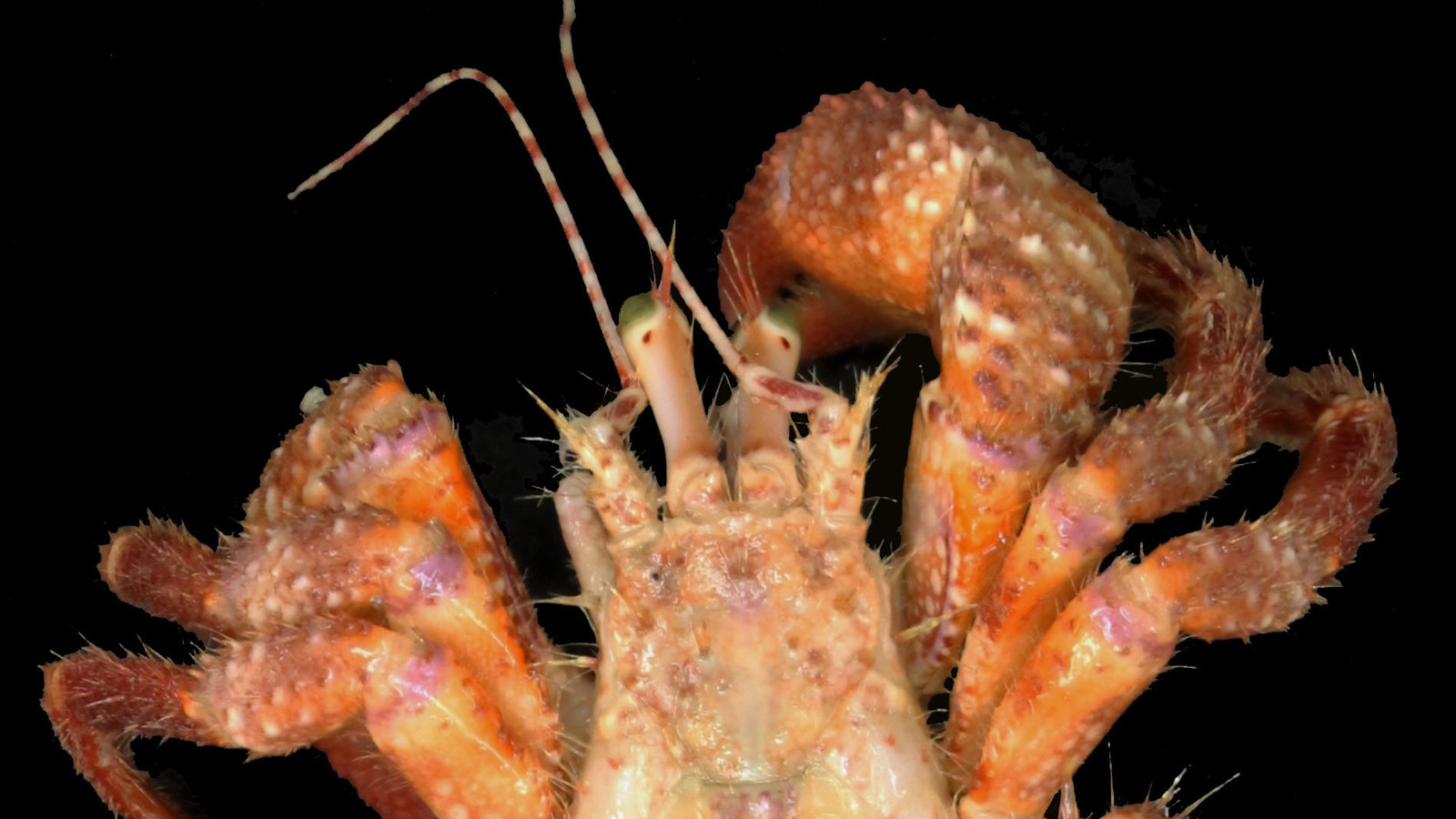
One of the western Atlantic's largest hermit crabs, this robust orange-red scavenger occupies big conch and whelk shells in Florida's coastal waters.
The Giant Hermit Crab is a large marine hermit crab found in the western Atlantic, Gulf of Mexico, Caribbean, and Florida waters. It lives on sandy, rubble, seagrass, and reef-associated bottoms, where its soft abdomen is protected inside a borrowed gastropod shell.
Large individuals may occupy conch or whelk shells and emerge to forage, especially after dark. As an active scavenger and predator of small invertebrates, the species helps recycle nutrients and connects several levels of the coastal food web.
Habitat:
Coastal Waters, Estuaries and Bays
Area / Range:
Atlantic Coast, Gulf Coast, Florida Keys
Diet:
Giant Hermit Crabs are opportunistic omnivores and scavengers. They consume carrion, algae, detritus, mollusks, and other bottom-dwelling invertebrates, and large individuals can prey on animals that also provide usable shells.
Behavior:
Often most active at night, this crab walks over sandy, rubble, seagrass, and reef bottoms while carrying a protective shell. It retreats fully when threatened and changes shells as it grows, sometimes competing with other shell-using animals for suitable housing.
Night
Active Times:
Best time to see:
After dark while snorkeling or diving over sandy, rubble, seagrass, and reef habitat in the Florida Keys and along both coasts
Florida Native Status:
Native
Conservation Status:
A widespread western Atlantic species not listed here as threatened in Florida; local collection pressure and loss of large empty shells can reduce available shelter
Safety Level:
Use Caution. Strong Claws
Safety Information:
Do not handle or provoke a Giant Hermit Crab. Its large claw can pinch forcefully; observe in place, keep fingers away from the shell opening, and never pull the animal from its shell.
Benefits to Property:
Giant Hermit Crabs recycle organic material, consume carrion and other food on the seafloor, and serve as both predators and prey in healthy coastal ecosystems.
Property Concerns:
They do not threaten coastal property. Removing live animals or taking large occupied shells reduces wildlife and may violate harvest or protected-area rules.
Fun Fact:
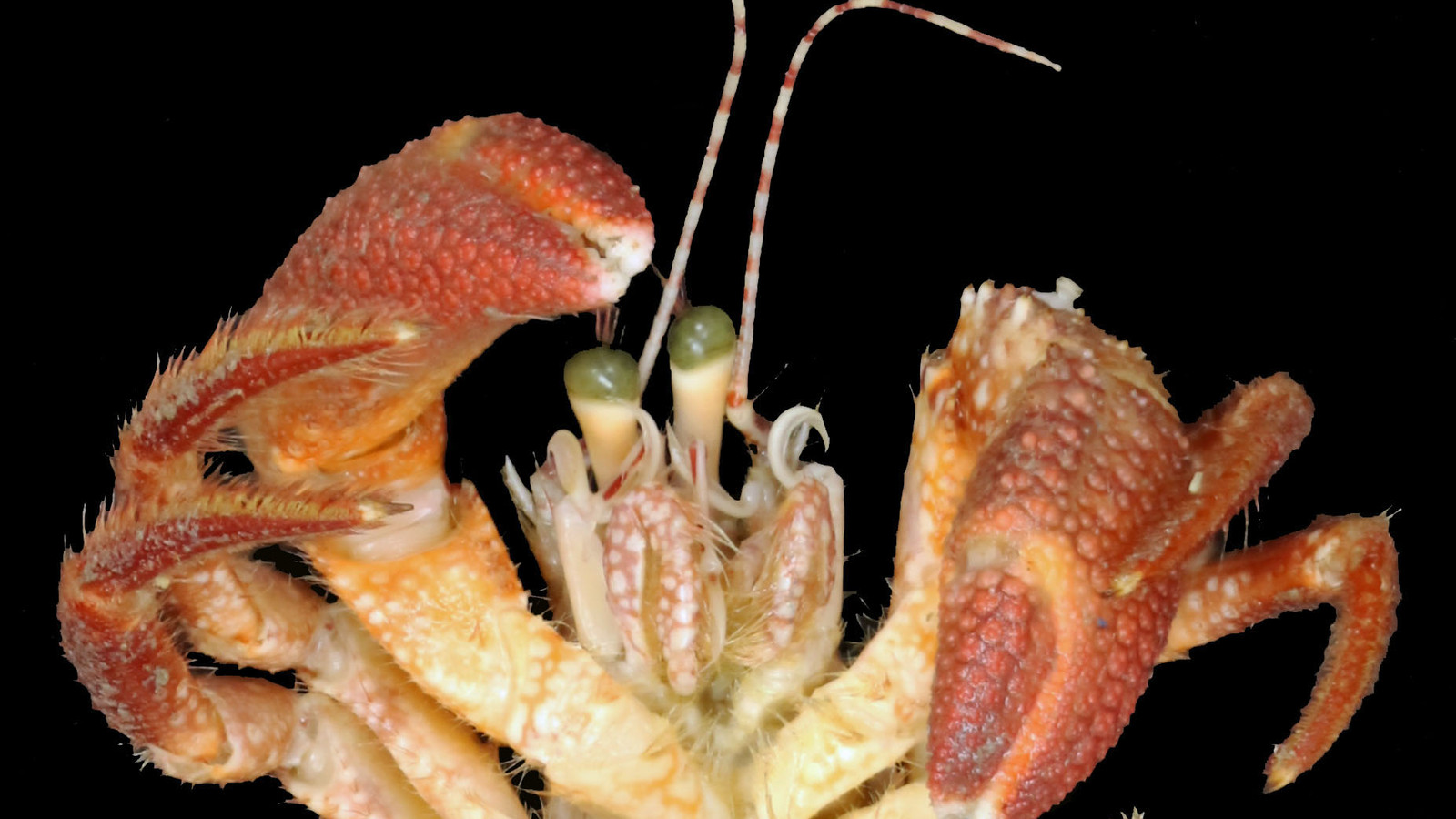
The Giant Hermit Crab can use the discarded shells of large conchs and whelks. Its oversized right claw functions as both a powerful tool and a shield that helps block the shell opening when the crab withdraws.
Wildlife Laws:
Marine-life collection and harvest are subject to current Florida saltwater licensing, species, gear, bag-limit, and protected-area rules. Check Florida Fish and Wildlife Conservation Commission regulations before collecting any hermit crab or occupied shell.
Identification:
Identify this species by its robust orange-red to reddish-brown legs and claws, coarse spines and hairs, long banded antennae, pale greenish eyes on stout stalks, and strongly unequal claws. The right claw is usually much larger and can close the entrance of a large borrowed shell.
Credits:
- U.S. Fish and Wildlife Service Giant Hermit Crab Profile
- World Register of Marine Species Taxon Record
- Gulf Specimen Marine Laboratory Giant Red Hermit Crab
- Key West Aquarium Hermit Crab Guide
- Primary Image Credit: Florida Fish and Wildlife, CC BY-ND 2.0
- Secondary Image Credit: Florida Fish and Wildlife, CC BY-ND 2.0