
Golden Topminnow
Fundulus chrysotus
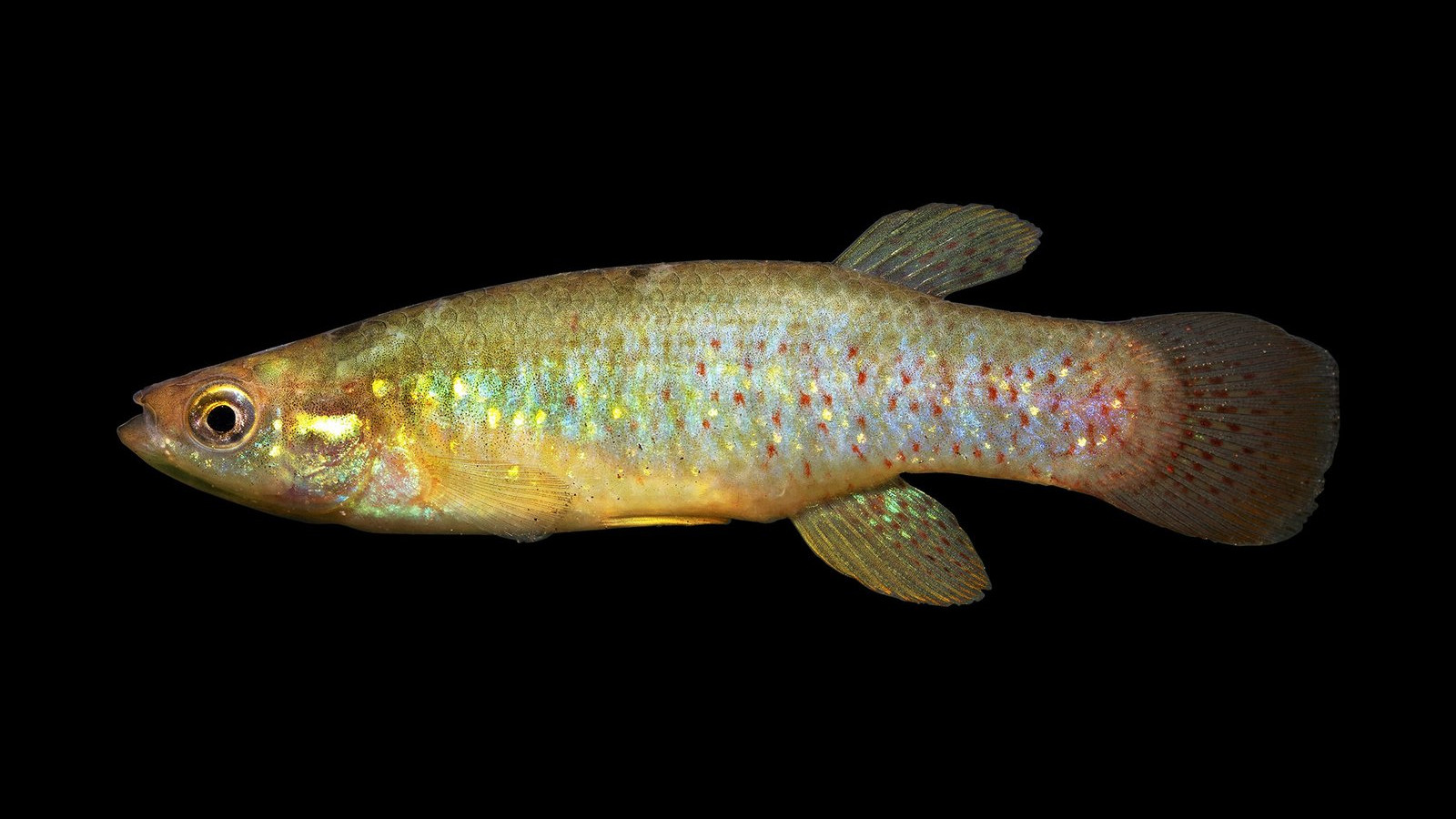
A small native Florida fish with gold flecks and red spots that lives near vegetation in quiet freshwater.
The golden topminnow is a colorful native killifish found in vegetated swamps, sloughs, pools, ponds, creek backwaters, and slow river margins. It usually stays close to the surface and dense aquatic plants.
Its broad Florida distribution makes it an important small predator and prey species in freshwater wetlands.
Habitat:
Freshwater Wetlands, Lakes and Ponds, Rivers and Springs, Canals and Ditches
Area / Range:
Statewide
Diet:
Golden topminnows feed at or near the surface on insects, insect larvae, small crustaceans, and other aquatic invertebrates.
Behavior:
They remain near floating or submerged vegetation in quiet water. Spawning occurs mainly from late spring through summer, with eggs placed singly among plant roots and stems.
Day and twilight
Active Times:
Best time to see:
Warm months in clear shallow water with abundant aquatic vegetation
Florida Native Status:
Native freshwater fish
Conservation Status:
Common and not federally listed
Safety Level:
Harmless
Safety Information:
This small fish is harmless. Observe it in the water and avoid handling; sudden temperature changes and dry contact can quickly injure small fishes.
Benefits to Property:
It eats insect larvae and other tiny invertebrates and provides food for wading birds, larger fish, turtles, and other wetland predators.
Property Concerns:
It causes no property damage. Draining ponds, removing all aquatic vegetation, polluted runoff, and introducing predatory nonnative fish can reduce populations.
Fun Fact:
The name chrysotus means golden, referring to the fish's metallic coloration. Males can become especially vivid during breeding season.
Wildlife Laws:
Fishing, collection, transport, and release of freshwater fish must follow current Florida rules. Never release aquarium fish, bait, or captured wildlife into a different water body.
Identification:
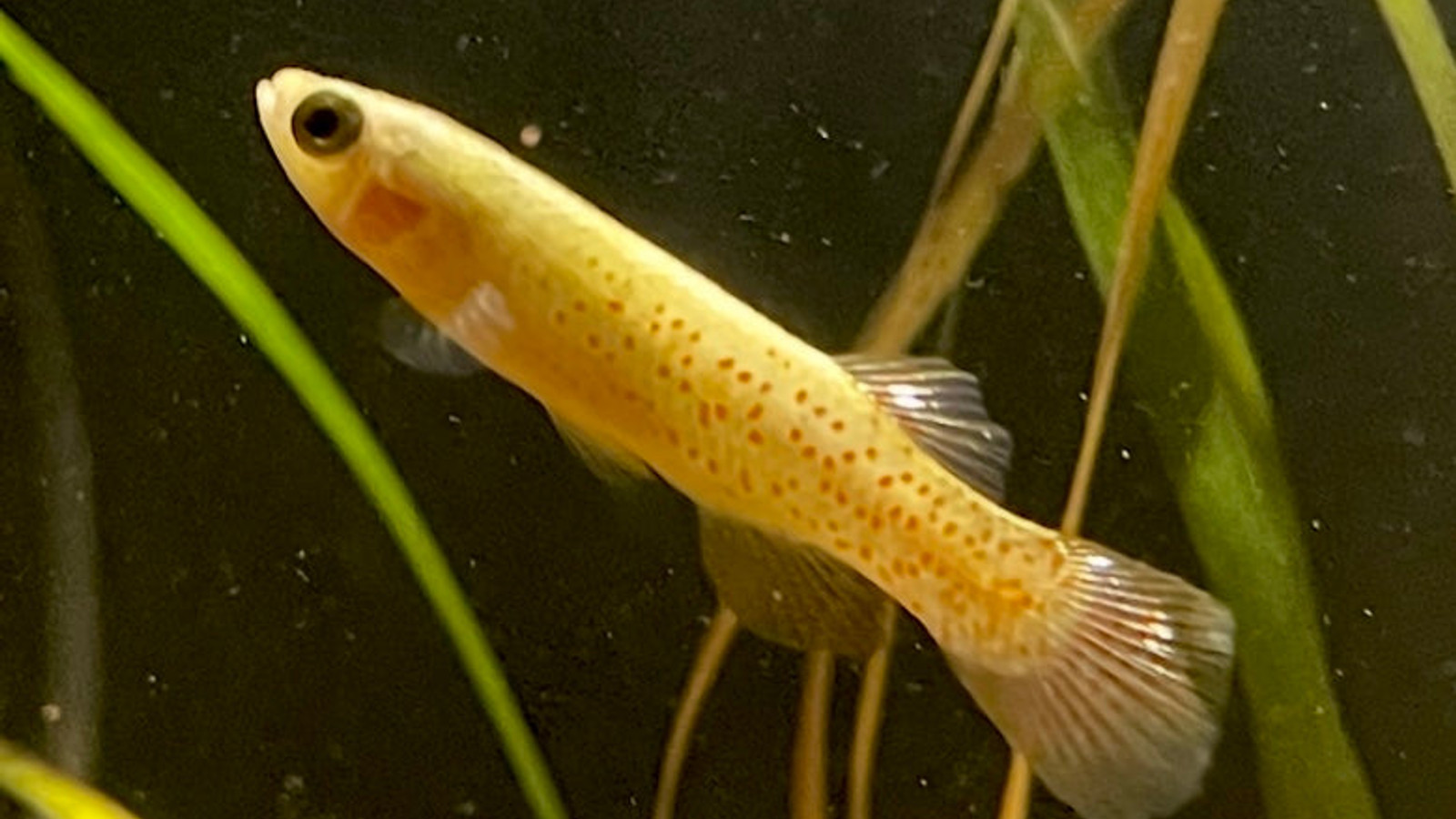
The body is yellow-green to olive with metallic gold flecks. Adult males commonly show bright red or reddish-brown spots toward the rear, while females are more subdued with scattered pearly spots and translucent fins. Adults are usually 1.2 to 2.2 inches long.