
Gopher Tortoise
Gopherus polyphemus
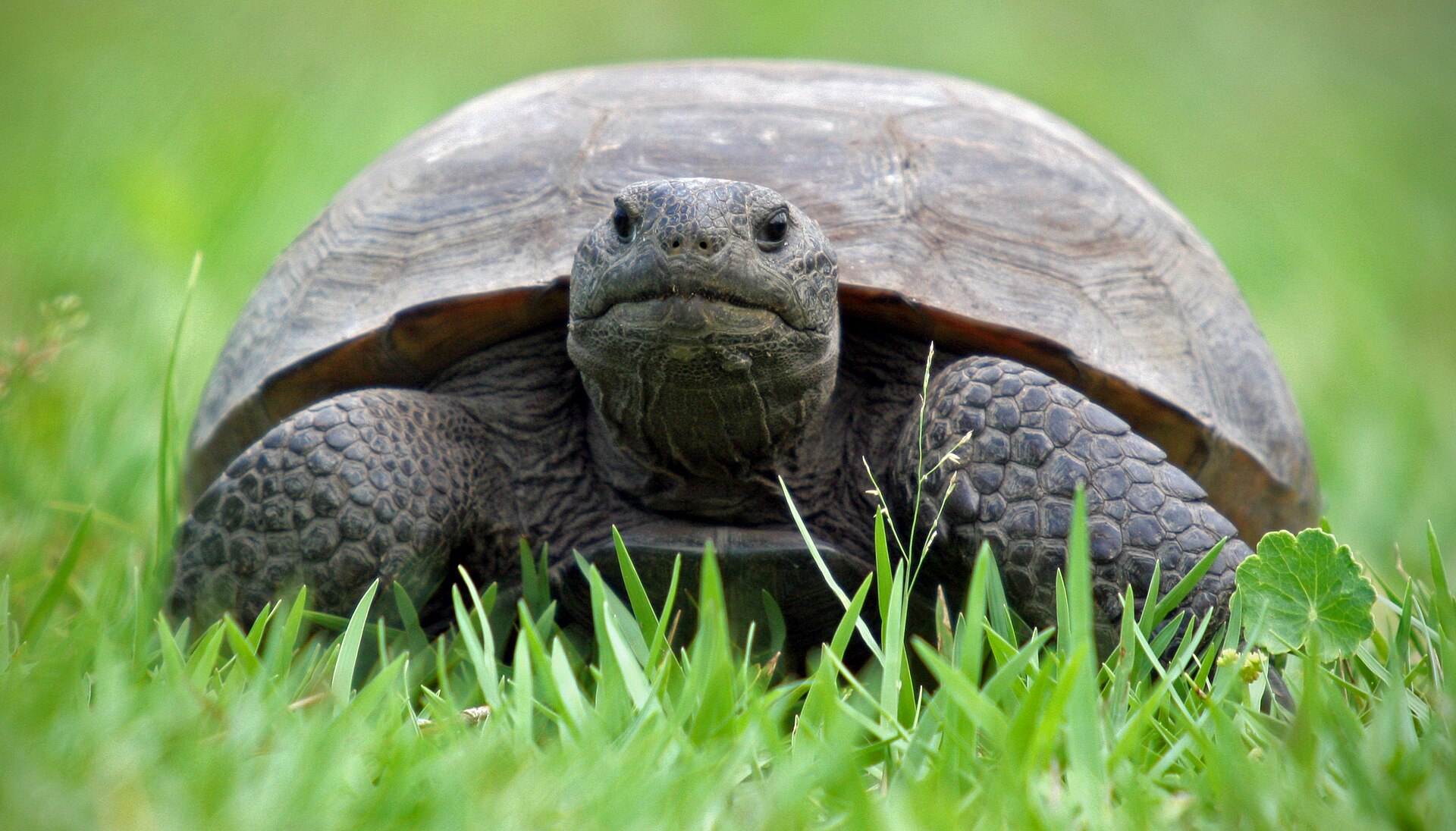
The state-threatened gopher tortoise is a protected land turtle whose deep burrows shelter hundreds of other species.
Gopher tortoises live in dry, sandy uplands with open sunlight and abundant low vegetation. They use powerful front legs to dig long burrows that stabilize temperature and humidity.
More than 350 other species use gopher tortoise burrows. This relationship makes the tortoise one of Florida’s best-known keystone species.
Habitat:
Pine Flatwoods and Sandhills, Scrub and Dry Prairie, Grasslands and Agricultural Areas, Urban and Residential Areas
Area / Range:
Statewide
Diet:
Gopher tortoises eat grasses, broadleaf plants, flowers, berries, cactus pads, and other low-growing vegetation.
Behavior:
They spend much of their time in burrows and emerge to feed, bask, and reproduce. Activity rises during warm daylight hours.
Day
Active Times:
Best time to see:
Warm sunny mornings and afternoons during spring through fall.
Florida Native Status:
Native
Conservation Status:
State-designated Threatened in Florida.
Safety Level:
Harmless. Protected Wildlife
Safety Information:
Do not place the tortoise in water. Never move one into another habitat. If it is crossing a road and conditions are safe, move it only across in the direction it was traveling.
Benefits to Property:
Burrows support hundreds of species and improve underground habitat complexity.
Property Concerns:
Construction, grading, vehicle traffic, or heavy equipment near a burrow risks injury and legal violations.
Fun Fact:
A gopher tortoise burrow stretches many feet underground and provides refuge from heat, cold, drought, and fire.
Wildlife Laws:
Florida protects both the tortoise and its burrow. A permit is required before relocation or land-clearing activity that affects either one.
Identification:
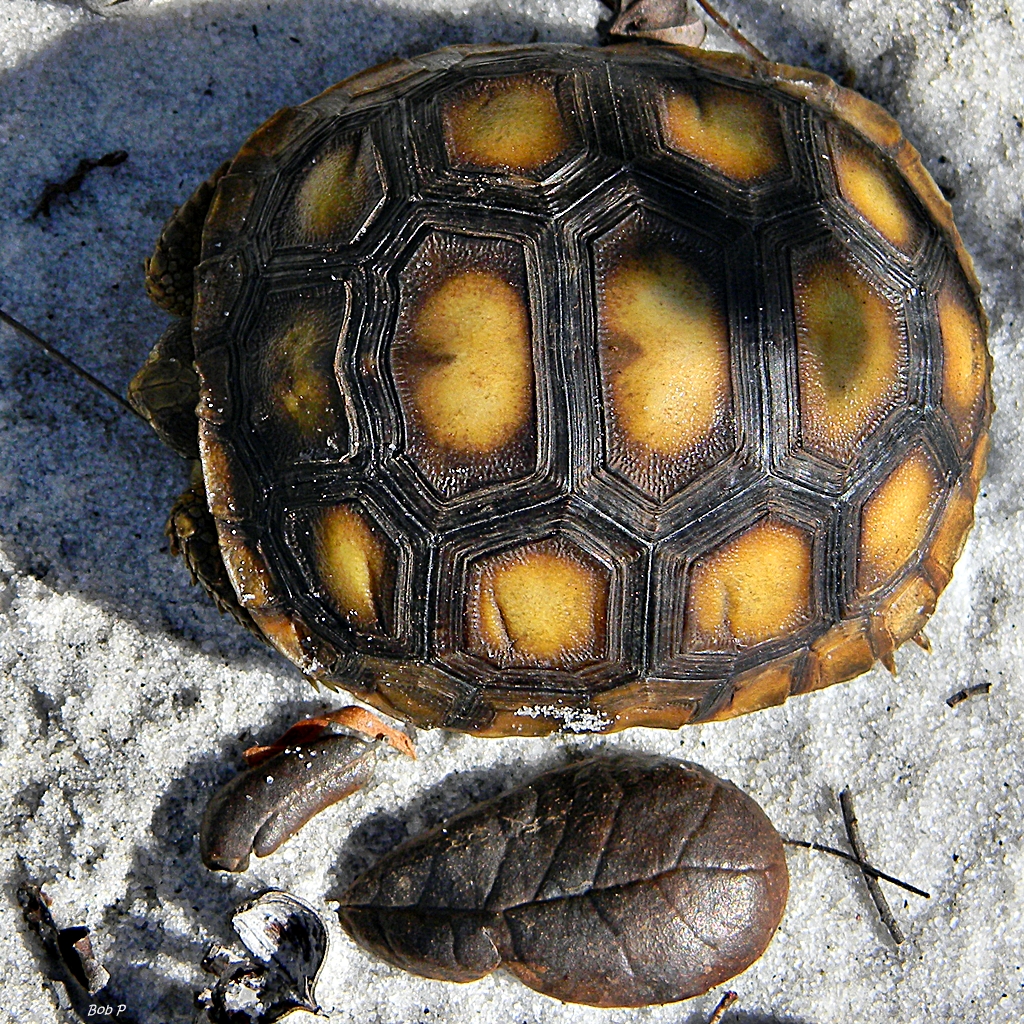
Adults have a tan, brown, or gray oblong shell, sturdy elephant-like rear legs, and flattened shovel-shaped front legs. Young animals often show brighter yellow-orange markings.
Credits:
Facts and law: Florida Fish and Wildlife Conservation Commission. Images: adult tortoise and young tortoise, Wikimedia Commons.